Rivian founder and CEO RJ Scaringe on April 22, 2026 drives the first customer-ready electric R2 SUV off the assembly line at the company’s plant in Normal, Illinois.
Courtesy Rivian
Rivian Automotive on Wednesday said it has started production of its new R2 all-electric vehicle for customers at its plant in Normal, Illinois.
The start of production is a crucial milestone for the company ahead of customer deliveries, which are scheduled for later this spring. Investors will be watching for the company to ramp up production for the foreseeable future.
Rivian expects the R2 — an updated, less expensive EV that looks like its flagship R1 SUV — to attract more buyers and deliver on the company’s promises to cut costs and become profitable in the years ahead.
The first of the R2 midsize vehicles is a $58,000 performance model with a “Launch Package” that includes a 330-mile range, dual motors, special attributes and “lifetime” access to its Autonomy+ advanced driver-assistance system.
Rivian has been touting a less expensive, entry-level version of the vehicle, starting at $45,000, but it said that model, which is expected to be less profitable, won’t be available until late 2027. Its current vehicles start at more than $70,000.
The R2 production announcement comes less than a week after a tornado damaged part of the company’s plant being used for R2 parts storage and logistics.
Rivian is scheduled to report its first-quarter results and update investors on R2 production on April 30.
A version of this article first appeared in the CNBC Property Play newsletter with Diana Olick. Property Play covers new and evolving opportunities for the real estate investor, from individuals to venture capitalists, private equity funds, family offices, institutional investors and large public companies. Sign up to receive future editions, straight to your inbox. Life science laboratories, mainly in biotech and biopharma, saw a massive drop in demand last year after the National Institutes of Health was forced to cancel billions of dollars in research grants. NIH funding was cut severely by the federal government. Of the 10 largest life sciences markets tracked by JLL, the aggregate vacancy rate was 27.4% in the first quarter of this year, up from 25.7% during the same period in 2025. Major markets like Boston and the Bay Area had vacancy rates over 30%. The sector, however, is beginning to stabilize. A separate report from CBRE shows venture capital investment in life sciences in the second half of 2025 was the strongest since 2022. In addition, the amount of space under construction is at its lowest since 2017. An October JLL report predicts, “gradual market stabilization driven by supply rationalization rather than dramatic demand recovery.” JLL forecasts that availability rates will decline to approximately 20% by 2030, “assuming continued below-average absorption coupled with significant supply exits through distress sales and adaptive reuse projects.” The market correction in the space, however, has been historic, according to Travis McCready, head of industries leasing advisory at JLL. And the trouble isn’t just funding cuts. McCready characterized the current oversupply situation as a combination of unprecedented construction combined with a fundamental change in how life sciences companies are using real estate. “This entire story and this entire narrative is evolving in real time,” said McCready. “We got really, really good at building that asset class based on the assumption of what type of equipment and enabling technology biotech companies needed, and then came AI and robots.” This is where the opportunity presents itself. McCready projects that close to 19 million square feet of available lab space will shift to other uses by 2030, but the companies and markets that adapt will end up stronger and more competitive. That adaptation comes in the architecture. Gensler, the largest architectural firm in the world, recently completed a yearlong, cross-disciplinary research initiative looking at how AI, automation and robotics are reshaping not just lab operations, but real estate strategy itself, from infrastructure requirements and space ratios to the composition of the workforce, according to the company. “It’s transformative,” said Ryley Poblete, global sciences practice area leader at Gensler. “Where we’re going with science, especially with these new tools of automation and AI, is completely changing the way we think about how you would do process.” Poblete pointed to the transformation of the so-called wet bench area, where scientists use instruments to conduct experiments. Many of these experiments can now be done with AI or automation, which means as robotics and computers move in, test tubes move out. From a real estate perspective, companies are learning what the new technologies can do and reevaluating the facilities they have to inform whether a space can be upgraded. “That’s happening in the real estate portfolios of the large clients, the people who have campuses and assets,” said Poblete. The vacancies, according to the Gensler study, are actually masking a quality problem: Much of today’s empty inventory was never truly “Class A” lab space to begin with. Even as it looks like the real estate needs of lab sciences are shrinking, there is a growing discussion about what kind of lab real estate will survive and outperform in the next cycle. “Large biotech companies and even the large chemical companies are evaluating their own infrastructures nowadays to really validate that they will be worthwhile taking it forward, or looking at a consolidation strategy or a new build strategy that brings these pieces together in the right environments,” Poblete said. Gensler is actively looking at older spaces, assessing the increased power and air needs for larger computers that run artificial intelligence. They’re also looking to see if the spaces can be modified to fit robotics. Poblete described it as essentially putting small data centers into laboratory spaces. Of course, they also need to see if the building structure can take the weight of all the new systems. Newer buildings, for the most part, can, but older ones are in question. The spaces are being redesigned for the machines, but there still needs to be some kind of creative lab environment where scientists can validate what the machines are doing. That involves deep focus, Poblete said, which requires quiet areas, not the open, often noisier workspaces that are more popular in today’s newer offices. Then there is the collaborative process. Scientists are no longer working entirely alone. They’re working with AI researchers, engineers and process designers. “Those people all work together with them now and not separately, and that’s been a big change for the industry, not just from a life science perspective, but from a chemistry perspective,” said Poblete. “They used to all think of themselves as like this, the hero scientists, in a way. Now that whole interdisciplinary science movement is — it’s an essential need for you to work with these partners to create real future endeavors.” Poblete pointed to Genentech as an example. The company is undergoing a major, multiyear buildout of its global headquarters campus in Basel, Switzerland. It is investing more than 3 billion Swiss francs (US$3.82 billion) in site development, including a new 72-meter research building scheduled for completion in 2029, according to its parent company, Roche , which says the development aims to modernize research facilities and consolidate R & D functions.
A Best Buy logo is displayed outside one of their stores on October 10, 2025 in San Diego, California.
Kevin Carter | Getty Images
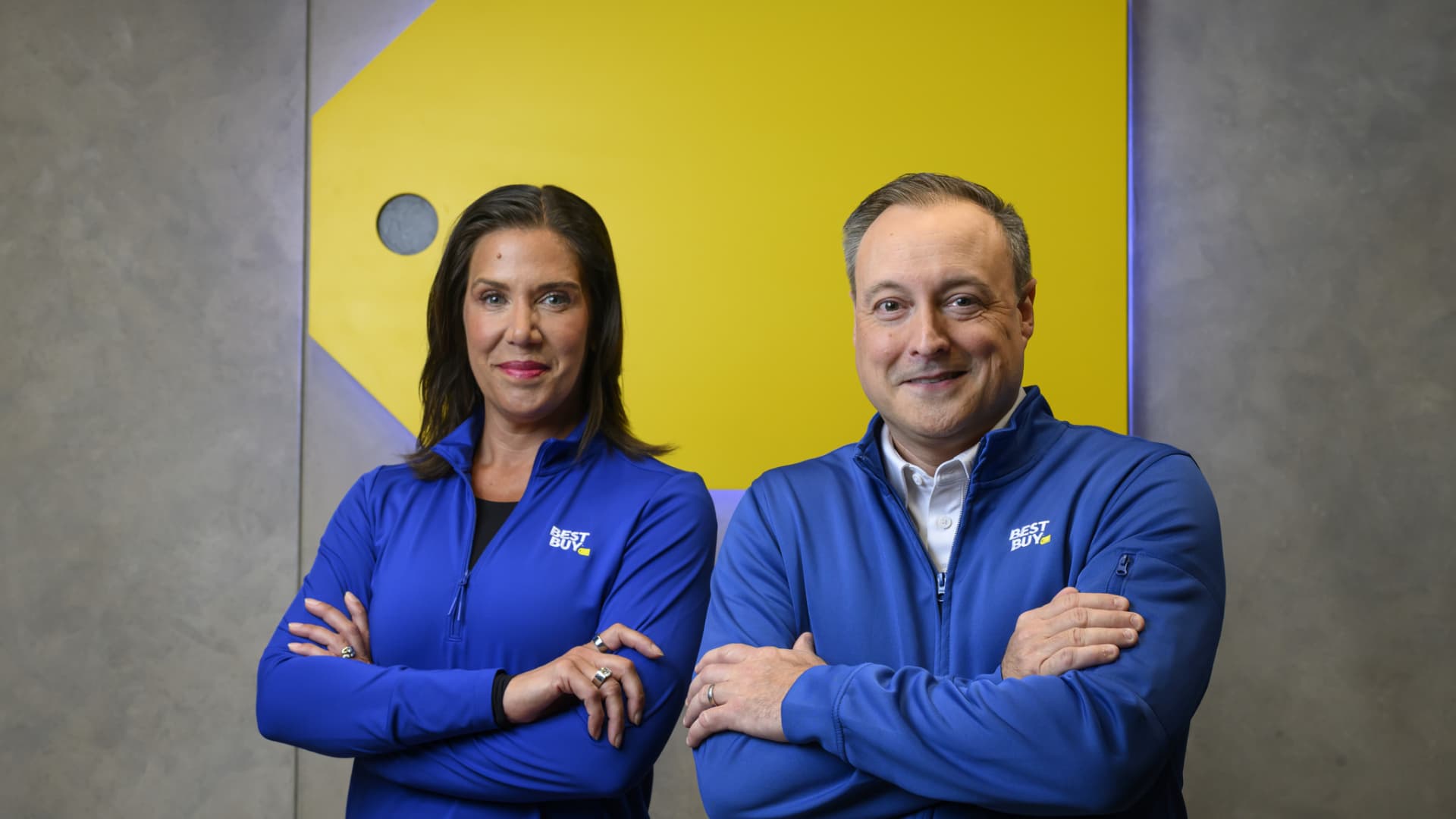
Best Buy said Wednesday that company veteran Jason Bonfig will succeed Corie Barry as the retailer’s CEO on Oct. 31, taking over as Best Buy tries to break a run of stagnant sales.
Bonfig, 49, is chief customer, product and fulfillment officer and rose through the ranks after joining the retailer as an inventory analyst in 1999. He will become Best Buy’s sixth chief executive officer and join the company’s board.
Barry will stay on as a strategic advisor for six months after stepping down, the company said in a news release. She is the second-longest tenured CEO in the company’s history after its founder, Dick Schulze.
Best Buy’s leadership change comes as the retailer tries to get back to meaningful sales growth and capitalize on the wave of artificial intelligence-enabled mobile phones and laptops.
In an interview with CNBC, Barry said Best Buy is in a good moment for a transition. She said the company is seeing “an upward swing of momentum” as customer and employee metrics improve and it enters a stage where artificial intelligence has begun to reshape the world of consumer electronics.
“It’ll change the way we work. It’ll change the way people shop, but in our industry in particular, it will change the devices we sell materially,” she said, describing that as a three- to five-year journey.
“It’s important for someone to steer that kind of next horizon,” she said.
Bonfig told CNBC that AI will not only refresh the products that Best Buy sells, but also open up new categories and new features for customers. For example, he said, Ray-Ban Meta glasses didn’t exist before.
“You’ll see us continue to make sure we’re as quick as possible to bring those in front of our customers, both digitally and in our stores,” he said.
Barry said Bonfig is well suited to take the helm, since he oversees crucial parts of Best Buy’s strategy to drive more sales and higher profits, including its third-party digital marketplace, which launched in the U.S. in August, and its advertising business, Best Buy Ads.
In his current role, Bonfig also oversees merchandising, marketing, supply chain and e-commerce.
Best Buy’s CEO transition comes as its sales have lagged in the past four years, which Best Buy has attributed to a slower housing market, price-conscious U.S. consumers and less tech innovation.
The company said at least some of those dynamics will likely persist this fiscal year. Best Buy said in early March that it expects revenue to range between $41.2 billion and $42.1 billion, compared with $41.69 billion last fiscal year. It expects adjusted earnings per share to range from $6.30 to $6.60, after it reported adjusted earnings per share of $6.43 for the previous fiscal year.
It said comparable sales, a metric that tracks sales online and in stores open at least 14 months, will range from a decline of 1% to an increase of 1%.
Barry, 51, will step down after nearly seven years in the company’s top job. She became the first woman to lead Best Buy when she started in the role in June 2019. She led Best Buy through a period marked by rapid changes and spikes in demand — including a rush to buy computer monitors and kitchen appliances during the Covid pandemic — along with supply chain headaches, high inflation and President Donald Trump’s sharp increase in global tariffs.
David Kenny, chair of the company’s board of directors, said in a statement that Barry “guided Best Buy with a confident and steady hand and an unrelenting commitment to drive value for our employees, customers, partners and shareholders through some of the most tumultuous and uncertain times we have ever seen.”
Best Buy’s stock has reflected that turbulence, too. On the day she began as CEO, the price of the company’s shares were $65.52, but they shot up to an all-time closing high of $138 on Nov. 22, 2021.
Shares of Best Buy closed Tuesday at $66.59, bringing the company’s market cap to $13.93 billion. As of Tuesday’s close, Best Buy’s stock is up about 7% over the past year and down about 0.5% this year. That compares with the S&P 500’s approximately 37% gains and 3% rise, respectively, during the same time periods.
The company’s shares were down more than 4% in morning trading on Wednesday.
Best Buy faces some skepticism among investors. Earlier this month, Goldman Sachs downgraded the company’s stock from buy to sell.
In an equity research note, retail analyst Kate McShane said the company may get a bounce from higher tax refunds in the first quarter of the year as customers buy new devices. Yet she said she expects sales and margins to come under pressure during the rest of the year as higher memory costs drive up the price of computers and laptops and consumers trade down to cheaper devices.
Plus, she said, Best Buy’s sales of appliances and other consumer electronics have lagged, even as competitors like Home Depot and Lowe’s have posted stronger sales trends.
Regardless of the economic backdrop, Bonfig said Best Buy’s teams “are always focused on staying as close to our customers as possible,” whether shoppers want value, ease or inspiration.
Barry said Best Buy’s business model as a specialty consumer electronics retailer works best “when we see innovation intersect with replacement cycles” — a dynamic that she said is returning again. One sign of that, she said, is the company’s nine straight quarters of sales growth in computing.
“We’re starting to see the indicators,” she said. “As more innovation proliferates, we feel like we’re set up well to capitalize on that.”
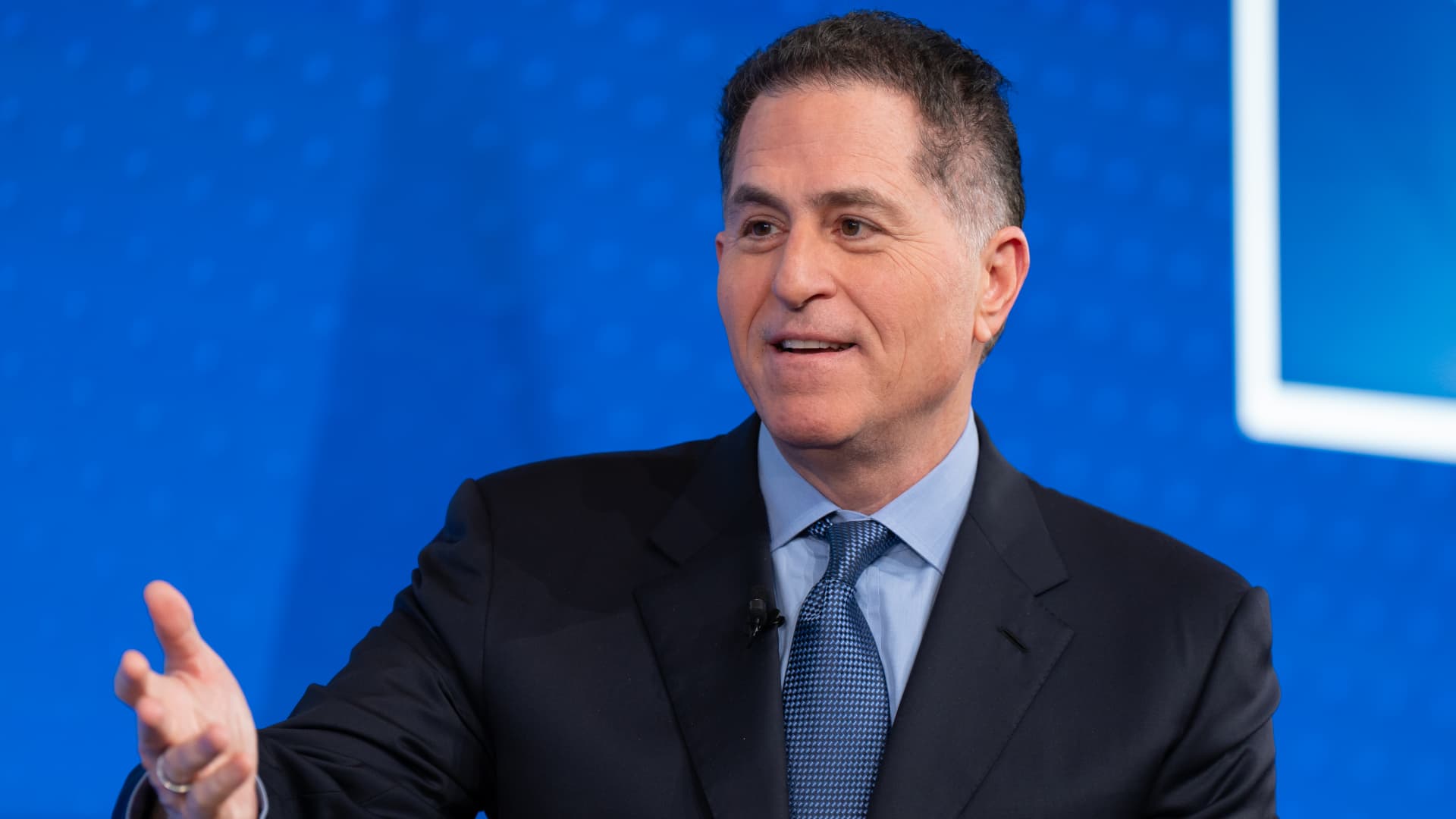
Michael Dell, chairman and CEO of Dell Technologies, speaks during CNBC’s Invest In America Forum in Washington, April 15, 2026.
Aaron Clamage | CNBC
Michael and Susan Dell announced Tuesday that they have committed $750 million to the University of Texas at Austin that will fund the development of a new medical center and research campus.
The billionaire CEO told CNBC that the new medical center, which will include a hospital and research facility, will use artificial intelligence and advanced computing to deliver earlier and more precise treatment for patients.
“There are a lot of medical centers out there,” Dell said in an interview. “But what you get with the opportunity to build something new is that you can design it from the start with data and computing and AI built in. It allows you to make better decisions earlier and coordinate care more effectively and ultimately create better outcomes.”
The university expects to break ground on Dell Medical Center later this year and open the facility in 2030. The new medical campus will also include a cancer center, which is already under development. The Dells’ donation will also go toward student scholarships and UT’s supercomputing center.
A conceptual rendering of the UT Dell Campus for Advanced Research, which is expected to open in 2030.
Courtesy: The University of Texas at Austin
The couple’s donation is one of the largest ever to an American public university. Dell founded his namesake technology firm from his dorm room at UT Austin in 1984 when he was a premed student. He dropped out of UT Austin before his sophomore year.
“I think about this as the next step in a timeline that actually goes back to my parents sending me off to UT to become a doctor,” he said. “Obviously, that part didn’t work out, but I never stopped thinking about that.”
With the latest commitment, the couple has contributed more than $1 billion in total to UT Austin, including a $50 million initial gift to establish Dell Medical School in 2013. Their foundation also gifted $25 million to establish Austin’s first pediatric hospital in 2007.
Nvidia investor and billionaire Tench Coxe and his wife, Simone, both Austin residents, donated $100 million in January to the new academic medical center.
Get Inside Wealth directly to your inbox
Dell said he and his wife have stepped up their giving as Austin’s population has surged. The city’s metro area population has roughly doubled since 2000 and was last estimated at nearly 2.6 million people in 2024, according to data from the city.
Investing in Austin’s health-care system means residents are able to seek care closer to home, Dell said.
“My perspective on this is as a parent and as an employer. You know, years ago, if there was a health challenge, you didn’t actually stay in Austin. You went to Houston or Dallas,” he said. “And that’s becoming less and less true, and now Austin is becoming a destination for special surgeries and difficult procedures, and it’s attracting that kind of talent.”
The Dells have ramped up their charitable giving in recent months, committing $6.25 billion in December to fund “Trump accounts” for 25 million U.S. children. The couple’s philanthropic commitments to date total more than $10 billion, according to their foundation.
“The scale has increased as we’ve had more ability to have a greater impact,” Dell said of their philanthropy. “We want to do this while we’re still here — and we’re very much still here — and so there’s a lot to be done.”
A conceptual rendering of a classroom at the new medical campus at the University of Texas at Austin.
Courtesy: The University of Texas at Austin
Patient advocacy groups and medical professionals have raised concerns about AI’s use in health care, such as data privacy risks and the potential for bias.
Dell said he prioritizes AI’s ability to aid health-care professionals rather than replace or hobble them.
“You’ve got to have the right sort of controls and standards around privacy and security,” he said. “At the end of the day, these are just tools. And they’re very powerful, they’re amazing, and they’re going to keep getting better, but still, I think having that human judgment is incredibly important.”
FedEx and UPS delivery vans are seen in Krakow, Poland, Feb. 22, 2022.
Beata Zawrzel | Nurphoto | Getty Images
The refund process for tariffs has begun, but it could be months before consumers start reaping those rewards.
Following the Supreme Court ruling that some tariffs were unconstitutional, U.S. Customs and Border Protection opened up a refund process on Monday for companies to begin requesting money back.
The refund process only affects levies collected under the International Emergency Economic Powers Act, or IEEPA, which were the specific tariffs that the Supreme Court invalidated. Some tariffs — like those under Section 232 of the Trade Expansion Act of 1962 or those under Section 301 — remain in place.
The tariff refund portal, called the Consolidated Administration and Processing of Entries, will allow importers of record to submit refund requests. CBP will then process those requests in phases, and the first phase will only cover refund requests for entries that CBP finalized within the past 80 days.
For shippers UPS and FedEx, that could mean a payday for the companies and, eventually, for customers.
UPS said this week that it will work to request and retrieve tariff refunds from CBP on customers’ behalf for any shipments where the company was the importer of record, meaning customers do not need to contact UPS.
Still, the company noted that the refunds could take up to three months to be delivered to UPS, which can only then issue refunds to customers.
“We remain focused on keeping shipments moving and helping ensure our customers can fully exercise their rights throughout this complex process,” UPS said in a statement. “We are closely monitoring legal developments and will share updates as available.”
The shipment company said it has only received CBP guidance about the first phase of tariff refunds.
FedEx also told CNBC it has begun filing claims with CBP for tariff refunds.
“Supporting our customers as they navigate regulatory changes remains our top priority,” FedEx said in a statement.
The company said its process is “straightforward”: If CBP issues refunds to FedEx, it will in turn issue those refunds to shippers and consumers who paid those charges.
FedEx said it will also generate the reports needed to secure refunds on behalf of its customers.
DHL told CNBC it has also begun filing for tariff refunds, launching the process automatically for any shipments where it was the importer of record.
“We will continue to monitor developments closely, engage with authorities and communicate transparently as further guidance becomes available,” the company said in a statement.
On Tuesday, President Donald Trump told CNBC’s “Squawk Box” that he would “remember” companies that did not request tariff refunds.
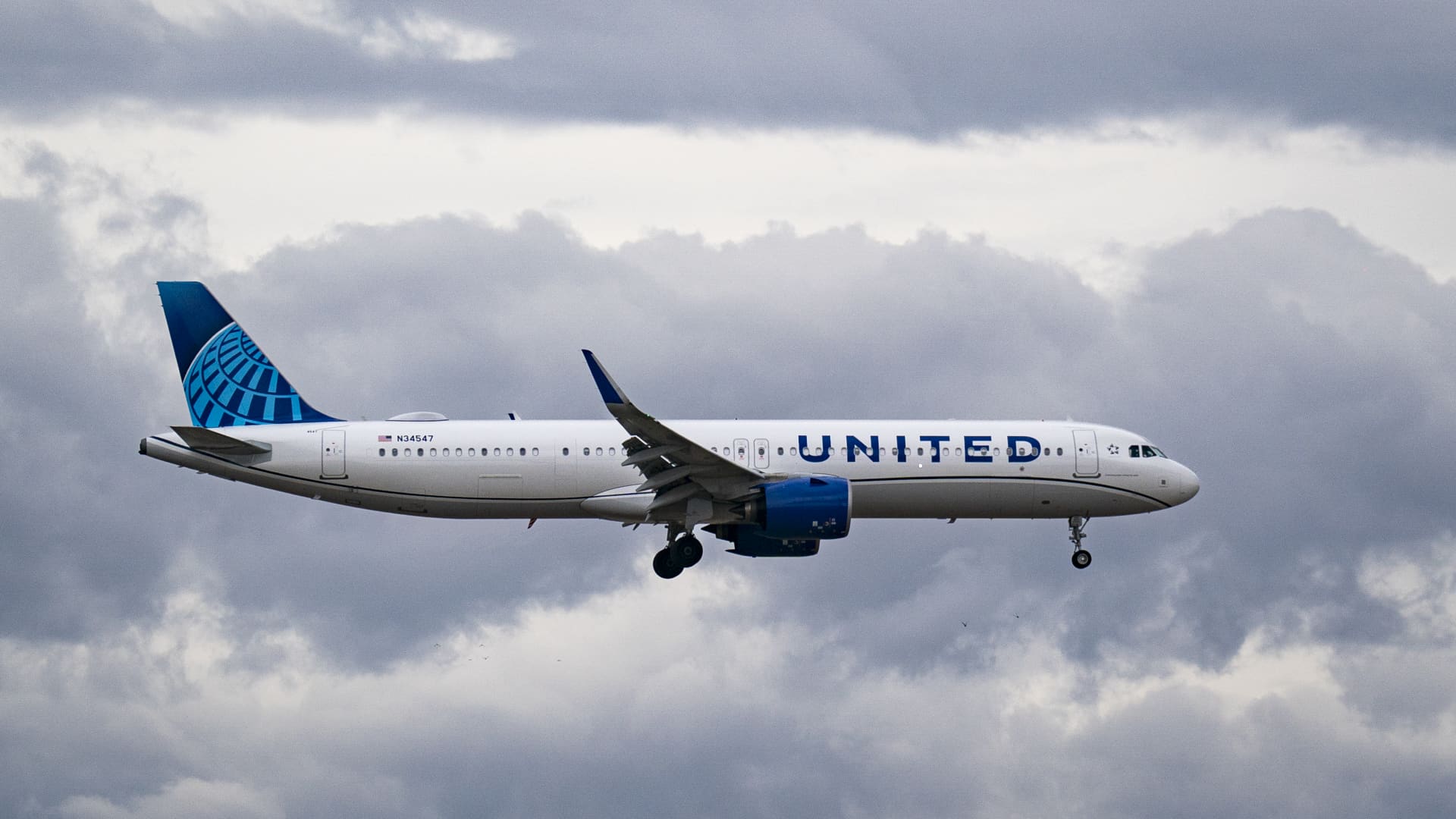
A United Airlines plane approaches the runway at Denver International Airport on March 23, 2026.
Al Drago | Getty Images
United Airlines slashed its 2026 earnings outlook Tuesday as it grapples with a surge in jet fuel prices due to the war in the Middle East.
United said it could earn between $7 and $11 a share on an adjusted basis this year, down from its previous forecast of between $12 and $14 a share that it released in January, more than a month before the U.S. and Israel attacked Iran.
The carrier, like others, is trimming some of its planned flying this year to reduce costs. Wall Street had already been adjusting its expectations for the year as a result. Analysts polled by LSEG had forecast that United’s adjusted, full-year earnings would be $9.58 a share.
For the second quarter, United forecast adjusted earnings of between $1 and $2 a share. Analysts had expected $2.08 a share for the quarter. United estimated its fuel price would average $4.30 a gallon in the second quarter.
The carrier said it expects its revenue to cover between 40% to 50% of the fuel price increase in the second quarter, as much as 80% in the third and between 85% and 100% by the end of the year.
United reiterated that it is tweaking its schedules to adjust to higher fuel, with capacity in the second half of the year expected to be flat to up about 2% on the year. It grew 3.4% in the first quarter.
Here is what United Airlines reported for the quarter that ended March 31 compared with what Wall Street was expecting, based on estimates compiled by LSEG:
Earnings per share: $1.19 adjusted vs. $1.07 expected
Revenue: $14.61 billion vs. $14.37 billion expected
Revenue, profit climb
Revenue overall rose more than 10%, to $14.61 billion, up from the $13.21 billion from a year before.
For the first quarter, United’s net income rose 80% to $699 million, or $2.14 cents a share, compared with net income of $387 million, or $1.16 cents a share, a year earlier. Adjusted for one-time items, United posted earnings per share of $1.19 a share.
Unit revenue was up in every reported segment, including for domestic U.S. flights, where it rose 7.9% to $7.9 billion from a year earlier, signaling strong pricing power in the quarter.
“These are results our employees can be proud of, and they show the resilience of our long-term strategy, even in the face of escalating fuel expense,” CEO Scott Kirby said in an earnings release.
Jet fuel in the U.S. was going for $3.51 a gallon on Monday, down from the high on April 2 of $4.78, but far above the $2.39 on Feb. 27, the day before the first attacks on Iran, according to prices assessed by Platts.
Airline executives have said demand has remained robust even while they have increased fares and checked bag fees as they pass along higher fuel prices to customers. The industry has become more reliant on travelers who are willing to shell out more for flights and bigger seats, and who are less affected by price increases.
Alaska Airlines pulled its 2026 forecast on Monday because of higher fuel prices. It has raised fares about $25, CEO Ben Minicucci told analysts Tuesday.
Merger ambitions?
United CEO Scott Kirby is likely to face questions on the company’s 10:30 a.m. ET earnings call on Wednesday about his ambitions for a merger with another airline.
Kirby floated a potential merger with American Airlines to a Trump administration official earlier this year, according to a person familiar with the matter, but President Donald Trump said he was against the idea.
“I don’t like having them merge,” he told CNBC’s “Squawk Box” on Tuesday morning. He said he would like someone to buy struggling discount carrier Spirit but he also suggested that the federal government could “help that one out.”
American also rejected the idea of a merger with United last week.
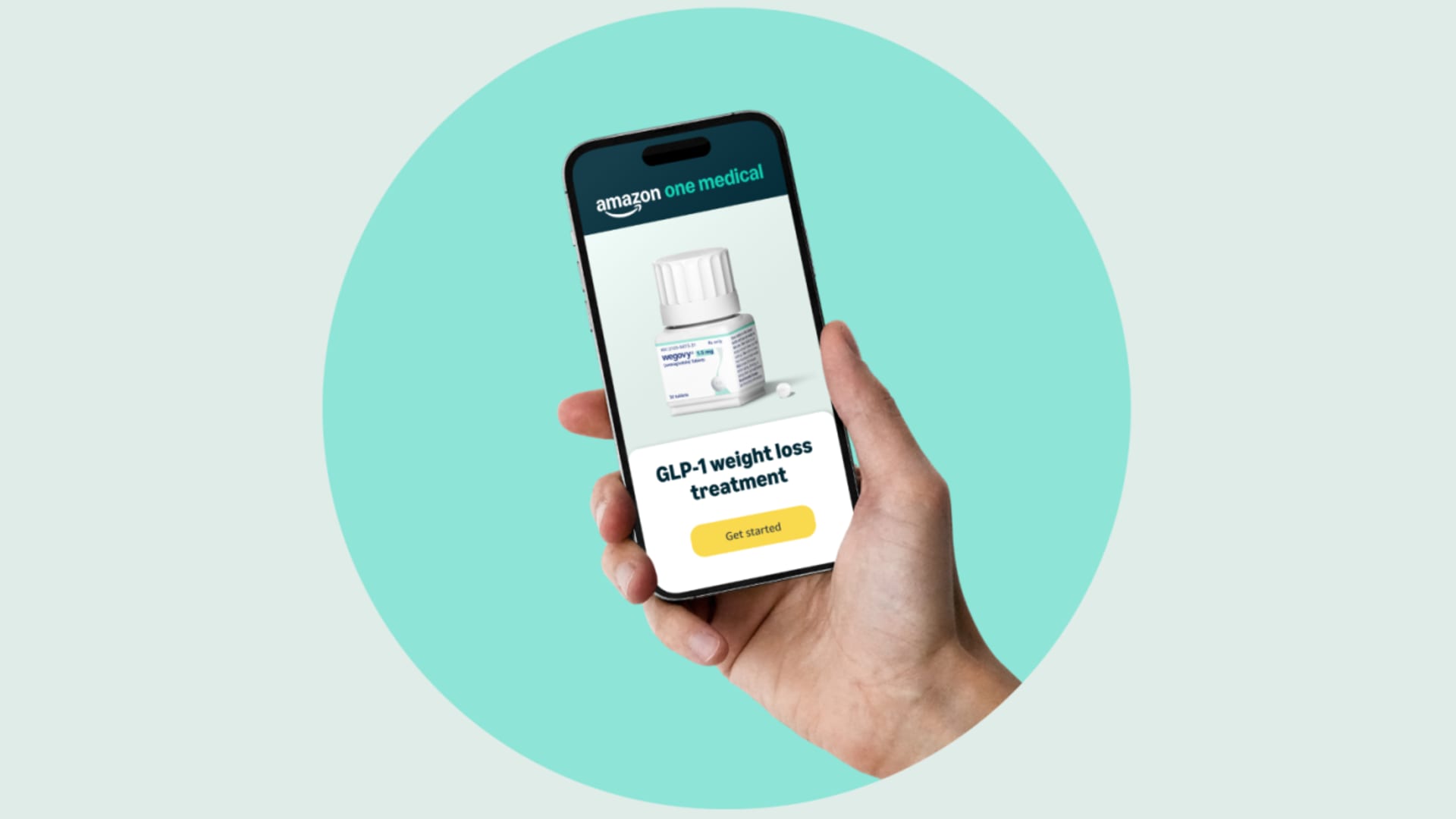
Amazon is pushing deeper into the booming weight loss market, unveiling Tuesday a new program that aims to simplify access to popular GLP-1 treatments.
The company said its primary care arm, Amazon One Medical, is launching a GLP-1 management program that integrates obesity treatment into routine care. The offering combines virtual and in-person visits, prescription management and pharmacy fulfillment, positioning weight management as a long-term chronic condition rather than a one-off prescription.
“Providing customers with fast, convenient medication access and clear, transparent pricing is integral to how Amazon Pharmacy is transforming the pharmacy experience,” said Tanvi Patel, vice president and general manager of Amazon Pharmacy, in the company’s press release.
“By expanding access to the latest GLP-1 medications with upfront, clear pricing, we’re making it easier for customers to get the treatments their health care providers prescribe and to stay on those medications because they are delivered reliably directly to patients,” Patel said.
Through Amazon Pharmacy, patients will be able to access medications including Novo Nordisk’s Wegovy as well as newer oral GLP-1 options. Insured pricing will start as low as $25 per month, Amazon said. For cash-paying patients, oral drugs start at $149 per month, it said.
Injectable treatments, including Wegovy shots and Eli Lilly’s Zepbound, begin at $299 per month when paid for without insurance, Amazon said.
Those prices are roughly in line with much of the current market.
But Amazon’s edge is in same-day delivery and convenience as it looks to leverage its logistics network and consumer reach into another corner of the medical system.
The company also said it will offer on-demand prescription renewals, starting at $29 for message consultation and $49 for video care. Amazon plans to expand its same-day drug delivery offering to 4,500 cities by the end of 2026.
Shares of several companies tied to the obesity drug boom moved lower following Amazon’s Tuesday announcement, including Hims & Hers Health, Viking Therapeutics, Amgen and Septerna.
President Donald Trump said Tuesday that the federal government could help struggling Spirit Airlines as the discount carrier faces the possibility of liquidation.
Trump told CNBC’s “Squawk Box”: “I don’t mind mergers. I think I’d love somebody to buy Spirit, as an example. You know, Spirit’s in trouble. … Maybe the federal government should help that one out.“
Spirit has sought government aid from the Trump administration in recent days, according to people familiar with the matter who were not authorized to speak to the media about the discussions. The request was first reported by aviation news publication The Air Current.
The airline has been struggling to find its footing after filing for bankruptcy protection in August for the second time in less than a year.
Spirit expected to emerge from bankruptcy in the middle of 2026, after selling more aircraft and narrowing its focus to several key cities. But the surge in fuel prices since the U.S. and Israel attacked Iran in February has become an added challenge. Fuel is airlines’ biggest expense after labor.
Jet fuel prices have nearly doubled this year since the attacks on Iran, with a gallon going for $3.87 on average on Monday in Los Angeles, Chicago, Houston and New York, according to Argus data published by Airlines for America. That’s up about 55% from before the war started on Feb. 28.
Transportation Secretary Sean Duffy later on Tuesday is set to meet with several discount carriers to discuss the impact of higher fuel on their businesses, and attendees are expected to ask for potential tax relief, people familiar with the matter said, requesting anonymity to speak about matters that had not yet been made public.
It wasn’t immediately clear if the administration would provide the Florida-based carrier with a lifeline. The U.S. government gave the airline industry billions of dollars during the Covid-19 pandemic, but that money went to many companies, not to one single carrier.
UnitedHealthcare sign is displayed at its office building in Minnetonka, Minnesota, U.S., Dec. 11, 2025.
Tim Evans | Reuters
UnitedHealth Group on Tuesday posted first-quarter earnings that topped estimates and hiked its 2026 profit outlook, as the company better manages high medical costs and streamlines its operations.
The nation’s largest private insurer said it expects 2026 adjusted earnings of more than $18.25 per share, up from a previous outlook of more than $17.75 per share. UnitedHealth is maintaining its full-year revenue guidance of greater than $439 billion, which the company said in January reflects “right-sizing across the enterprise.”
Here’s what the company reported for the first quarter compared with what Wall Street was expecting, based on a survey of analysts by LSEG:
Earnings per share: $7.23 adjusted vs. $6.57 expected
Revenue: $111.72 billion vs. $109.57 billion expected
UnitedHealth is banking on a new leadership team to carry out a turnaround plan. The strategy involves shrinking membership, selling the U.K. business of its Optum health-care unit, heavily investing in artificial intelligence, streamlining access to care and increasing transparency to restore profitability — along with the company’s reputation — after a series of hurdles over the last two years.
The company posted first-quarter net income of $6.28 billion, or $6.90 per share, compared with $6.29 billion, or $6.85 per share, in the same period a year ago. Excluding items like business divestitures, restructuring and the expected reduction of reserves for unprofitable contracts, UnitedHealth earned $7.23 per share.
Revenue climbed to $111.72 billion from $109.58 billion in the prior-year quarter. The company’s insurer, UnitedHealthcare, and Optum both topped analysts’ sales estimates for the quarter, according to StreetAccount.
Notably, UnitedHealth appears to have a better handle on higher medical costs – an issue that has dogged the broader insurance industry for more than two years. Insurers, particularly those that privately run Medicare plans, have been pinched by an influx of people seeking care they delayed post-pandemic and high-cost specialty drugs like GLP-1s, among other factors.
More CNBC health coverage
UnitedHealth’s medical benefit ratio — a measure of total medical expenses paid relative to premiums collected — came in at 83.9% for the first quarter. That’s an improvement from the 84.8% reported in the year-earlier period. A lower ratio typically indicates that the company collected more in premiums than it paid out in benefits, resulting in higher profitability.
Analysts were expecting a ratio of 85.5% for the quarter, according to StreetAccount.
In a release, UnitedHealth said the first-quarter ratio reflects its strong management of medical costs and the release of previously set-aside funds for unprofitable Optum contracts. But that improvement was partially offset by “consistently elevated” medical costs, the company noted.
“We are continuing to help simplify and modernize health care for the people and care providers we serve, bringing greater value, affordability, transparency and connectivity,” UnitedHealth CEO Stephen Hemsley said in the release.
The results come just weeks after the Trump administration finalized a 2027 payment rate increase to Medicare Advantage plans that was far bigger than initially proposed, in a boost to UnitedHealth and other health insurer stocks.
Eli Lilly will acquire biotech company Kelonia Therapeutics in a deal worth up to $7 billion, the company said Monday.
Lilly will pay $3.25 billion upfront, and the remaining payments are contingent upon clinical, regulatory and commercial milestones, it said. The transaction is expected to close in the second half of 2026.
Kelonia is developing technology to reprogram patients’ T-cells inside the body so those cells can attack cancer, called in vivo CAR-T. Current treatments require that work to be done outside the body, or ex vivo, a process that involves harvesting cells, engineering them in a lab and then reintroducing them. While logistically intensive, the procedure has been successful for blood cancers like multiple myeloma.
“It’s an intravenously delivered therapy, one time,” Jacob Van Naarden, president of Lilly oncology and head of corporate business development, said in an interview. “It targets your body’s T-cells, transforms them into attacking the cancer in the body, and requires no preconditioning at all.”
Johnson & Johnson’s CAR-T treatment for multiple myeloma, Carvykti, accounted for $1.89 billion in sales last year. Gilead recently acquired partner Arcellx and its rival to J&J’s drug, called anito-cel, for $7.8 billion.
Ex-vivo CAR-T involves waiting weeks for a patient’s blood cells to be engineered. It requires patients to receive chemotherapy to clear out old cells and make room for the engineered ones, a process known as preconditioning. The procedure has thus far been limited to mostly academic medical centers that have expertise in the process.
Lilly’s Van Naarden called Kelonia’s data “nothing short of remarkable.” He said he recognizes the competition but sees the convenience of a one-time infusion as an attractive option. Outside of multiple myeloma, Lilly plans to use Kelonia’s technology to treat other blood cancers, and possibly solid tumors.
“We’re going to be a player in hematology,” he said. “It’s nice to have another medicine to go to those doctors with, a medicine that can be used broadly, that isn’t relegated to academic medical centers who can do ex-vivo personalized cell therapy.”
Lilly has been on a deal-making spree this year, announcing several acquisitions like sleep disorder drug developer Centessa Pharmaceuticals and cell therapy company Orna Therapeutics. Van Naarden said the deals are all part of Lilly’s plan to grow beyond the GLP-1 drugs for obesity and diabetes that Lilly is best known for.
“Right now, Lilly is thought of as a weight loss company, and that’s a very large part of our business,” Van Naarden said. “But over time, the goal, very intentionally, is to use the financial strength that the incretin and the weight loss business is providing us to help diversify the business into the other therapeutic areas even more so.”
Some of Lilly’s recent deals have come with bigger price tags and later-stage experimental drugs than Lilly has typically bought up. The company has historically focused on small, early-stage deals for unproven science.
Van Naarden said the company has made a slight shift in strategy to keep doing the high-volume, early-stage deal-making as well as later-stage deals for experimental drugs with more clinical data.
“The challenge with the high-volume, early-stage deal-making is most of that will turn into nothing. We know that, and that’s OK. That’s the nature of those bets,” Van Naarden said. “There’s another side of the spectrum, where you can spend a little bit more money, you can still create value through the deals in the long term, but they have some de-risking. You’ve seen clinical data that shows these things work, and then you feel much better about having a tangible medicine at the end of the journey. Those things, of course, cost more.”
Even factoring in the deals Lilly has already done, when asked if there could be more ahead, Van Naarden said, “We don’t feel constrained.”