American Airlines CEO Robert Isom said a potential merger with rival United Airlines would hurt consumers and would be anticompetitive.
United CEO Scott Kirby floated the idea of a possible merger with American to a Trump administration official earlier this year, according to people familiar with the matter, eyeing a global expansion that could take on other international carriers.
“Merging the world’s two largest airline together, that was a nonstarter from the get-go,” Isom told CNBC’s Phil LeBeau on Thursday, shortly after the company reported first-quarter results. “At the end of the day there’s no way to view that as anything but anticompletive, bad for customers, ultimately bad for American Airlines, bad for our team.”
Isom declined to say if United made a formal inquiry to American.
“I’m not going to get into details,” he said. On Friday, American issued a statement saying that it is “not engaged with or interested in any discussions regarding a merger with United Airlines.”
President Donald Trump said he was against the idea earlier this week.
“I don’t like having them merge,” he told CNBC’s “Squawk Box” on Tuesday morning. He said he would, however, like someone to buy struggling discount carrier Spirit but he also suggested that the federal government could “help that one out.”
The Trump administration is currently in advanced talks for a rescue package for Spirit that could give the government a significant ownership stake in the discount carrier, people familiar with the matter told CNBC.
American has trailed competitors United — where Kirby previously served as president — and Delta Air Lines, and is trying to catch up through investments in premium products, like new planes and lounges.
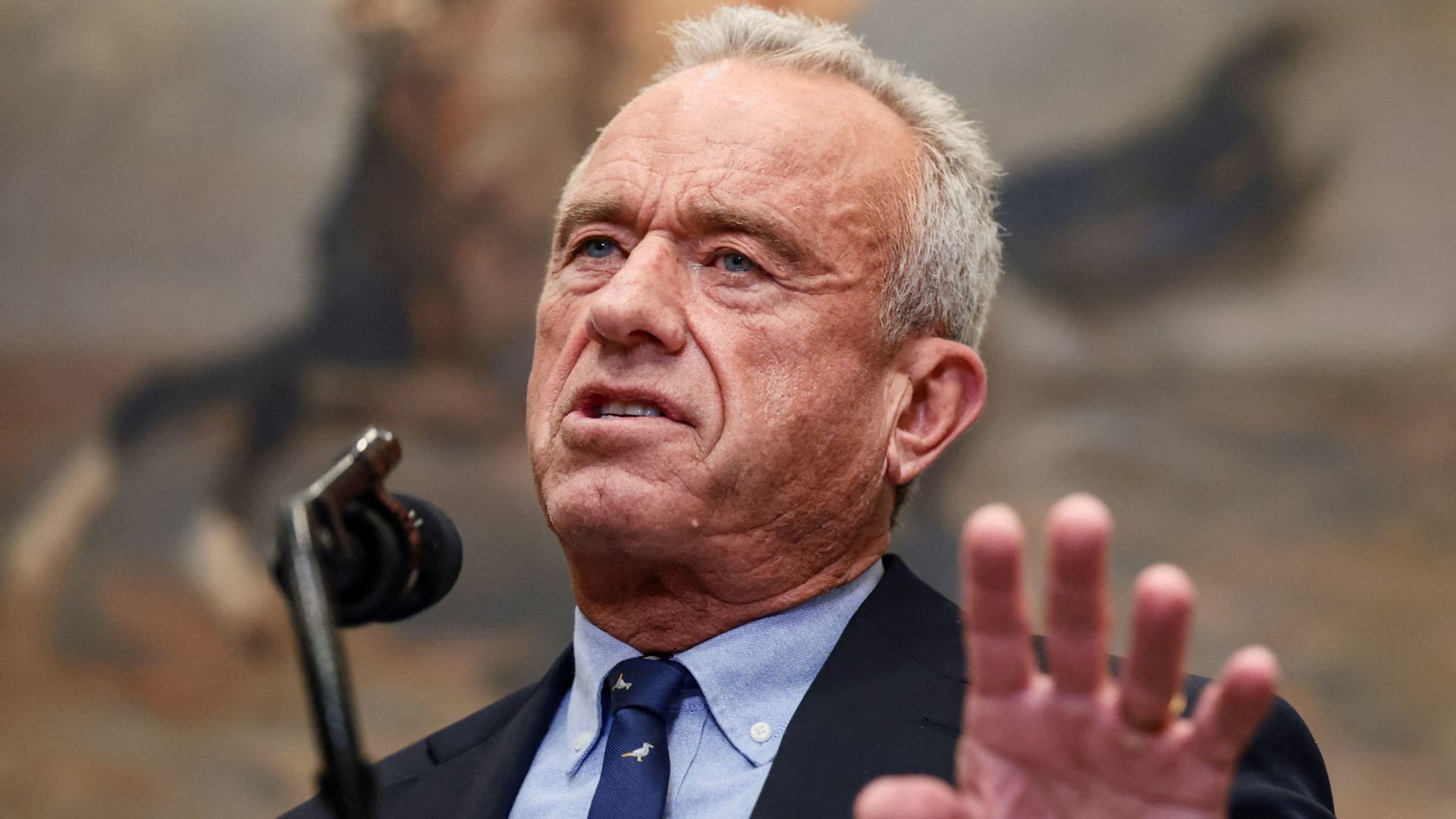
U.S. Secretary of Health and Human Services Robert F. Kennedy Jr. gestures as he speaks during an event at the Roosevelt Room of the White House in Washington, D.C., U.S., Dec. 19, 2025.
Evelyn Hockstein | Reuters
Health and Human Services Secretary Robert F. Kennedy Jr. on Wednesday said he would support a potential ban on junk food TV advertisements in the U.S. – an effort that would likely draw fierce backlash from major food manufacturers.
Speaking at a Senate Health, Education, Labor, and Pensions (HELP) Committee hearing, ranking member Sen. Bernie Sanders, I-Vt., said President Donald Trump’s nominee for surgeon general, Casey Means, had recently told the panel she supports banning junk food ads on TV.
When asked whether he agrees with a ban, Kennedy said, “I would support that.”
But Kennedy also appeared to imply that he would want the effort to be voluntary for food companies.
“The only hesitation I have was … we tried to do a smoking ban on TV, and the tobacco companies voluntarily came to the table, which was a good thing,” he said. “And I think the same arguments apply for junk food, [which is] probably even worse for Americans than smoking.”
Food, beverage and restaurant companies spend almost $14 billion per year on food ads in the U.S., with more than 80% promoting fast food, sugary drinks, candy, and unhealthy snacks, 2017 research from the University of Connecticut’s Rudd Center for Food Policy and Health shows. It is not clear how trends have changed in the years since.
The Trump administration is already exploring whether to limit food companies’ ability to market certain unhealthy foods to children, according to a “Make America Healthy Again” strategy document released by the White House in September.
More CNBC health coverage
HHS, the Federal Trade Commission and other agencies will consider establishing food industry guidelines on marketing to children, “including the evaluation of misleading claims and imagery,” the document said.
Two decades ago, the food industry launched The Children’s Food and Beverage Advertising Initiative as a commitment to only advertise products that met certain nutrition parameters to kids under the age of 13. But the initiative is voluntary, and children still view about 1,000 television commercials annually for unhealthy food and drinks, according to a study from the University of Illinois Chicago from 2024.
Kennedy’s testimony before the HELP committee is the last in a string of congressional hearings for him over the past two weeks around the proposed HHS budget for fiscal year 2027.
Means, during her Senate confirmation hearing in February, had stated she would “absolutely lend” her voice to support a ban on television advertisements for junk food aimed at children.
— CNBC’s Amelia Lucas contributed to this report.
Correction: The Children’s Food and Beverage Advertising Initiative applies to advertising to kids under the age of 13. A previous version of this story misstated the age.
WEEHAWKEN, NJ – OCTOBER 5: The sun rises behind buildings along Billionaire’s Row in New York City on October 5, 2025, as seen from Weehawken, New Jersey. (Photo by Gary Hershorn/Getty Images)
Gary Hershorn | Corbis News | Getty Images
A version of this article first appeared in CNBC’s Inside Wealth newsletter with Robert Frank, a weekly guide to the high-net-worth investor and consumer. Sign up to receive future editions, straight to your inbox.
New York’s proposed tax on second homes worth more than $5 million is likely to spark costly legal battles over how to value the city’s most expensive real estate, according to appraisers and attorneys.
The city’s so-called “pied-à-terre” tax, announced last week by New York Gov. Kathy Hochul and New York City Mayor Zohran Mamdani, would impose an annual surtax on non-primary residential real estate worth more than $5 million. The governor and mayor said the levy will raise about $500 million a year to help pay off the city’s budget deficit.
Officials haven’t released any details, including the tax rates or timing. Yet real estate appraisers and attorneys said the tax sets the stage for a massive legal fight over how to value high-end real estate in one of the most expensive markets in the world. Because New York’s antiquated property tax system dramatically undervalues co-ops and condos, experts said the city will have to come up with a new system for valuing high-end second homes.
Among the questions: Will it be up to the property owner, or the city, to set the taxable value? Will pied-à-terre owners have to hire appraisers to value their apartments every year? How will the city handle the barrage of legal challenges over values?
“The administrative costs haven’t been thought through,” said Jonathan Miller, CEO of Miller Samuel, the appraisal and research company. “This tax could give birth to a whole new cottage industry, where I get to do a lot of appraisals.”
The tax is expected to be part of the state’s annual budget and still has to be approved by the state legislature. It faces strong opposition from the real-estate industry and similar proposals have failed in the past. Citadel on Thursday rebuked Mamdani for singling out CEO Ken Griffin in his push for the tax.
Previous proposed pied-à-terre taxes included graduated rates based on value. A 2019 proposal, for example, imposed a 0.5% tax on the value of a pied-à-terre over $5 million, 1.5% over $10 million and 4% over $25 million.
Imposing a new surtax on the value of second homes will require two new forms of verification by the city: non-residency and value. Hochul estimates that about 13,000 non-primary homes in New York City valued at $5 million or more will be subject to the tax.
Miller said 4,146 Manhattan apartments sold for $5 million or more over the past five years. He estimates that about 70% of properties sold for $5 million-plus are second homes (or even third, fifth or 10th homes).
Proving nonprimary residence should be straightforward, based on tax rolls. If the owner of a $5 million-plus property is not a New York City tax resident, they will be subject to the levy. Those who purchase condos through LLCs, which are likely the vast majority of high-end buyers, may be difficult to identify. And since second-home owners who rent to long-term tenants may be exempt, some LLC owners might be able to rent to themselves and possibly avoid the tax, according to real estate experts.
The greater problem will be valuation. Real property taxes are the largest source of revenue for New York City, accounting for over 40% of total tax revenue in recent years, according to the city’s Independent Budget Office. Yet the city’s assessment system values properties far below their market value. Thanks to a complex legal history that values certain kinds of real estate based on their rental value, the assessed values for New York City apartments are often a fraction of their market value.
“The assessed values are absurdly low,” said Robert Pollack, senior partner at Marcus & Pollack LLP and an expert on New York real estate taxes. “They are not representative of market values.”
Griffin’s penthouse at 220 Central Park South, which Mamdani used as a backdrop to announce the tax, was purchased in 2019 for $238 million. Yet the city assesses it at $6.99 million and lists its market value at $15.5 million, according to Pollack. Few apartments in the building, among the most expensive in the city, would have to pay the pied-à-terre tax under the city’s current values.
The 2019 pied-à-terre proposal called for valuations to be based on recent sale prices. Yet brokers said that since every apartment is different, and markets change quickly, using recent sale prices can distort the values. To hit the revenue target of $500 million a year for the new tax, city officials will likely have to create a new system for determining market values, according to experts.
Miller said one option would be for the property owners to get regular appraisals, which would be create a flood of demand for appraisal companies like his.
“I would be thrilled if every apartment in New York City will have to get an annual appraisal,” he said.
Even with owner appraisals, however, there will be pressure to value apartments just below their nearest tax thresholds. There could wind up being a large number of apartments valued at $4.98 million, for example, to avoid the tax. Or someone with a $26 million apartment could get it appraised for $24.9 million to avoid the top 4% rate.
“You could have wind up having these big clusters of valuations around each tax bracket,” Miller said.
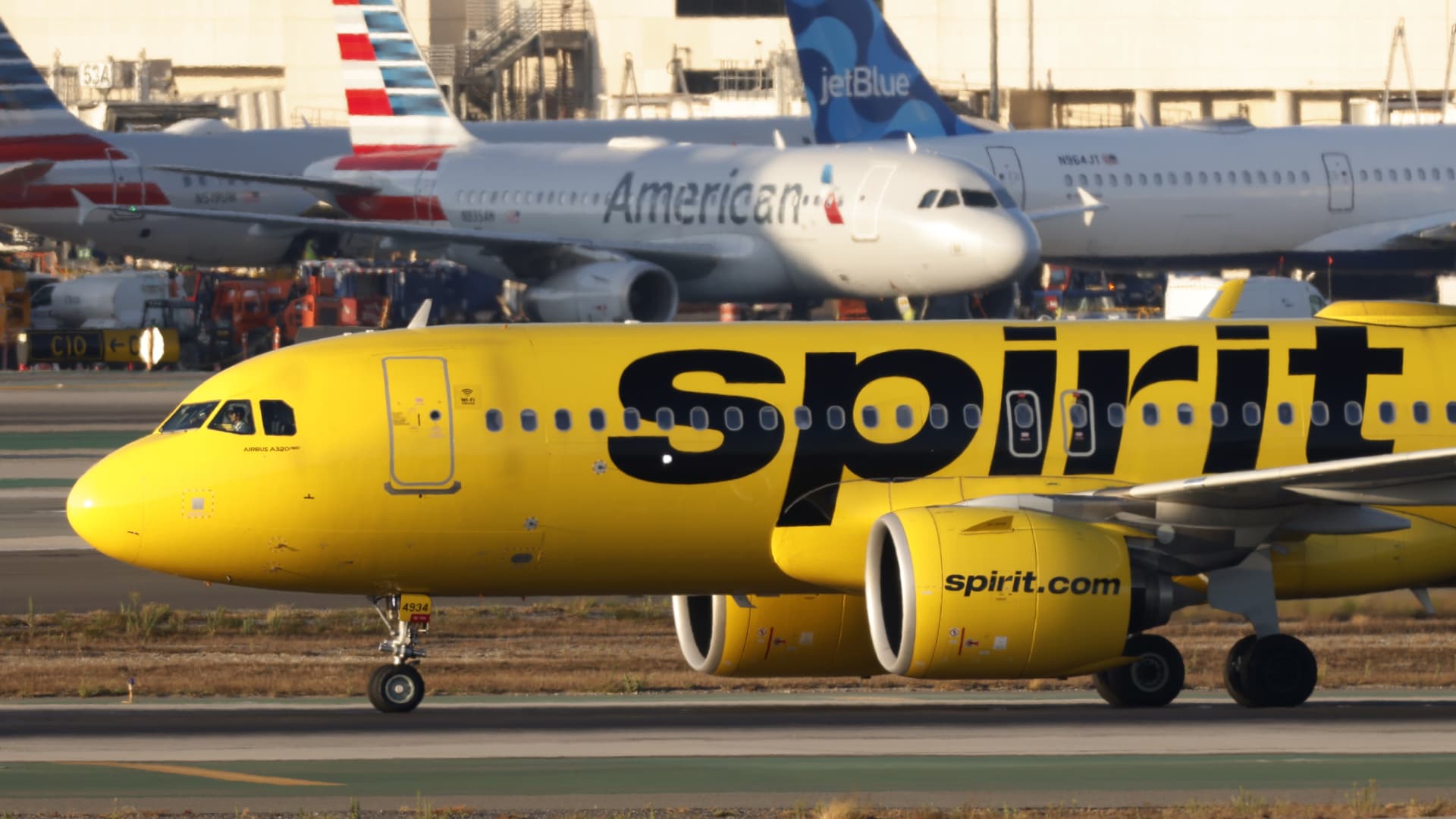
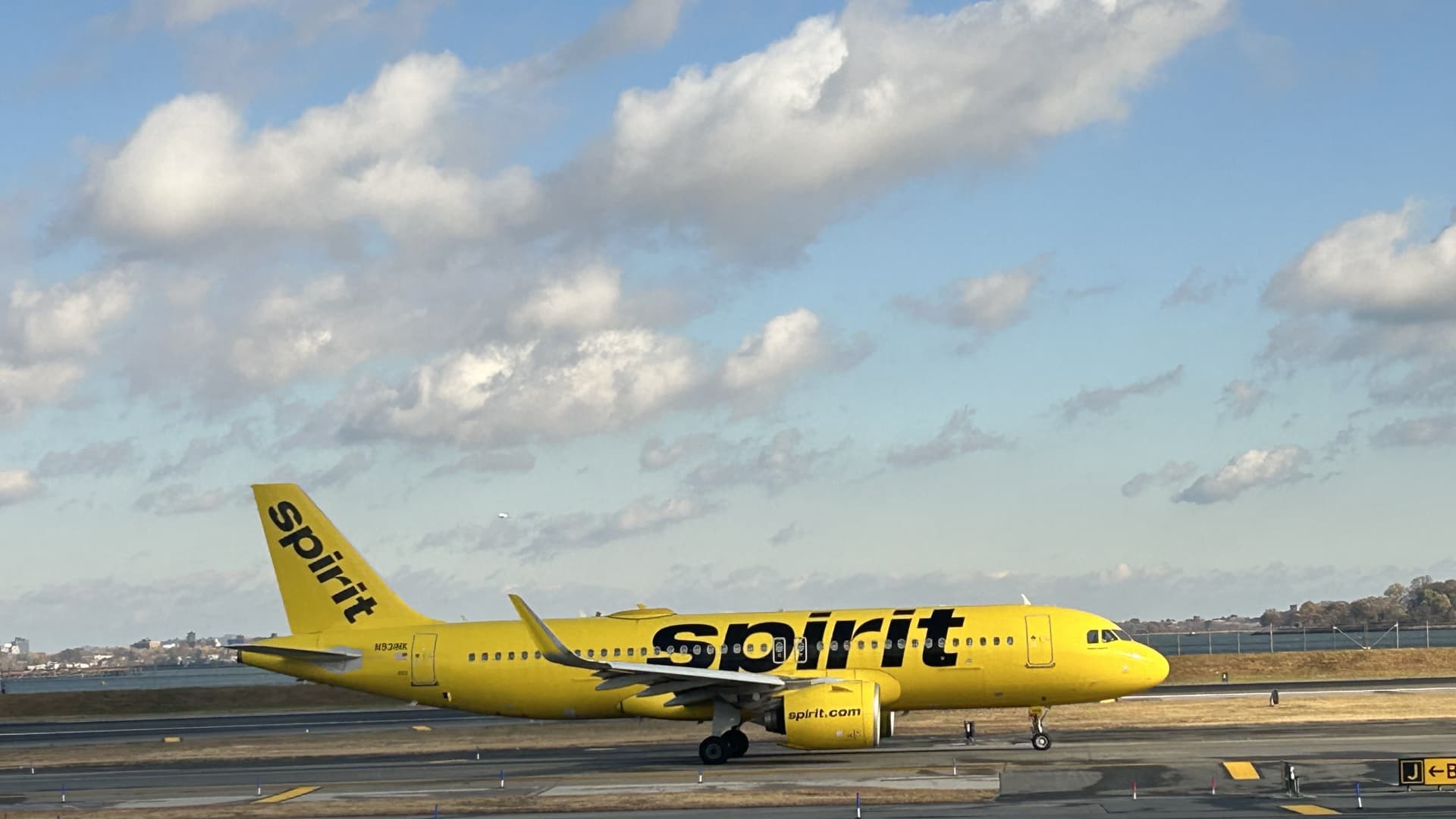
A Spirit Airlines Airbus A320 taxis at Los Angeles International Airport after arriving from Boston on Sept. 1, 2024.
Kevin Carter | Getty Images News | Getty Images
Spirit Airlines’ future is hanging in the balance over the next week as President Donald Trump said the government could bail out the airline, and the struggling discount carrier’s lenders are assessing a potential deal.
“We’re thinking about doing it, helping them out, meaning bailing them out, or buying it,” Trump told reporters in the Oval Office on Thursday.
“I’d love to be able to save those jobs. I’d love to be able to save an airline. I like having a lot of airlines, so it’s competitive,” Trump said.
The White House and major bondholders either didn’t immediately comment or declined to comment on the matter.
Trump told reporters that “when the price of oil goes down,” the government could “sell [Spirit] for a profit.”
Spirit expected to emerge from bankruptcy midyear, but that was before the U.S.-Israel attacks on Iran led to a surge in jet fuel costs. Spirit had a nearly $28.3 million operating loss in February, according to a court filing, which was before the fuel price spike hit carriers — and travelers’ wallets.
Spirit, the iconic budget carrier known for its bright yellow planes and bare-bones service that became a punchline for late-night comedians, has struggled to survive. The industry’s costs ballooned after Covid, as customer tastes changed for more upmarket offerings and international destinations.
Spirit has aggressively axed its costs, selling aircraft and shrinking its network. Last May, Spirit operated 19,575 flights, according to aviation data-firm Cirium. This May, it’s operating 9,353.
A planned acquisition of Spirit by JetBlue Airways was successfully challenged by the Biden administration, which the Trump administration said hurt Spirit.
“Spirit Airlines would be on a much firmer financial footing had the Biden administration not recklessly blocked the airline’s merger with JetBlue,” a White House spokesman said by email. “The Trump administration continues to monitor the situation and overall health of the U.S. aviation industry that millions of Americans rely on every day for essential travel and their livelihoods.”
Will others follow suit?
Some industry members and analysts have suggested other airlines, especially low-cost carriers, could seek similar assistance from the government.
Low-cost airlines met with Transportation Secretary Sean Duffy earlier this week to discuss the current surge in fuel costs, people familiar with the matter told CNBC.
The Trump administration has taken stakes in companies it views as a national security interest, while companies from automakers to banks to the airline industry as a whole have received bailouts in the past, but it’s highly unusual that the government would rescue a single company.
Delta Air Lines and United Airlines account for most of the airline industry’s profit in the U.S., spending years and billions of dollars to successfully court a less price sensitive clientele that is willing to pay up for roomier seats and other perks, as well as broad international networks. Many other carriers, including Spirit, have tried to catch up in recent years.
“We wonder if a potential Spirit deal could become a facility of last resort that other challenged carriers could seek in the future,” Barclays analyst Brandon Brandon Oglenski said in a note Thursday.
Read more about Spirit Airlines’ recent challenges
Possible deal
The terms of a tentative deal are for a $500 million loan that could eventually give the government a 90% stake in the Florida-based carrier, people familiar with the matter told CNBC. The potential plan would also put the government ahead of other investors, the people said, requesting anonymity to talk about the terms.
A U.S. bankruptcy court hearing to discuss the possible deal could be set for as early as Monday, according to comments in court on Thursday.
Mike Stamer, an Akin attorney who represents bondholders in the bankruptcy case, confirmed in court Thursday that “we did, in fact, receive a copy of the term sheet” for the potential deal with a loan from the U.S. government, a sign of how advanced the talks are.
The deal would also allow the U.S. government to select a board member, a person familiar with the potential terms told CNBC.
Spirit’s labor unions are also pushing for a deal.
“Any assertion that Spirit should just liquidate is only going to harm workers, passengers, and further strain our economy,” the Association of Flight Attendants-CWA said Thursday. “It’s unnecessary and mean spirited — when just a little help can stave off massive harm.”
Spirit’s lawyer, Marshall Huebner of Davis Polk, said in bankruptcy court Thursday that the loan would help Spirit get to “standalone fighting shape” but could also set it up for a potential merger.
Acquisition talks have failed before, however, most recently, with Frontier Airlines, which originally planned to merge with Spirit until a surprise all-cash offer by JetBlue.
Spirit’s challenges might also not go away, said Conor Cunningham, Melius Research airline analyst.
“How deep does he want to go?” he said of Trump and the possible rescue deal. “$500 million is probably not enough.”
Procter & Gamble on Friday reported quarterly earnings and revenue that topped analysts’ expectations, as volume for its products grew for the first time in a year.
But looking ahead, executives warned about uncertainty caused by the war with Iran, like the effects on the company’s input costs and consumer spending. P&G will not provide a forecast for fiscal 2027 until its next earnings report in July.
“I’m very happy that I don’t have to give guidance today [for fiscal 2027],” CFO Andre Schulten said on the company’s earnings conference call Friday. “Because what do we know what the world looks like three months from now, with what we know today?”
Despite that haziness, shares of the company rose more than 3% in morning trading.
Here’s what the company reported compared with what Wall Street was expecting, based on a survey of analysts by LSEG:
Earnings per share: $1.59 adjusted vs. $1.56 expected
Revenue: $21.24 billion vs. $20.5 billion expected
P&G reported fiscal third-quarter net income attributable to the company of $3.93 billion, or $1.63 per share, up from $3.78 billion, or $1.54 per share, a year earlier. Excluding restructuring costs and other items, the company earned $1.59 per share.
Net salesrose 7% to $21.24 billion. Organic sales, which strip out acquisitions, divestitures and currency, increased 3%.
P&G’s volume increased 2%, marking the first time in a year that it reported growing volume across the company. The metric excludes pricing, which makes it a more accurate reflection of demand than sales. Like many consumer companies, P&G has seen demand for its products shrink as shoppers try to spend less and stretch their laundry detergent and shampoo further.
“I would say, right now, the consumer in the U.S. is stable,” Schulten said on a call with media. “We see the bifurcation of the consumer segments continuing.”
Despite inflation fears, consumers haven’t started pantry loading toilet paper or paper towels yet, P&G said.
P&G’s beauty division, which includes Olay, Head & Shoulders and Pantene, was the star of the quarter, with 5% volume growth. P&G said it saw volume increases across its personal care, skin care and hair care categories.
The baby, feminine and family care segment saw volume increase 3%. The company saw higher demand for its diapers and family care products, which includes Bounty paper towels and Charmin toilet paper.
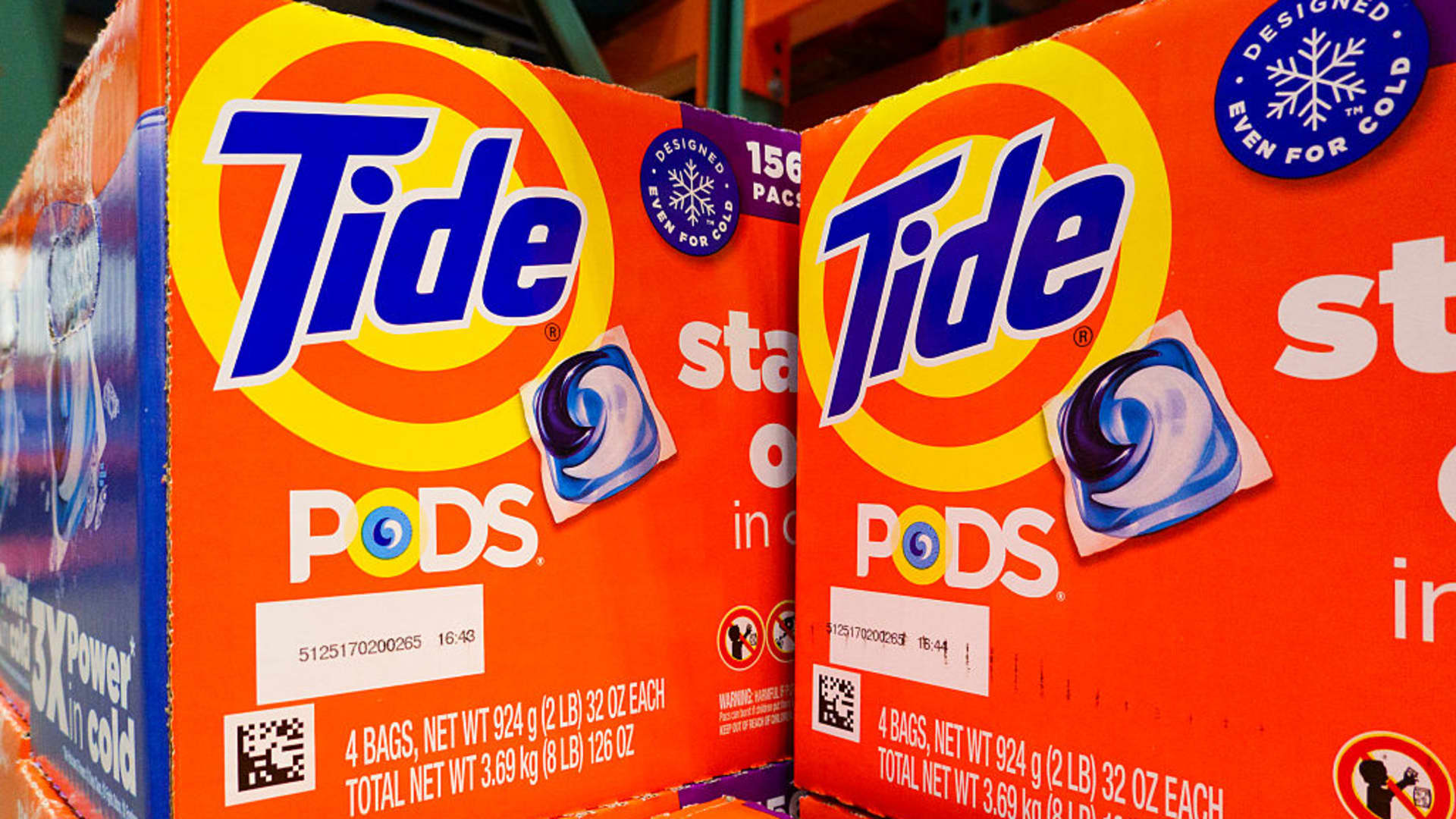
P&G’s fabric and home care division reported that volume rose 2% in the quarter, fueled by higher North American demand for its Tide detergent.
Grooming and health care were the two laggards of the portfolio. The grooming segment, which includes Gillette and Venus products, saw volume fall 2%. Health care, which houses Oral-B and Vicks, also reported that volume declined 2%.
The company reiterated its full-year forecast of sales growth between 1% and 5% and net earnings per share growth in the range of 1% to 6%.
“However, where we will land within those ranges has become more uncertain given the geopolitical dynamics in the Middle East,” Schulten said on the earnings call.
In the fiscal fourth quarter, P&G is projecting a $150 million hit from increased costs, largely driven by increased transportation costs stemming from higher fuel prices, Schulten said.
However, Schulten did say that if oil prices stay high, it would weigh on P&G’s profits. He told analysts that if the price of Brent crude oil stays around $100 per barrel, the company is projecting an annual after-tax headwind of $1 billion.
That increase in costs could lead to higher prices for consumers. However, P&G said it would likely avoid a straight price hike across its portfolio and instead focus those increases on premium products, mitigating any volume declines by leaning into the current K-shaped economy in which higher-spending consumers are doing better.
Plus, higher fuel prices would likely mean more budget-conscious shoppers.
“It’s unclear how much higher gasoline and energy costs will costs will impact near-term consumer spending in our categories,” Schulten said.
Correction: P&G reported adjusted EPS of $1.59. An earlier version of this story misstated the figure.
FILE PHOTO: Psilocybin or “magic mushrooms” are seen in an undated photo provided by the U.S. Drug Enforcement Agency (DEA) in Washington, U.S. May 7, 2019.
DEA | Reuters
The U.S. Food and Drug Administration on Friday announced a series of measures aimed at accelerating the development of psychedelic treatments for serious mental illness.
That comes after President Donald Trump signed an executive order on Saturday directing federal health agencies to expand access to emerging therapies.
The move marks a significant shift toward supporting psychedelic-based medicines for conditions such as treatment-resistant depression, post-traumatic stress disorder and other substance use disorders, the FDA said.
“Under President Trump’s leadership, we are accelerating the research, approval and responsible access to promising mental health treatments,” Robert F. Kennedy Jr., secretary of the U.S. Department of Health and Human Services, said in the release. “The FDA will prioritize therapies with Breakthrough Therapy designation, where early evidence shows meaningful improvement.”
As part of the announcement, the FDA said it would issue national priority vouchers to companies studying psilocybin for depression and methylone for PTSD.
The agency also cleared an early-stage clinical trial for noribogaine hydrochloride, a derivative of ibogaine, as a potential treatment for alcohol use disorder. This is the first time a compound like it has been authorized for study in the U.S.
“These medications have the potential to address the nation’s mental health crisis,” FDA Commissioner Marty Makary said in the announcement. “It is critical that their development is grounded in sound science and rigorous clinical evidence.”
The FDA said allowing these studies to proceed does not mean the drugs are approved or proven safe and effective. Officials said data with be closely monitored as research advances.
A customer inside a Starbucks coffee shop in Hercules, California, US, on Thursday, Sept. 25, 2025.
David Paul Morris | Bloomberg | Getty Images
Starbucks is seeing early signs that changes to its loyalty program are paying off as value-minded consumers take advantage of its rewards, CNBC has learned.
Last month, the coffee chain brought back tiers to its North American Rewards program, added “free Mod Mondays” for drink customization, offered double points for using a reusable cup and extended the amount of time for members to redeem their birthday award. The revamp also cut the number of stars — or points — earned per dollar spent when paying with a preloaded Starbucks gift card.
Starbucks relies on Rewards to get customers to visit frequently and spend more money on their drink orders. In fiscal 2025, the transactions linked to the loyalty program accounted for 60% of the company’s revenue. Those loyal customers are all-important to the chain’s turnaround; while its troubles began when occasional customers stopped visiting, its traffic suffered as it lost active Rewards members, too.
Now, as members adjust to the Rewards revamp, Starbucks is observing early signals that customers are leaning in to benefit from the loyalty program’s new deals.
For example, the program’s new 60-star redemption option has become its most popular. More than a quarter of all redemptions now opt for the $2 discount off an order.
The coffee chain’s first “free Mod Monday” more than doubled the number of point redemptions compared with its Starbucks Monday promotion earlier in the year. Vanilla sweet cream cold foam was the preferred modification for members in the lower green and gold tiers, while those in the reserve tier were more likely to add an extra espresso shot.
And while changing the point valuation may have disappointed some customers, members have been capitalizing on easy ways to earn more stars, like adding more money to their accounts for bonus points.
Hundreds of thousands of loyalty program members are using their personal cups to earn double stars on their orders. That represents a double-digit increase since the changes went into effect.
Starbucks will likely share more details about the loyalty program and the company’s broader turnaround efforts on its fiscal second-quarter earnings conference call, which is scheduled for after the bell on Tuesday.
U.S. President Donald Trump (C) speaks during an event on advancing health care affordability in the Oval Office of the White House on April 23, 2026 in Washington, DC.
Alex Wong | Getty Images
Regeneron agreed to lower U.S. drug prices for some Americans as part of a deal with President Donald Trump, the White House said on Thursday.
The biotech company will also offer the first hearing-loss gene therapy for free to eligible U.S. patients following regulatory approval of the product earlier Thursday.
Regeneron is the latest in a string of major drugmakers to make pricing concessions for new and existing medicines under agreements with Trump. Those deals are part of his “most favored nation” effort to tie U.S. drug prices to the lowest ones in other developed nations.
The agreements also exempt the companies from tariffs for three years, including Trump’s planned up to 100% levies on some pharmaceutical products. The Trump administration has so far inked 17 deals, but is negotiating more with other biotech and pharma companies, said CMS deputy administrator Chris Klomp during a White House event on Thursday.
Regeneron’s deal comes just hours after the Food and Drug Administration approved the company’s gene therapy, Otarmeni, which restored hearing in a small number of deaf children. The treatment received an expedited approval under the FDA’s so-called National Priority Voucher program.
The drug targets an ultra-rare genetic condition caused by a mutation that prevents the body from making a protein required for hearing. It’s a significant breakthrough for a subset of patients who have long depended on cochlear implants.
In a March note, Piper Sandler analysts estimated that the gene therapy will rake in peak sales of $130 million.
— CNBC’s Angelica Peebles contributed to this report.
The Trump administration moved Thursday to reclassify cannabis under federal law, which could significantly expand scientific research into the drug’s medical uses.
The change would not legalize the drug at the federal level, but shift cannabis from its current status as a Schedule I substance to Schedule III under the U.S. Drug Enforcement Administration’s controlled substances framework.
In a release, the Department of Justice said it will immediately move FDA-approved products containing marijuana along with items regulated by a state medical marijuana license to Schedule III. It also announced an expedited hearing in June to consider the formal reclassification of cannabis to Schedule I at the federal level.
“Together, these actions provide immediate and long-term clarity to researchers, patients, and providers alike while still maintaining strict federal controls against illicit drug trafficking,” the DOJ said.
Drugs in Schedule I, which include heroin and LSD, are considered to have no accepted medical use and a high potential for abuse. Schedule III drugs, like Tylenol with codeine and testosterone, by contrast are recognized as having medical applications and are subject to fewer regulatory restrictions.
Reclassification lowers longstanding barriers that have made it difficult for researchers to study cannabis in clinical settings.
The financial implications are significant too. It would exempt cannabis companies from IRS Code Section 280E, allowing them to deduct standard expenses like rent and payroll for the first time, and opens the door for banking access that was previously barred.
Investors showed some skepticism over the move as cannabis stocks pulled back from early gains and turned negative. Critics are concerned the policy could create a two-track system for drug development that may allow developers to bypass the FDA process entirely in favor of state level pathways.
Still, the move marks one of the most significant federal shifts on marijuana policy in decades, signaling a growing willingness in Washington to reconsider how the drug is categorized and studied in the U.S.
The move could benefit companies like Tilray, which is known for recreational cannabis products but is expanding its medical segment. Tilray’s medical business has served hundreds of thousands of patients across more than 20 countries, according to the company.
“We have the research to walk into the FDA. We have the research to walk into the DEA and show them what we’ve been doing,” said Tilray CEO Irwin Simon.
Simon told CNBC he expects to hear from pharmaceutical companies interested in U.S. partnerships, similar to the wave of outreach from alcohol companies following the surge in demand for hemp-derived beverages.
Tilray currently partners with Novartis in Canada.
Scientists have faced strict approval processes, limited supply access and heavy compliance requirements when attempting to examine cannabis for therapeutic use, including chronic pain, PTSD and neurological disorders. Those federal barriers remained in place even as roughly half of states have legalized marijuana for recreational use, and even more have approved it for medical use.
“While operators would still face a fragmented state-by-state system, the improved cash flow from rescheduling would support reinvestment, strengthen stability, and help build momentum for more consistent standards over time,” said Wendy Bronfein, co-founder and chief brand officer at Curio Wellness, a Maryland-based cannabis company.
The action follows an executive order issued last year directing federal agencies to begin the reclassification process, which typically unfolds over several years and involves scientific review, interagency coordination and rulemaking procedures.
“This rescheduling is not the finish line — it is the final stage of a race we have been running for decades,” said Shawn Hauser, partner at cannabis law firm Vicente LLP.
In 2024, the Biden administration started that process and put reclassification before the public for a 60-day comment period. After that window, hearings to review potential hurdles stalled in the handoff between administrations.
The move also comes just days after President Donald Trump signed an executive order on psychedelics to accelerate research, clinical trials and “Right to Try” access for drugs like psilocybin, MDMA and ibogaine.
Spirit Airlines’ accessible cash to keep operating won’t last long and a government rescue package is on the table, a lawyer for the struggling budget carrier said at a hearing Thursday.
President Donald Trump later Thursday at the White House told reporters: “We’re thinking about doing it, helping them out, meaning bailing them out, or buying it.”
Trump told reporters that “when the price of oil goes down,” the government could “sell it for a profit.”
“I’d love to be able to save those jobs. I’d love to be able to save an airline. I like having a lot of airlines, so it’s competitive,” he said.
Marshall Huebner of Davis Polk, the airline’s lawyer, did not outline the proposed rescue plan at the Thursday bankruptcy hearing, but people familiar with the matter told CNBC this week that on the table is a $500 million loan that could give the government a potential stake of 90% of the Florida-based airline. They requested anonymity because they were not authorized to discuss the talks.
The deal would also allow the U.S. government to select a board member, a person familiar with the potential terms told CNBC.
The White House and Spirit didn’t respond to a request for comment about the board seat.
“We are grateful for President Trump’s support and look forward to continuing to work with him and his Administration on a solution that protects thousands of jobs, preserves and enhances competition and helps ensure Americans continue to have access to affordable fares,” Spirit’s CEO Dave Davis said in an emailed statement
The company needs access to existing cash or new funding in the next few days to continue operations, Huebner said Thursday.
“The cash actually available to Spirit to fund ongoing operations is not going to last for very much longer,” he said. “So either new financing, either or both of new financing or access to almost $240 million of restricted cash, is absolutely essential. Round about, no later than the end of next week.”
The airline has been at risk of shutting down. The potential deal has been shared with various creditor groups, according to the people familiar with the matter.
Spirit had expected to emerge from bankruptcy midyear, but a surge in fuel prices since the U.S. and Israel attacked Iran has complicated those plans, the company has said.
The iconic discount airline has faced troubles for years, including an engine recall, an acquisition by JetBlue Airways that a federal judge blocked two years ago, shifting customer preferences for more upmarket offerings and a jump in costs, even before fuel prices surged this year.
“Spirit now definitively stands at the crossroads,” Huebner said, with “several hundred million dollars” of the company’s cash “locked away and inaccessible” under bankruptcy loan terms while other funds are in separate accounts for payroll and tax payments.
Huebner said the additional financing would “create an appropriately capitalized, fierce competitor in the airline space” as a stand-alone carrier, “but also potentially as the strongest player in what so many believe must happen next, consolidation in the value carrier space,” hinting at a potential merger.