Blog

  • Why foreign automakers dominate the sedan market

    Why foreign automakers dominate the sedan market

    Automakers say 'affordable' sedans are luring buyers

    The biggest American automakers all but abandoned sedans and coupes in recent years as they rushed to compete in the pickup truck and SUV markets.

    Many domestic buyers also shifted toward those bigger vehicles. Still, there’s a market for cars, as Japanese, Korean and German brands sell hundreds of thousands of smaller passenger vehicles in the U.S. annually.

    The resilience of the sedan market and concerns that high prices are driving away customers have led some American automakers to reconsider their lineups.

    With the average price for a vehicle hovering around $50,000, a compact sedan that starts at about $22,000 is an attractive entry point for buyers, industry experts said. 

    “It’s all about affordability,” said Orth Hedrick, vice president of product planning for Kia USA. Kia’s K4 compact sedan and its predecessor, the Kia Forte, together were the brand’s second-bestselling vehicle last year, accounting for 140,514 units sold. “It’s just been doing phenomenally well for us. Way over plan, and a lot of it is affordability.”

    Similarly, the RAV4 crossover SUV is Toyota’s bestseller, reaching 479,288 units sold in 2025. The automaker also moved 316,000 Camrys and nearly 250,000 Corollas last year, or 65% and 51% of the SUV’s sales, respectively.

    “There is opportunity for sedans to offer an alternative to the sea of SUVs, and they are typically less expensive than an SUV in the same size class,” said Stephanie Brinley, associate director, AutoIntelligence, for S&P Global Mobility. “Sedans do offer more opportunity for compelling design and they are typically more fuel efficient than utility vehicles.”

    Industry watchers, dealers and automaker executives have publicly expressed concerns that high vehicle prices and rising fuel costs could cause buyers to pull back or increasingly turn to used cars.

    Indeed, Volkswagen said it has kept its Jetta sedan in its lineup for 45 years in the U.S. as an affordable entry point. The brand showed off a newly refreshed version of its full-size Atlas SUV at the New York International Auto Show in early April. But it also had its compact car, Jetta — and two higher-trim versions of the Golf hatchback — on the show floor as well.

    “Jetta is one of our most important nameplates,” said Petar Danilovic, senior vice president of North American product marketing for Volkswagen. “Every car has a different role in the portfolio. And the Jetta, for example, is of course important to also attract entry customers. So hopefully to be able to grow them in the brand from a Jetta maybe to a Tiguan to an Atlas. So this is also the logic behind it.”

    “Affordable options are essential for bringing newer and younger buyers into a brand,” said Rebecca Lindland, a managing director at Allison Worldwide. “Many Gen Z and younger Millennials simply can’t, or don’t want to, stretch to the typical SUV or crossover payment.”

    SUVs have been growing in popularity for decades and shot up in popularity in the 2010s, while sales of smaller cars shrank. Sedans were almost 40% of the market in 2015, according to Edmunds. As of 2026, they were only 15%, according to the auto site. 

    The SUV offered a lot of those buyers a change from the cars they were familiar with. Now, their rarity might be giving sedans the same effect.  

    “A lot of it is this new generation that grew up in the back seat of an SUV,” Hedrick said. “They don’t want to drive an SUV. They like something different. So to them, a sedan is new. For the rest of us who grew up with sedans all the time, it’s old hat. But for new buyers, they like the look. They like the idea of doing something different.”

    American automakers

    Despite their pullback, American automakers still make a few sedans and coupes. 

    General Motors’ luxury brand Cadillac is discontinuing the CT4 sedan in 2026. The larger CT5 will leave the market temporarily, but will return, the company confirmed in an email.

    GM also makes the high-end Corvette sports coupe. 

    A report from Automotive News, citing an anonymous source, said GM is planning to build a Buick sedan in a Michigan plant. GM spokesperson Kevin Kelly told CNBC in an email the company does not comment on product plans.

    “We don’t see sedans recovering a decade-old heyday,” Brinley said, “but getting back into the segment may be a good move for GM and others considering the opportunity.” 

    Ford’s only traditional silhouette is the Ford Mustang, which many insiders — including CEO Jim Farley — have called the “soul of the company,” despite the fact that the F-150 pickup truck is its biggest seller by far and the Mustang is outsold by most of Ford’s SUVs. Still, it’s the best-selling coupe in the U.S. as of April 2026, according to Edmunds.

    Farley said at the Detroit Auto Show that the company would “never say never” to bringing back more traditional passenger cars.

    Stellantis‘ Dodge currently makes the Charger sedan in two- and four-door configurations. 

    The best-selling sedan by an American automaker is the Tesla Model 3, according to Edmunds. It’s the only sedan Tesla makes now that it has discontinued the full-sized Model S.

    Electric vehicle maker Lucid Motors also makes the high-end Lucid Air sedan, but is planning a midsize SUV for its next product.

    Others say they aren’t giving up on the segment.

    “Obviously, the industry has moved towards SUVs and light trucks away from passenger cars,” Dave Christ, group vice president and general manager at Toyota Motor North America, said. “But we still believe in passenger cars, so we’re going to continue to invest in passenger cars. Even if the industry is 20% passenger cars, that’s over 3 million cars a year.”


    Source link

  • Tax planning: How the wealthy aim to cut their 2026 IRS bills

    Tax planning: How the wealthy aim to cut their 2026 IRS bills

    The U.S. Internal Revenue Service (IRS) building stands after it was reported the IRS will lay off about 6,700 employees, a restructuring that could strain the tax-collecting agency’s resources during the critical tax-filing season, in Washington, D.C., Feb. 20, 2025. 

    Kent Nishimura | Reuters

    A version of this article first appeared in CNBC’s Inside Wealth newsletter with Robert Frank, a weekly guide to the high-net-worth investor and consumer. Sign up to receive future editions, straight to your inbox.

    For seven years, wealthy Americans faced a looming deadline to take advantage of tax provisions that were set to expire at the end of 2025. While the One Big Beautiful Bill Act alleviated much of the uncertainty by making most of the cuts permanent, lawyers and tax accountants say the ever-shifting tax code requires constant planning.

    With this year’s Tax Day now behind us, here are five of the most important planning strategies wealthy investors and high earners are thinking about for next year and beyond.

    1. Long-short tax-loss harvesting

    Last year’s tax bill permanently raised the estate tax exemption to $15 million per person, up from $13.99 million. (It was initially set to be cut in half at the end of 2025.)

    The higher threshold has prompted a shift in focus from minimizing federal estate taxes to lowering taxes on income and capital gains. Minimizing capital gains has become crucial after several years of strong market gains, according to Mitchell Drossman, head of national wealth strategies in Bank of America’s chief investment office. The S&P 500 has surged more than 75% since the beginning of 2023.

    “The biggest tax story to me is a capital gains and investing story,” said Drossman. “You have lots of clients who are sitting on significant gains.”

    Investors are increasingly turning to long-short tax-loss harvesting, an aggressive form of a popular strategy, in order to minimize capital gains, Drossman said. With traditional tax-loss harvesting, investors sell losing assets to offset realized gains on others. Long-short tax strategies, on the other hand, borrow against the portfolio to buy short positions expected to fall and maintain long positions expected to thrive.

    “If there’s natural volatility in the markets, you have, now, a greater amount of an asset base to choose from in terms of harvesting losses,” he said. “But when you look at your overall portfolio, you’re still kind of neutral.”

    2. Bonus depreciation

    The 2025 tax bill renewed bonus depreciation, allowing businesses to deduct the full cost of qualifying assets like machinery, computers or vehicles the first year they are used.

    Adam Ludman, head of tax strategy at J.P. Morgan Private Bank, said many clients with operating businesses are investing with bonus depreciation in mind, such as buying private jets. 

    Real estate developers and investors are trying to get the most bang for their buck by assessing which parts of their properties can be depreciated faster, according to Ludman. For instance, while a commercial building can take 39 years to depreciate, a parking lot can be depreciated over 15 years, allowing owners to recover costs faster.

    Get Inside Wealth directly to your inbox

    3. Changing domiciles

    A wave of blue states are considering new taxes on top earners and high-net-worth individuals in order to cover cuts in federal aid. California’s one-time billionaire tax proposal may end up on the November ballot, while Maine and Washington have recently passed millionaire taxes.

    Jane Ditelberg, chief tax strategist for Northern Trust Wealth Management, said a growing number of clients are asking how to change their tax status as these proposals gain traction. Depending on their state, residents can avoid state-level taxes by creating trusts in states with favorable trust income laws like Delaware.

    The most straightforward way to avoid local taxes is to change your domicile, which is easier said than done, according to Jere Doyle of BNY Wealth. The senior estate planning strategist based in Massachusetts, which imposes a millionaire tax, said he has had clients move to New Hampshire and establish residency before selling their businesses.

    But clients are often loath to take the steps necessary to establish intent not to return, Doyle said. For instance, moving to Florida may not be enough to avoid Massachusetts taxes if you refuse to sell your Martha’s Vineyard home, he said. 

    “Everyone thinks that if they spend 183 days in another state, you’re domiciled in that state. That’s not necessarily true. Each state’s a little bit different,” he said. “You [have] got to change where you vote, where your car is registered, even where your doctors are, what clubs you belong to, golf clubs, country clubs, things like that.”

    4. Bunching charitable gifts

    One notable drawback of last year’s tax bill was a reduction in the tax benefits of charitable giving for top earners. 

    The bill limits top-earning donors in two ways. First, starting this year, donors who itemize will only be able to deduct charitable contributions in excess of 0.5% of their adjusted gross income, or AGI. 

    Second, taxpayers in the 37% tax bracket will have their itemized deductions reduced by 2/37th of the value. This ceiling reduces the effective tax benefit from 37% to 35%.

    Ditelberg said many clients accelerated their charitable giving last year before these new rules took effect. She said she anticipates clients will continue to “bunch” their donations, by giving a larger sum in one year rather than spreading it over multiple years, so they only trigger the 0.5% haircut once, either through their foundations or donor-advised funds. 

    5. Opportunity zones

    The tax bill also offered an incentive for business owners and real estate owners to postpone selling their assets. The bill made permanent the qualified opportunity zone program, which allows investors to defer capital gains by rolling them over into a fund that invests in a low-income community.

    The opportunity zone funds created under the first Trump administration still exist, but you can only defer the taxes until the end of the year. The new opportunity zones, which have yet to be designated, come with enhanced benefits, especially for investors in rural communities. For instance, if you hold your investment in a qualified rural opportunity fund for five years, your capital gains are reduced by 30% for tax purposes.

    But you only have 180 days to roll over your gains, and the new opportunity zone rules don’t take effect until 2027, Ditelberg noted. 

    “If you’re thinking of incurring a major gain, you may want to defer it until August or September, instead of doing it in May or June, if you think you would like to take advantage of the opportunity zone deferral,” she said. “I think we’re going to see people who are incurring gains in the second half of this year.”

    That said, investors are waiting to see what the new funds entail. Drossman said some clients are reluctant to invest in opportunity zones again after their previous investments underperformed. 

    “It’s a classic example of not letting the tax-tail wag the dog because these need to be sound investments,” he said. “Like with all investments, there is an element of risk and return.”

    Source link

  • Local car dealerships growing, dying amid rise of mega auto retailers

    Local car dealerships growing, dying amid rise of mega auto retailers

    Derek Sylvester with members of his family, team and mascot Molly, who was featured on the dealership’s logo.

    Courtesy Sylvester Chevrolet

    Derek Sylvester’s father built the family’s original Chevrolet dealership with his bare hands on Main Street in rural Peckville, Pennsylvania, in 1972.

    The store and family have been a pillar of the village, outside Scranton, ever since. That was until late last month, when Sylvester and his family closed a deal to sell Sylvester Chevrolet to a New York-based dealer group.

    “As a family, we decided this might be the time,” said Sylvester, who at 67 has been contemplating retirement. “Unless you’re a larger store, a much larger store, it’s a little bit harder to make money. … It’s just scale.”

    Many of Sylvester’s family members plan to continue working at the dealership, but he said they didn’t feel they were in a position to continue running the business amid the rapidly changing automotive retail landscape in the U.S. The industry is facing a tumultuous adoption of all-electric vehicles, technological shifts such as artificial intelligence, and growing demands from automakers.

    Sales of dealerships such as Sylvester Chevrolet are occurring across the country at a rapid pace as the business of selling cars, once considered the purview of mom-and-pop shops, has evolved into a lucrative trillion-dollar industry rife with consolidation that has drawn more notice from Wall Street and investors in recent years.

    While the National Automobile Dealers Association, or NADA, reports that the vast majority of its U.S. franchised dealers are small business owners such as Sylvester who have fewer than six stores, the top retailers in the country have significantly grown.

    The top 150 dealers sold 27% of all retail and fleet new vehicles in 2025, up from 24.3% in 2021 and 21.2% in 2015, according to Automotive News’ annual ranking of top automotive retailers. They also owned roughly a quarter of dealerships last year, up from less than 20% a decade ago, according to the trade publication.

    Meanwhile, top publicly traded dealers such as Lithia Motors and AutoNation have ballooned to market caps of more than $6 billion each. Even online used-car retailer Carvana — and its $74 billion market cap, which surpasses the value of most car companies it sells vehicles from — has quietly started purchasing new vehicle franchises without disclosing its future plans.

    “There’s a lot of money that wants to come to the industry,” Brian Gordon, president of dealer advisor and broker Dave Cantin Group, told CNBC. “And, generally, the industry is sort of aligned on how to value these things. That makes for a good climate for [mergers and acquisitions].”

    Industry consolidation

    Multibillion-dollar dealerships have been on the rise amid a decadeslong consolidation that has led to a grow-or-die mentality for many U.S. automotive retailers.

    NADA, a trade association representing franchised dealers, reports the average dealership owner has between two and three stores, but the largest growth area over the past decade has been in medium-sized dealerships that own between six and 25 stores.

    NADA reports 90.5% of its nearly 17,000 dealers own between one and five stores, down from 94.4% in 2016. Meanwhile, 0.2% of dealers own 50 stores or more, up from 0.1% during that time frame.

    “It’s clear that it’s a consolidating industry, and it’s an industry that is going to continue to consolidate,” Gordon said. But, he added, that is happening at every level, especially the expansion of mom-and-pop shops to larger players.

    Dave Cantin Group — the advisor for Matthews Auto Group, the dealer group that acquired Sylvester Chevrolet — conducts dozens of such deals a year and said it expects the pace of consolidation and mergers and acquisitions to continue to increase this year.

    Matthews Auto Group is one of many regional dealership companies that has decided to expand. The family-owned company started in Vestal — in central New York, south of Syracuse — in 1973 with a single Chrysler-Plymouth store that has grown into a roughly $800 million business with 18 locations and 800 employees.

    Rob Matthews, a second-generation owner and CEO of Matthews Auto Group, said the company’s decision to grow is ongoing and that it aims to be more profitable and better compete in its current markets of New York and Pennsylvania.

    Matthews Auto Group CFO John Totolis (from left to right), Dave Cantin Group managing director Talon Fee, Sylvester Chevrolet President Derek Sylvester, partner Sylvester Chevrolet Neil Sylvester, Matthews Auto Group CEO Rob Matthews and Matthews Auto Group President Mark Gaeta outside Sylvester Chevrolet in Peckville, Pennsylvania

    Courtesy image

    “I think that’s certainly a competitive advantage. I think staying still is probably not the best play. You’re seeing continued scale,” Matthews said. “The trend is you’re just going to continue to see consolidation to allow you to stay competitive.”

    That’s also why Sylvester said he wanted to sell his business, with stipulations about retaining the store’s dozens of employees — something that’s part of Matthews’ strategy when acquiring a store.

    “There’s a lot of things that, because of our scale, we see we can really unlock a store like his,” Matthews said. “I think, honestly, it’s exciting in the sense that we’re just looking to give them more tools and hopefully let everyone work going forward.”

    Growth of mega-dealers

    Wall Street has taken notice of how lucrative and protected franchised dealerships are in the U.S. The franchised dealer system, which exists to sell new vehicles to consumers rather than automakers selling their vehicles themselves, is unique and heavily regulated.

    “I think there’s endless upside. The opportunity for growth in our company is just endless,” Sonic Automotive President Jeff Dyke told CNBC during a recent interview. “I think having mom-and-pop dealers is really good for the business. The thing is, the mom-and-pop dealer is going to have to advance their thinking.”

    Sonic Automotive, a publicly traded company with a market cap of more than $2 billion, has grown from 96 franchised dealership stores in 2015 to 134 to end last year. It’s also gone through a massive expansion of its EchoPark used vehicle stores and Sonic Powersports. The company’s revenue during that time jumped 58% to $15.2 billion last year.

    Stock Chart IconStock chart icon

    hide content

    Dealership stocks

    Others, such as Lithia Motors, have been even more aggressive in growth. The Medford, Oregon-based company surpassed longstanding dealership group AutoNation to become the top U.S. new vehicle franchised dealer in 2022.

    Lithia, with a $6.3 billion market cap, has executed an audacious growth plan, from $8.7 billion in revenue in 2016 to $37.6 billion last year. The company nearly tripled its new and used stores from 154 locations to 455 stores during that time frame.

    John Murphy, a longtime automotive analyst who is a managing director of strategic advisory at buy-sell advisory firm Haig Partners, said he believes that dealerships remain an extremely lucrative market for investors, despite things settling down somewhat after companies saw inflated profits during the Covid pandemic.

    “Structurally, there’s some real potential upside, and there is an increasing level of attention by existing capital in the dealership community as it stands right now from outside players, private equity family offices, other pools of capital on this limited number of dealers and finite number of dealers,” he said. “The earnings upside is increasing and there’s increasing attention, or demand, on the buy side of the equation.”

    Mom-and-pops remain

    All of that combines to make many mom-and-pop dealerships ripe for acquisition or expansion.

    “There’s just so many factors that make competition for a small mom-and-pop dealership more difficult,” said Talon Fee, a managing director at Dave Cantin Group who led the sale of Sylvester Chevrolet to Matthews Auto Group. “It’s not to say that small mom-and-pop dealerships can’t continue to exist and thrive and survive, but they do need to have a plan.”

    Fee and others said the top reasons for owners to sell are a lack of succession planning, a growing competitive and changing industry, and a lack of commitment to reinvest in the businesses.

    “There’s a lot of outside capital that’s figured out how to come in, given the fact that you have to be an operator in order to get approved by a manufacturer,” said Gordon, of Dave Cantin Group.

    But the industry is changing in other ways, as new automakers such as Tesla, Rivian and Lucid try to bypass the franchised dealer model and sell vehicles directly to consumers.

    Such companies have continuously fought state laws to allow such sales, with Rivian recently winning a battle with car dealers in Washington state by threatening to take its case to voters with a ballot measure to permit direct sales.

    It adds to the evolving U.S. automotive retail landscape that owners such as Sylvester and his wife, who also worked at the dealership, haven’t had to deal with in the past. It’s also something Sylvester and many other smaller mom-and-pop stores won’t have to compete with once they sell their businesses.

    “I lived a great life, don’t get me wrong. But, hey, good things come to an end,” said Sylvester, who plans to spend retirement caring for a 92-acre farm in Pennsylvania. “We made a good living. You know, we helped the community out.”

    Source link

  • Airline CEOs urged by lawmaker to lower fares if fuel prices come down

    Airline CEOs urged by lawmaker to lower fares if fuel prices come down

    A JetBlue aircraft lands under the DC skyline featuring the U.S. Capitol building, near United Airlines, American Airlines and Delta Airlines aircraft on the tarmac at Ronald Reagan Washington National Airport in Arlington, Virginia, U.S. January 25, 2025.

    Jim Urquhart | Reuters

    A U.S. lawmaker is urging the CEOs of the country’s largest airlines to lower prices if and when the cost of jet fuel declines after a massive run-up this year prompted carriers to raise surcharges, bag fees and fares.

    “If airline pricing is truly tied to global fuel costs, then it must be truly responsive when those costs decline,” U.S. Rep Ritchie Torres, D-N.Y., wrote to the CEOs of Delta Air Lines, United Airlines, JetBlue Airways and Southwest Airlines, according to a letter that was seen by CNBC. “I call on you to publicly commit to lowering costs associated with air travel should jet fuel prices decline. The American people deserve fairness and pricing models that do not only reflect market conditions, but also economic justice.”

    Fuel is airlines’ biggest expense after labor. Jet fuel reached an average of $4.88 a gallon in New York, Houston, Chicago and Los Angeles on April 2, according to Argus, up about 95% since the Feb. 28 attacks by the U.S. and Israel on Iran started. The climb was steeper in other regions that don’t produce as much oil or jet fuel as the U.S.

    United declined to comment. The other carriers didn’t immediately respond for requests for comment.

    Delta reported a $2 billion headwind from fuel this quarter and said it would “meaningfully” scale back its capacity plans, something other carriers are likely to discuss when they report results next week.

    Lower capacity can drive up fares, especially if demand remains robust. A drop in fuel prices, meanwhile, can encourage airlines to expand capacity, doing the opposite to pricing.

    When asked what will happen if fuel prices decline from recent highs, Delta CEO Ed Bastian last week said that “fuel recapture is going to be important. No matter what we do, and the degree in which we can retain any of the pricing strength that we talked about from industry rationalization, that will certainly help us boost our margins this year and clearly into next year as well.”

    Delta, United, Southwest, JetBlue, American Airlines and Alaska Airlines have all raised bag fees since the attacks began, while airlines around the world have posted higher airfare and surcharges.

    Consumers willing to shell out more to travel have been driving the airline industry. Bastian last week told analysts that demand has held up.

    “I think the higher-end consumer, the premium consumer is candidly immune or becoming more immune to the headlines and not delaying their investment in the experience economy, waiting to see what the next headline is going to be, on the margin,” he said.

    Source link

  • Trump nominates Erica Schwartz as CDC director

    Trump nominates Erica Schwartz as CDC director

    Rear Admiral Erica G. Schwartz.

    U.S. Department of Health and Human Services

    President Donald Trump on Thursday nominated Erica Schwartz to serve as director of the Centers for Disease Control and Prevention, concluding a monthslong effort to choose a permanent leader of the embattled health agency. 

    Schwartz, who will have to be confirmed by the Senate, would take over the role as Health and Human Services Secretary Robert F. Kennedy Jr. oversees a string of controversial health policy changes at the agency, including an overhaul of childhood vaccine recommendations.

    Schwartz served as deputy surgeon general during the first Trump administration, where she played a major role in the U.S. response to the Covid-19 pandemic. She spent more than 20 years in uniform, including as rear admiral and chief medical officer of the Coast Guard.

    Dr. Jay Bhattacharya had been acting director of the CDC — a title that expired last month under federal law. That law, called the Vacancies Act, limits the amount of time an acting officer can serve in place of a Senate-confirmed official to 210 days. 

    Late last month marked 210 days since the most recent CDC director, Dr. Susan Monarez, was fired. 

    A sign sits outside of the Centers for Disease Control and Prevention (CDC) Roybal campus in Atlanta, Georgia, U.S. March 18, 2026.

    Megan Varner | Reuters

    She has so far been the only person to serve as a confirmed CDC director during Trump’s second term, holding the role for under a month last summer. In congressional testimony in September, Monarez said she was fired after refusing Kennedy’s demands to approve vaccine recommendations she believed lacked scientific support.

    It is unclear how Schwartz’s views on vaccines or other key public health policies compare with Kennedy’s.

    Also on Thursday, Trump said he chose Sean Slovenski as deputy CDC director and chief operating officer, and Jennifer Shuford as deputy CDC director and chief medical officer. Shuford, as head of the Texas Department of State Health Services, led the state’s response to a massive measles outbreak last year, and credited vaccination and testing in declaring it over.

    Schwartz’s nomination comes after a tumultuous several months for the agency, which is reeling from the leadership upheaval, plummeting morale, significant staff turnover and controversial changes to U.S. vaccine policy. Ahead of leadership departures last year, staff members were shaken by a gunman’s attack on the CDC’s Atlanta headquarters on Aug. 8. 

    Last month, a judge blocked a critical vaccine panel’s efforts to overhaul U.S. immunization policy. That includes an effort to reduce the number of recommended childhood shots from 17 to 11.

    Trust in federal health agencies has plummeted during Kennedy’s tenure as Health and Human Services secretary, according to a February poll from health policy research group KFF, with declines across the political spectrum.

    Source link

  • Netflix was long ‘a builder not a buyer.’ Is that era over?

    Netflix was long ‘a builder not a buyer.’ Is that era over?

    Netflix sinks on guidance miss: Here's what you need to know

    For years, Netflix top brass would tell investors they were builders not buyers. Now, that sentiment toward growth may be changing.

    On Thursday Netflix reported its quarterly earnings. Typically, Netflix’s earnings calls are focused on metrics like engagement, content spending, price hikes and membership. While those factors were still present on Thursday’s call, analysts were also questioning Netflix’s merger and acquisition aspirations following the Warner Bros. Discovery sale process.

    Late last year, Netflix emerged as a bidder for WBD, surprising many in the industry and market. Even more stunning was an announcement in December that Netflix had reached a deal to acquire WBD’s film studio and streaming assets in a $72 billion deal.

    While the transaction initially raised eyebrows, it’s now opened the door to questions from media onlookers and insiders about whether the company needs to pursue other deals as streaming becomes more competitive.

    Netflix co-CEO Ted Sarandos said Thursday that questions also arose both internally and externally about the company’s ability to do such a megadeal.

    “What we did learn, though, was that our teams were more than up to the task,” said Sarandos. “We’ve learned so much about deal execution, about early integration.”

    Netflix had said its reasoning was simple for the pivot toward a big acquisition. Despite being the largest streaming service by far when it comes to subscribers — 325 million paid global members reported in January — it wanted to deepen its bench of franchises and intellectual property, and get more squarely in the movie studio business.

    Paramount Skydance ultimately upended the deal in February with a superior bid, and Netflix walked away (collecting its $2.8 billion breakup fee in short order).

    “But mostly, we really built our M&A muscle,” Sarandos said. “And the most important benefit of this entire exercise, though, was that we tested our investment discipline.”

    ‘M&A muscle’

    Netflix CEO Ted Sarandos arrives at the White House in Washington, Feb. 26, 2026.

    Andrew Leyden | Getty Images

    Sarandos’ newfound openness to M&A has left some wondering whether the streaming giant could be on the lookout for new targets.

    After all, its library of intellectual property and its relationship to the movie studio business are still right where they were before it took on the WBD deal.

    Although Wall Street was clearly not a fan of Netflix’s proposed acquisition of WBD — shares fell 15% between the announcement of the deal and the day it fell apart, and have since risen about 26% — the media landscape will be undeniably different if Paramount’s takeover is approved.

    Paramount is seeking to buy the entirety of WBD’s business — cable TV networks, film studio, streaming and all. That would create a behemoth of a competitor for Netflix and its media peers on various fronts.

    “The way the WBD cards fell matters a lot. A probable combination of Paramount+ and HBO Max changes the streaming landscape in ways Netflix hasn’t really had to contend with before,” said Mike Proulx, vice president and research director at Forrester, prior to Netflix’s earnings release.

    “I just want to remind you that we said this from the beginning that the WB deal was a nice to have, not a need to have. We are very confident in the core business,” Sarandos said Thursday. He added that Netflix viewed its biggest risk going into the deal process as losing focus on its core business.

    “As you can see from our Q1 results, we did not lose focus,” he said.

    Still, Netflix’s earnings report, and particularly its forward-looking guidance, seemed to disappoint investors.

    The company’s stock dropped roughly 10% in extended trading after the streamer maintained full-year guidance despite a first-quarter revenue beat and the termination of the WBD deal.

    Stock Chart IconStock chart icon

    hide content

    Netflix stock sinks after Q1 earnings report.

    “The bigger surprise this quarter was the unchanged full-year margin guidance despite walking away from the Warner Bros. deal and related M&A costs,” said analyst Robert Fishman of MoffettNathanson in a research note Friday.

    Netflix, for its part, didn’t spend too much time on M&A during the earnings call, instead focusing on its more familiar talking points like user engagement, a growing advertising business, and spending on content that holds onto members (and helps justify price hikes).

    The return to Netflix’s typical narrative appeared to be welcome.

    “Post WBD, the company could return to its relentless focus on growing revenue and profits by leveraging its global subscriber scale,” said Fishman in Friday’s note. He added that Netflix management “emphasized the success of its recent price increases and noted that retention was strong,” as well as that it remains on track to double ad revenue this year.

    Still, Proulx of Forrester said in a note after the earnings call that while Netflix was back to being “squarely focused on executing its tried‑and‑true playbook,” questions still remained.

    “None of that changes the reality that the streaming market is more competitive than it was a year ago,” Proulx said. “Pricing power has to be earned quarter by quarter, and holding engagement as prices rise remains the central challenge across the streaming market. Netflix is betting that steady execution on its core business wins in a more crowded, consolidating market.”

    Source link

  • Some grocers are using AI to cut food waste and boost profit margins

    Some grocers are using AI to cut food waste and boost profit margins

    How AI is giving Kroger an edge in the grocery price wars and helping to curb food waste

    As grocery chains face mounting pressure from inflation-weary shoppers and growing competition, some in the industry are starting to rely on AI to protect margins without losing customers.

    Traditional levers to protect profits or drive sales, like raising prices or running blanket promotions, are becoming less effective as shoppers split trips across multiple retailers in search of value. That dynamic has helped drive market share gains for discounters like Dollar General and warehouse clubs like Costco, forcing traditional grocers to rethink how they compete.

    Many are turning to more targeted, tech-enabled strategies to balance affordability with profitability. One emerging approach is using data and AI to adjust pricing on perishable inventory, especially items nearing their “best-by” dates. Historically, about 30% of food in American grocery stores is thrown away each year, and some experts estimate that translates to nearly $18.2 billion in lost value.

    Now with years of high inflation and a recent spike in gas prices making it harder for households to afford food, companies are trying to assume less of that loss, otherwise referred to as “shrink”. 

    “We see AI as a meaningful opportunity to both improve the customer experience and drive productivity across our business,” said Kroger Chairman Ronald Sargent on the company’s most recent quarterly earnings call. “We’re already seeing results from more competitive pricing.”

    According to a Deloitte study, 89% of people are shopping for discounts and deals. Numerator data shows that shoppers are visiting 23% more retailers to purchase their groceries.

    That makes setting the right prices at the right time more crucial than ever.

    Still, making the right real-time pricing decision requires a break from traditional playbooks. Platforms like Flashfood are helping grocers dynamically price those items, which could aid them in limiting losses from food waste.

    “Not only is everyone now a value shopper, but shoppers have the information and resources available to find the best deal,” said Flashfood CEO Jordan Schenck. “This raises the stakes in terms of competition between grocers, because they’re now competing with value-specific retailers.”

    This has created a unique paradigm shift for grocers who have seen increased competition from other retailers, Schenck said, and a pressure to figure out how to create value without eroding their brands through yellow sticker markdowns and discounting.

    Flashfood connects shoppers with local grocery stores to purchase food nearing its best-by date at a discount. Users browse, purchase, and pay for items directly through the app, then pick up orders from a designated “Flashfood zone” fridge in-store.

    Kroger’s Flashfood app.

    Courtesy: Kroger

    Flashfood says it helps grocers to sell fresh food by converting what would have been shrink into incremental revenue. The company is expanding to more than 100 additional Kroger stores this month, building on a footprint that already spans more than 2,000 locations across North America.

    The pitch is that retailers don’t have to choose between offering affordability to shoppers and boosting their margins. By using AI to target discounts precisely, rather than marking down an entire category, Flashfood says stores can improve sell-through while reducing waste. The end goal is more sales of perishable food and less product ending up in landfills.

    Flashfood says its partners, which include Kroger but also regional chains like Piggly Wiggly, Loblaws and Gelson’s, and have reduced shrink by an average of 27% while also driving incremental traffic. Shoppers using the app make nearly four additional trips per month on average and spend about $28 more per visit on full-priced items beyond their discounted purchases, according to the company.

    Advertisement for Kroger’s Flashfood app.

    Courtesy: Kroger

    At the same time, the data generated from these systems is giving retailers deeper insight into consumer behavior by identifying what products will sell, at what price and at what point in their shelf lives. That’s especially important in categories like fresh foods and bakery, where margins are tighter and spoilage risk is higher.

    “Grocery stores have some of the best personalized data, but not all grocery stores know what to do with the data,” said Roth Capital Partners analyst Bill Kirk. “Kroger has been at the forefront of recognizing the importance of their data and the insights that can be derived.”

    Kirk has a buy rating on the stock and $78 price target, higher than its Thursday closing price of $67.77.

    Bridging that gap between surplus inventory and value-seeking shoppers is emerging as one of the clearest opportunities grocers are trying to cash in on to improve profitability.

    Source link

  • Netflix (NFLX) earnings Q1 2026

    Netflix (NFLX) earnings Q1 2026

    Reed Hastings, Netflix’s co-founder and then-CEO, in Sydney to meet with executives of other subscription streaming services on Feb. 25, 2022.

    Wolter Peeters | Fairfax Media | Getty Images

    Netflix shares fell 9% in extended trading on Thursday after the streaming giant released its first-quarter earnings report and announced a key governance change.

    The company beat Wall Street expectations for revenue, reporting $12.25 billion for the first quarter, above the $12.18 billion expected by analysts polled by LSEG and 16% higher than the $10.54 billion it reported in the year-ago quarter.

    Thursday marked the company’s first earnings report since it walked away from its proposed acquisition of Warner Bros. Discovery’s streaming and film assets in February.

    Netflix reported net income of $5.28 billion, or $1.23 per share, nearly double the $2.89 billion, or 66 cents per share, that it reported during the same period last year. The company cited higher-than-projected operating income and the $2.8 billion termination fee that it received after the WBD deal fell through.

    Reported earnings per share were not comparable to analyst expectations of 76 cents because of the impact of the termination fee.

    Still, Netflix maintained its previous full-year guidance of revenue between $50.7 billion and $51.7 billion.

    The company said it expects second-quarter revenue to increase 13% and reiterated its earlier warning that content spending would be weighted in the first half of the year due to the timing of title launches. Netflix added that it expects the second quarter to have the highest year-over-year content amortization growth rate in 2026, before lowering in the second half of the year.

    Despite dropping its proposed deal for WBD’s assets, that would-be transaction will still affect Netflix’s finances this year. Netflix Chief Financial Officer Spencer Neumann said Thursday that while some of the initially planned costs related to the deal won’t “fully materialize,” some of the costs that had been planned to carry into 2027 would now be moved up to 2026. He added that the company is “still in the ballpark … of the total that we were projecting for total M&A-related expenses in the year.”

    On Thursday, Netflix also announced that Reed Hastings, Netflix’s co-founder and current chairman, would exit the board in June when his term expires.

    Hastings stepped down from his CEO role in 2023. Greg Peters, who had served as chief operating officer, stepped into the co-CEO role alongside Ted Sarandos.

    “Netflix changed my life in so many ways, and my all‑time favorite memory was January 2016, when we enabled nearly the entire planet to enjoy our service,” Hastings said in the company’s shareholder letter on Thursday. Hastings will now focus on philanthropy and other pursuits, according to the letter.

    On Thursday, an analyst questioned whether the departure of Hastings was related to the proposed WBD deal.

    Sarandos knocked that down, adding that Hastings was “a big champion for that deal. He championed it with the board. The board was unanimous.”

    Looking in-house

    Netflix on Thursday reiterated that it’s on track to reach $3 billion in advertising revenue in 2026, which would mark a doubling year over year, as that newer revenue line shows growth.

    The company first introduced its cheaper, ad-supported tier in 2022 and has since been emphasizing that avenue for revenue expansion — even as it raises subscription prices and cracks down on password sharing in a bid to boost subscriber counts.

    In January, Netflix said it had reached 325 million global paid subscribers. Netflix no longer provides quarterly updates on its membership numbers.

    It said Thursday that “slightly higher-than-planned subscription revenue” helped propel an 18% jump in operating income during the first quarter.

    And last month Netflix announced it would once again raise prices across all of its streaming plans.

    “Our recent price changes have gone well, reflecting the strong value we provide members,” the company said in the shareholder letter on Thursday.

    Co-CEO Peters said on Thursday’s call that the price increase was always part of the company’s plan for the year. While Peters said the rollout of the price changes is still ongoing, so far everything is consistent with what Netflix has previously seen as a result of price changes — such as members dropping memberships or switching to cheaper price plans.

    “We look to provide more and more value to our members … invest the revenue that we’ve got successfully, and well, occasionally, when we’ve added more value, we ask our members to contribute more so we can invest that into delivering them even more entertainment value,” Peters said.

    The company said Thursday that its expansion into video podcasts, as well as its showing of the World Baseball Classic helped its “primary internal quality engagement metric” to reach a new record in the first quarter.

    Live sports have become a big part of Netflix’s platform, and on Thursday co-CEO Sarandos said the company is currently in discussions with the NFL to “expand the relationship.” While Netflix doesn’t have a typical NFL package, it has streamed NFL games on Christmas Day for the past few years.

    Correction: This story has been updated after LSEG corrected its assessment of Netflix’s earnings per share. Reported EPS is not comparable to analyst estimates because of the impact of the WBD termination fee.

    Source link

  • RFK Jr. peptide policy could boost Hims & Hers as its GLP-1 business changes

    RFK Jr. peptide policy could boost Hims & Hers as its GLP-1 business changes

    Piotr Swat | Lightrocket | Getty Images

    As its high-margin compounded GLP-1 business evolves, Hims & Hers Health may be finding a new opportunity in peptides.

    Shares of the telehealth company jumped Thursday after HHS Secretary Robert F. Kennedy Jr. announced Wednesday that the FDA plans to convene a Pharmacy Compounding Advisory Committee meeting to review peptides for potential inclusion on the 503A bulk list, a designation that allows drugs to be compounded on an individual prescribed basis rather than mass producing.

    For Hims, the bigger story is how expanding compounding for peptides could unlock new revenue streams as it directs members toward branded rather than more profitable compounded GLP-1 drugs. The telehealth company has been building toward a peptide business for years.

    Peptides are short chains of amino acids — think of them as small building blocks of proteins — that are being explored for a wide range of health and wellness uses. They’re controversial because scientific evidence on their long-term safety and effectiveness is limited, and their production remains largely unregulated.

    Hims & Hers made a significant move into the space in February 2025 when it acquired a California-based peptide facility. At the time, CEO Andrew Dudum called peptide demand “future-facing innovation.”

    “Many use cases have yet to be launched,” said Dudum. “Peptide innovation is at the forefront of so many categories we’re excited to start offering.”

    Following Kennedy’s announcement on Wednesday, Hims Chief Medical Officer Dr. Patrick Carroll applauded the news as a move away from the “gray market,” saying the goal is to bring peptide therapy into regulated, physician-led care.

    “Our medical team believes certain peptide therapies hold meaningful potential in helping Americans live healthier lives, and we are actively exploring how to expand access in a way that will be aligned with FDA guidance,” Carroll said.

    Leerink Partners called the news that the FDA will review peptides for the compounding list a positive outcome that could give Hims a clearer regulatory path to scale peptide therapies. Even so, the firm said it will take time for peptides to boost the company’s bottom line.

    “This would not immediately translate into revenue, but would seemingly be a growth avenue that HIMS would push hard on,” said Leerink analyst Michael Cherny, who has a hold-equivalent rating on the stock and a $25 price target. It was trading around $26 a share Thursday.

    For now the opportunity is still early, and clinical evidence supporting many peptide therapies is still limited.

    Of the dozen peptides listed by Kennedy for consideration on the compounding bulk list, one — MK-677 — is often treated as an illegal drug when sold for human consumption. The growth hormone has also been banned by the World Anti-Doping Agency.

    Other peptides on the list, such as GHK-Cu and Semax, which are used for cosmetic or cognitive enhancement, are generally viewed as less controversial, but still lack robust scientific backing.

    Kennedy — who has supported many medical treatments and food options outside of those backed by mainstream science — was asked about his plans for expanding peptide therapies during a House Ways and Means Committee hearing Thursday.

    “Peptides were not supposed to be regulated,” Kennedy said, arguing the Biden administration restricted the use of peptides due to safety concerns that he considers unfounded.

    The FDA process is just beginning, and the July meeting will be advisory only, so change is not expected to be immediate.

    Even so, investors are already focusing on what replaces GLP-1 driven growth for Hims, and peptides are emerging as one of the clearest candidates so far.

    Source link

  • PepsiCo (PEP) Q1 2026 earnings

    PepsiCo (PEP) Q1 2026 earnings

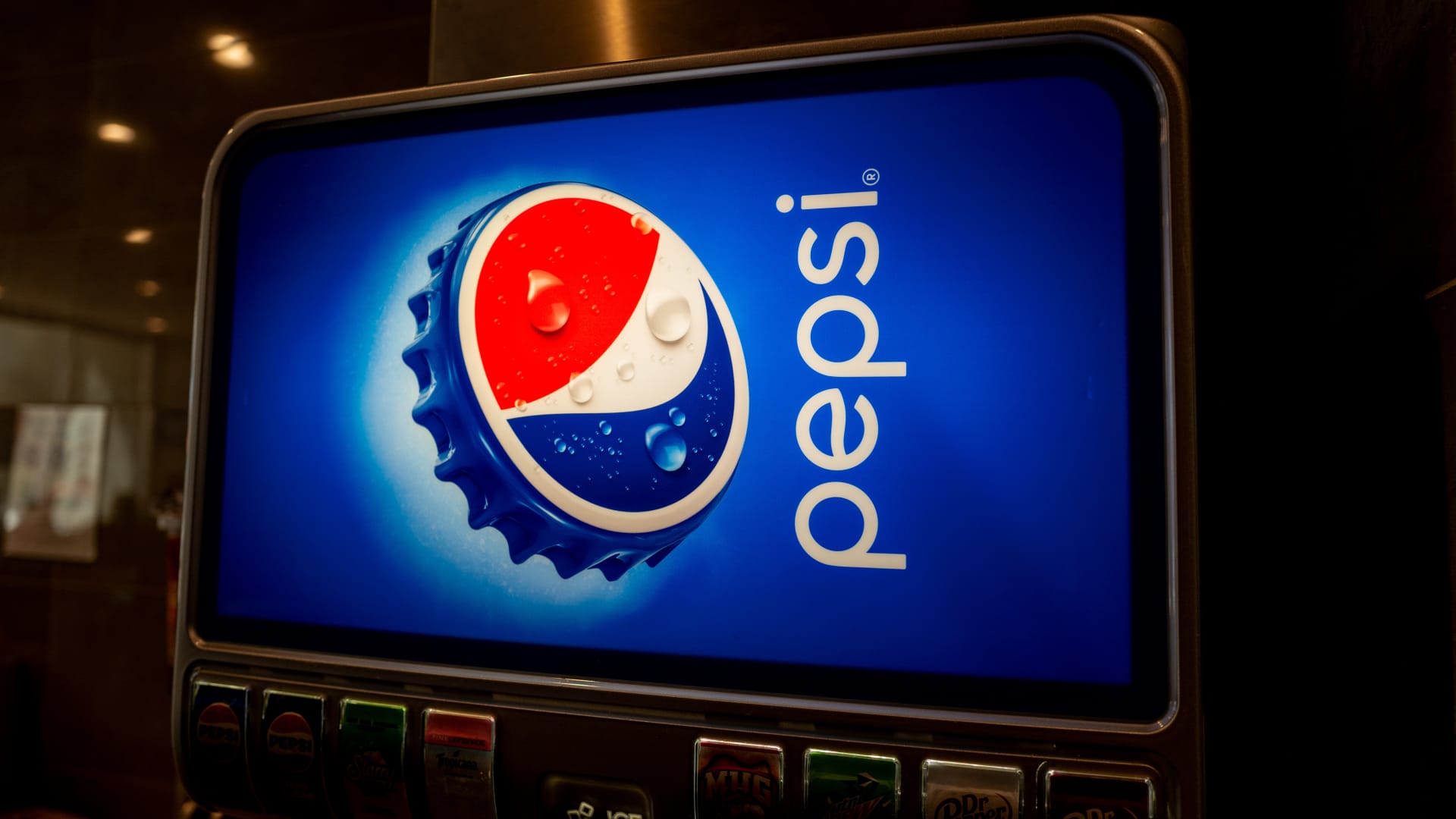
    Illuminated logo for Pepsi on a soda fountain in Walnut Creek, California, March 4, 2026.

    Smith Collection | Gado | Archive Photos | Getty Images

    PepsiCo on Thursday reported quarterly earnings and revenue that topped analysts’ expectations as its struggling North American food business reported a return to volume growth.

    Shares of the company rose slightly in premarket trading.

    Here’s what the company reported compared with what Wall Street was expecting, based on a survey of analysts by LSEG:

    • Earnings per share: $1.61 adjusted vs. $1.55 expected
    • Revenue: $19.44 billion vs. $18.94 billion expected

    Pepsi reported first-quarter net income attributable to the company of $2.33 billion, or $1.70 per share, up from $1.83 billion, or $1.33 per share, a year earlier.

    Excluding items including restructuring and divestitures, the company earned $1.61 per share.

    Net sales rose 8.5% to $19.44 billion, boosted by its acquisition of Poppi, the new distribution of Alani Nu energy drink and the divestiture of Rockstar. Pepsi’s organic revenue, which strips out acquisitions, divestitures and currency fluctuations, increased 2.6%.

    For the first time in more than two years, Pepsi’s North American food business reported an increase in volume. The division, a combination of its North American Frito-Lay and Quaker Oats units, has faced pushback from consumers for hefty price increases when inflation spiked in 2022. In February, Pepsi cut prices on Lay’s, Tostitos, Doritos and Cheetos by as much as 15% to try to win back shoppers; the efforts are paying off already.

    Pepsi’s North American food business reported volume growth of 2% for the quarter. The metric excludes pricing and foreign exchange fluctuations to reflect demand more accurately.

    The company’s North American beverage business reported that volume fell 2.5%. The division, which includes its namesake soda, Starry and Poppi, has also faced weaker demand as a result of higher prices.

    Pepsi on Thursday said it would “restage” the Gatorade brand in an attempt to boost sales of the sports drink. The company plans to market Gatorade’s hydration benefits to non-athletes, release a lower sugar version and start to remove artificial colors, among other changes.

    Pepsi has also been leaning into snack and drink trends, particularly those that embrace higher protein and fiber content. Recent launches include Pepsi Prebiotic, Starbucks Coffee & Protein, Doritos Protein and SunChips Fiber.

    For the full year, Pepsi reiterated its prior forecast that organic revenue will rise between 2% and 4% and core constant currency earnings per share will increase in a range of 4% to 6%. It noted that the global economy has become harder to predict due to the war in the Middle East.

    “As we look ahead, the macroeconomic environment has become more volatile and uncertain because of ongoing geopolitical conflicts,” executives said in prepared remarks. “Systematic commodity hedging programs for market traded commodities are expected to provide some near-term protection and visibility on certain input costs.”

    Source link