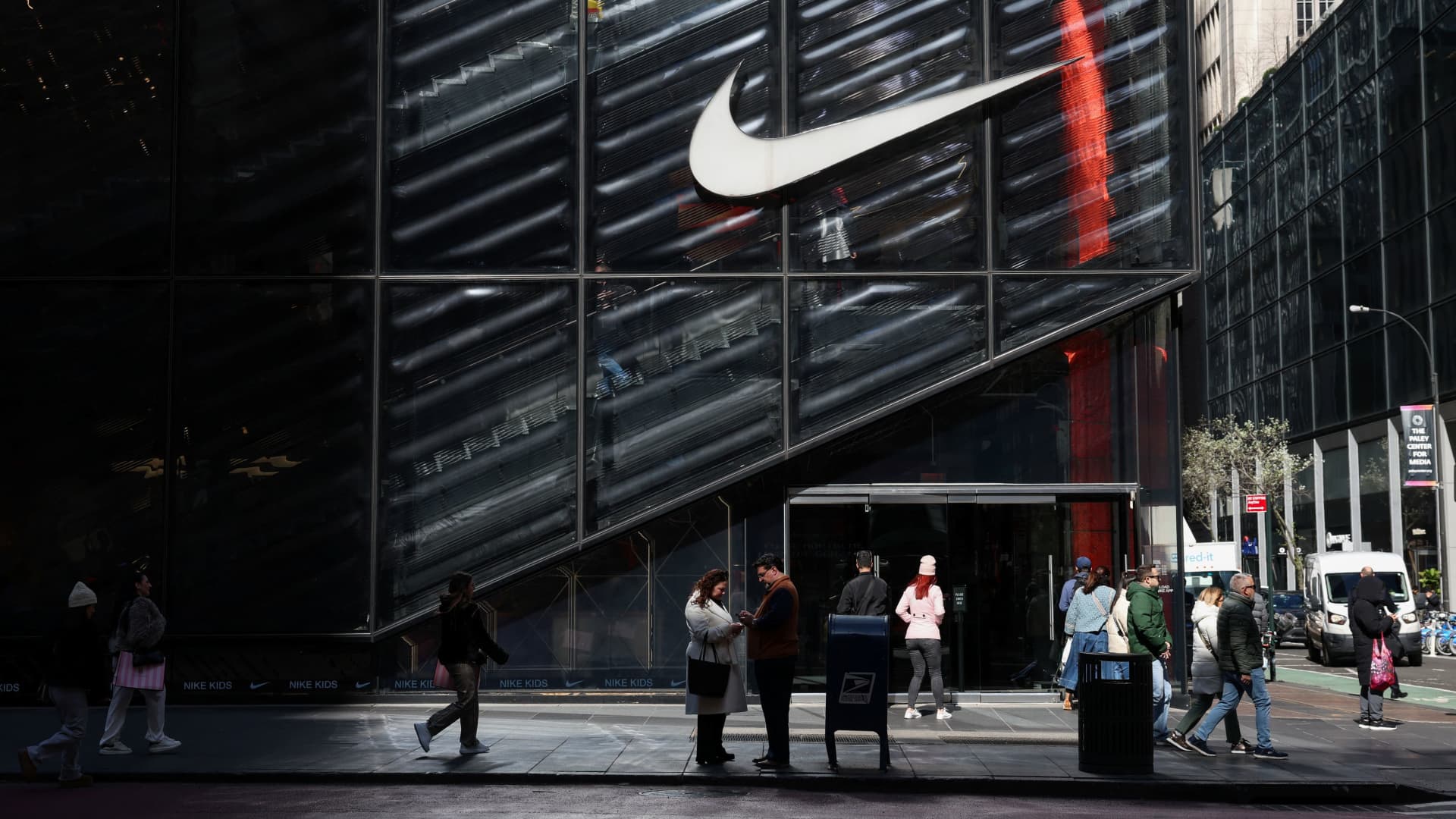
People walk past a Nike store in New York City, on April 2, 2025.
Kylie Cooper | Reuters
Nike announced a new round of layoffs Thursday affecting approximately 1,400 employees across the organization, mostly concentrated in its technology department.
In a note from COO Venkatesh Alagirisamy, the company said the layoffs were part of Nike’s broader “Win Now” turnaround strategy aiming to reshape its technology team, modernize its Air manufacturing, move some of its Converse Footwear operations and integrate its materials supply chain work into its footwear and apparel supply chain teams.
“Collectively, these changes will result in a reduction of approximately 1,400 roles in global operations, with the majority in technology,” Alagirisamy wrote. “These reductions are very hard for the teammates directly affected and for the teams around them, too.”
A Nike spokesperson said the layoffs are about better positioning the organization for the current pace of sports and accelerating its growth. The layoffs affect employees across North America, Asia and Europe and represent less than 2% of the company’s total global head count.
“This is not a new direction,” Alagirisamy wrote. “It is the next phase of the work already underway.”
Affected employees will be notified beginning Thursday, Nike added.
CEO Elliott Hill has been working to turn Nike around after years of slumping sales. While Hill has made some initial progress, it’s come with some bumps in the road.
Nike announced 775 job cuts in January, primarily at its U.S.-based distribution centers, due to the company’s work in accelerating its use of automation. At the time, the company said the cuts are part of Nike’s goal to return to “long-term, profitable growth.”
Those layoffs came on top of a round of cuts last summer that affected less than 1% of Nike’s corporate staff as part of the company’s efforts to realign the business.
In its third fiscal quarter earnings report last month, the retailer warned that sales will continue to fall for the rest of the year, primarily led by an anticipated 20% decline in China during the current quarter.
— CNBC’s Jessica Golden contributed to this report.
France, Provence-Alpes-Cote d’Azur, French Riviera, Alpes-Maritimes, Principality of Monaco.
Marco Bottigelli | Moment | Getty Images
A million dollars isn’t what it used to be — especially in luxury real estate.
According to the new Knight Frank Wealth Report, $1 million buys you only 16 square meters (or about 172 square feet) in Monaco, the world’s most expensive luxury market as measured per meter. That’s down from 17 square meters (182 square feet) in 2020.
In Hong Kong, which ranks second, $1 million gets you 22.5 square meters, or about 242 square feet. New York looks downright affordable next to London, Singapore and Geneva, with $1 million getting you 33.9 square meters, or 365 square feet.
Luxury real estate in most major markets around the world continues to become more expensive, as the wealthy grow wealthier and more mobile. Last year, prices for prime real estate in 100 markets tracked by Knight Frank increased by 3.2%, outpacing the growth of mainstream global housing prices at 2.9%.
The Middle East led global luxury growth last year, with prices in Dubai, United Arab Emirates, up 25% in 2025 and nearly 200% over the past five years, according to the report. Tokyo was the big standout in 2025, with prices surging 58%, the report said. Manila, Philippines, Seoul, South Korea, and Prague also had strong price growth.
For future growth, Knight Frank says Mumbai, India, Brisbane, Australia, Miami and Hong Kong are all future hot spots for luxury real estate. The report said the ultra wealthy are more mobile than ever, buying homes around the world and flitting from city to city more frequently.
“Rising tax and growing regulatory pressures are accelerating the global mobility of wealth,” the report said. “As a result, established hubs such as London are shifting towards a ‘dip-in, dip-out’ model: places to spend time for business, culture and connectivity rather than permanent residence.”
Liam Bailey, global head of research at Knight Frank, said the luxury markets with the strongest outlook have low supply combined with a strong lifestyle and tax appeal. Miami, Milan and Dubai, for instance, have attractive tax environments. New York and London draw the wealthy for their lifestyle offerings and business concentration. Yet both cities are becoming less attractive for tax reasons.
“Every market that wants to succeed in attracting UHNW capital over the next decade needs to be positioned at an attractive point on the tax curve, ” Bailey said. “Capital is already moving away from high-friction environments toward jurisdictions that actively court wealth.”
A version of this article first appeared in CNBC’s Inside Wealth newsletter with Robert Frank, a weekly guide to the high-net-worth investor and consumer. Sign up to receive future editions, straight to your inbox.
Kevin Warsh can credit more than $100 million of his vast fortune to a lucrative regulatory carveout that favors family office executives and investment professionals, family office attorneys told Inside Wealth.
While single-family offices are widely understood to only manage family members’ assets, a little-known exception allows certainemployees to invest with the ultra-wealthy families they work for.
Warsh’s recent financial disclosures are putting the carveout on display.
The Federal Reserve chair nominee has two stakes worth at least $50 million each in a vehicle called the Juggernaut Fund, according to the filings. The fund is managed by Duquesne Family Office, the personal investment firm of billionaire hedge fund manager Stanley Druckenmiller.
Warsh joined Duquesne as a partner and advisor after leaving the Fed in 2011 and has interests in dozens of other Duquesne entities. The underlying assets in the Juggernaut Fund are not detailed, citing Warsh’s “pre-existing confidentiality agreements” with the firm.
An attorney who has advised family offices for 30 years told CNBC it’s increasingly common for family offices to structure compensation for their key employees in a similar manner to private equity firms. That could include incentive fees from investments or opportunities to co-invest capital, said the lawyer, who spoke on the condition of anonymity in order to speak freely.
Family offices often lend money to these employees in order to fund their capital commitments and forgive them over time or apply future bonuses toward the debt, the lawyer said.
Single-family offices can allow employees to co-invest thanks to a family office rule issued by the Securities and Exchange Commission in 2011. Under that rule, family offices do not have to register as investment advisors so long as they only advise or manage assets for family clients, a category that includes key employees along with family members of the firm founder.
To qualify, key employees must occupy a senior position like director or a executive officer or be involved in the firm’s investment activity, according to the SEC. Investment professionals must have held these duties at the family office or another company for at least 12 months, per the SEC.
“I think the SEC staff at the time was sympathetic to the family office community’s concerns about making investment opportunities and in-house investment staff as robust as possible,” said a lawyer at a New York City firm, who asked to remain anonymous to speak about the matter. “They recognized that attracting and retaining that type of talent required providing executives that level of compensation.”
Lawyers told Inside Wealth that Warsh likely falls under the key employee exception. Duquesne and a representative of Warsh did not respond to requests for comment.
Evan Hall, partner at investment management practice group at Haynes Boone, said the “key employee” category is somewhat flexible, however.
“If you’re an employee of the firm who participates in investment decisions, it doesn’t have to be allinvestment decisions for the family office,” Hall said. “People can game it a little bit. Can a consultant fit in the key-employee definition? It really seems kind of murky, but that’s a line we see a lot.”
Get Inside Wealth directly to your inbox
Warsh has promised to divest his Duquesne-affiliated investments if he’s confirmed as Fed chair, but he has not disclosed how he would do so.
Lawyers who spoke with Inside Wealth said Warsh would have to sell them to the Druckenmiller family or another family client in order for Duquesne to comply with the family office rule.
“I will say that if he doesn’t have friendly partners willing to buy him out, getting out of underlying investments tends to be very difficult,” said another New York lawyer, who similarly requested to remain anonymous to speak candidly. “Otherwise it’s very difficult to get out of private investments.”
At Tuesday’s Senate Banking Committee confirmation hearing, Sen. Elizabeth Warren, D.-Mass, asked Warsh if he would sell those interests back to Druckenmiller.
“Will you disclose how you divest those assets? Or will you just collect a check for $100 million from someone whose whole business is betting on what the Fed will do?” Warren said.
Warsh said he had come to an agreement with the Office of Government Ethics, but did not give specific details about that.
Although Warsh’s nomination and wealth have cast attention on how family offices compensate their employees, lawyer Michael Schwamm, a partner at Duane Morris, said it’s unlikely that it will invite regulatory scrutiny on how key employees are defined or how many can co-invest.
He said the SEC would probably only act if an investment went bad and an employee lost their life savings and came after the firm in a public way.
“I would not be surprised if there are family officers that have tripped the line, but is this something that the SEC is actively gonna go after?” he said. “Not until something happens.”
Warner Bros. Discovery shareholders approved the company’s proposed merger with Paramount Skydance in a preliminary vote on Thursday, bringing a buzzy sale process one step closer to the finish line.
Paramount has offered $31 per share for the entirety of Warner Bros. Discovery — its cable TV networks like TNT, CNN and Discovery Channel as well as its streaming service HBO Max and the Warner Bros. film studio. That proposal was the result of several offers since September and a bidding war with Netflix and Comcast.
In late February, Paramount’s upped offer to $31 spurred Netflix to walk away from its own proposed deal for WBD’s studio and streaming assets.
Paramount’s offer includes a $7 billion breakup fee in the event the proposed merger doesn’t win regulatory approval. The company also agreed to pay the $2.8 billion breakup fee that WBD owed Netflix for the termination of that agreement.
“Shareholder approval marks another important milestone towards completing our acquisition of Warner Bros. Discovery, building on our successful equity and debt syndications and progress across regulatory approvals,” Paramount said in a statement Thursday. “We look forward to closing the transaction in the coming months and realizing the creation of a next-generation media and entertainment company that better serves both the creative community and consumers.”
Paramount and WBD have said the deal is expected to close in the third quarter, pending regulators’ sign off.
“Over the past four years, our teams have transformed Warner Bros. Discovery and returned the company to industry leadership,” WBD CEO David Zaslav said in a news release on Thursday. “Today’s stockholder approval is another key milestone toward completing this historic transaction that will deliver exceptional value to our stockholders. We will continue to work with Paramount to complete the remaining steps in this process that will create a leading, next-generation media and entertainment company.”
Top proxy advisory firm Institutional Shareholder Services had recommended that shareholders accept the deal, which it said was “the result of a competitive sales process and public bidding war.”
“Further, shareholders are receiving a meaningful premium to the unaffected share price, there is a potential downside risk of non-approval, and the cash consideration provides liquidity and certainty of value to shareholders,” ISS wrote in its report. “Given these factors, support for the proposed transaction is warranted.”
While WBD shareholders voted “overwhelmingly” in favor of the deal with Paramount, per WBD’s release, they did not support the payouts to WBD’s executives.
This didn’t come as a surprise after ISS’s earlier report had advised against approving the proposed golden parachute for Zaslav as part of the deal. Zaslav’s exit package consists of hundreds of millions of dollars in severance and other stock awards tied to Paramount’s acquisition.
Since it’s a non-binding vote, however, the payments to Zaslav and other executives will still go through.
The payout — which totals more than $800 million — highlights an obscure tax rule originally designed to limit CEO pay, CNBC recently reported.
ISS called out the $500 million in proposed stock awards, as well as “a recently-added excise tax gross-up, valued at approximately $335 million,” or what’s known as the so-called golden parachute excise tax. Originally created by Congress in the 1980s, the tax was meant to limit what many considered to be massive payouts to CEOs upon a change of control or sale.
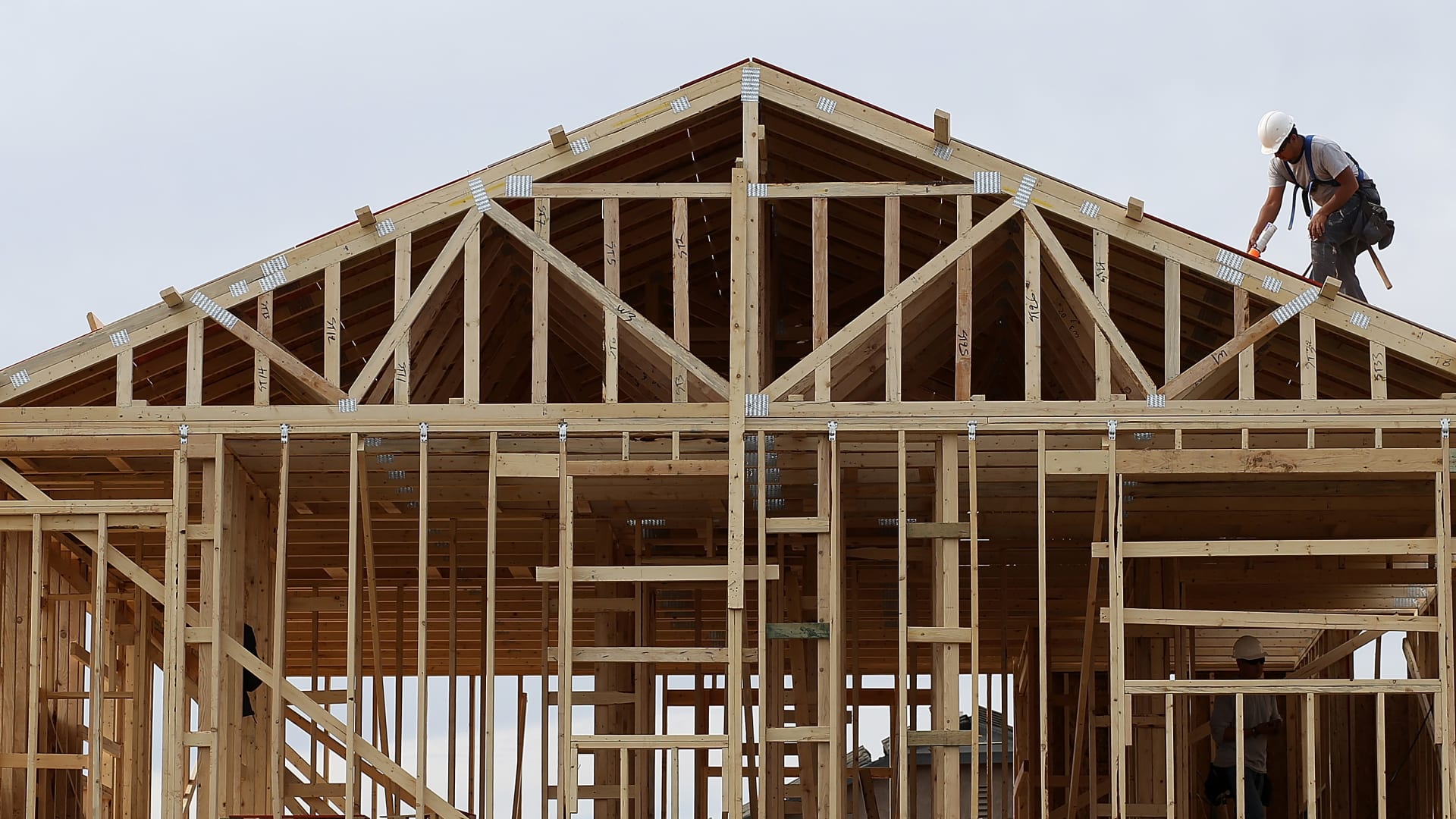
Homebuilder sentiment dropped sharply in April, according to a monthly index from the National Association of Home Builders.
The war with Iran has pushed mortgage rates higher and layered on big increases in costs for materials and transportation due to the spike in oil prices.
A slew of building suppliers reported price hikes in April on everything from foam insulation and roofing to windows and doors.
A version of this article first appeared in the CNBC Property Play newsletter with Diana Olick. Property Play covers new and evolving opportunities for the real estate investor, from individuals to venture capitalists, private equity funds, family offices, institutional investors and large public companies. Sign up to receive future editions, straight to your inbox. U.S. homebuilders had hoped for a robust spring market this year after the winter brought falling mortgage rates and rising homebuyer demand. The war with Iran threw a wrench into that optimism, pushing rates higher and layering on big increases in costs for materials and transportation due to the spike in oil prices. Homebuilder sentiment in April, the heart of the spring housing market, dropped sharply, according to a monthly index from the National Association of Home Builders. “With oil prices higher in the U.S., 62% of builders reported suppliers have increased building material costs due to higher fuel prices, including gas and diesel,” said Robert Dietz, NAHB’s chief economist, in a release. “Energy costs make up approximately 4% of residential construction material input and service costs. With near-term economic risks elevated, 70% of builders reported challenges pricing homes given uncertainty about material costs.” A slew of building suppliers reported price hikes in April on everything from foam insulation and roofing to windows and doors. The cost of both manufacturing these products and transporting them has increased quickly. “We’re starting to hear more about subcontractor and supplier price increases along with freight and fuel surcharges,” said Rick Palacios, director of research at John Burns Research and Consulting. JBRC surveyed homebuilders on this topic in early April and found 38% of builders nationally indicated supplier delays or price increases due to rising fuel costs. Regionally, some increases were higher. In Florida and Texas, for example, builders reported price increases of 47% and 45%, respectively. And nearly every product is getting hit. Mohawk Industries , the world’s largest flooring manufacturer, announced it would implement an 8% price increase on residential and mainstreet commercial soft surfaces (carpet, carpet tile and pad) and select hard surface products effective April 27. Cornerstone Building Brands is increasing prices on windows and doors, from vinyl to aluminum products. That goes into effect June 1. In a March 30 letter to suppliers , Cornerstone wrote: “Over the past several months, our industry has experienced increased volatility driven by ongoing economic and political developments. These factors have led to sustained increases in the cost of raw materials, transportation, and labor.” Paint giant Sherwin-Williams increased prices on paint by 9% and on bulk solvent products, thinners and reducers by 18%. That led to an analyst downgrade by Wells Fargo earlier this month. “The war in Iran has led to broad-based inflation across most commodity chains, flowing down to coatings raw materials,” Wells Fargo analyst Michael Sison said in a note to clients. “We believe margins will be pressured by rising raw material costs as the conflict in the Middle East persists.” Even spray polyurethane is taking a hit. In a message on its website, Performance Pro Supply, an insulation products company, wrote: “We don’t jack up our prices and blame others. We show you the amount of the increases as we receive them from manufacturers.” It then listed multiple manufacturers showing price increases anywhere from 6% to 15%. “Bottom line, so not only does the housing industry have subdued buyer traffic, builders are now thrown a whole new set of raw material and procurement challenges,” wrote Peter Boockvar, an economist and market strategist, in a research note.
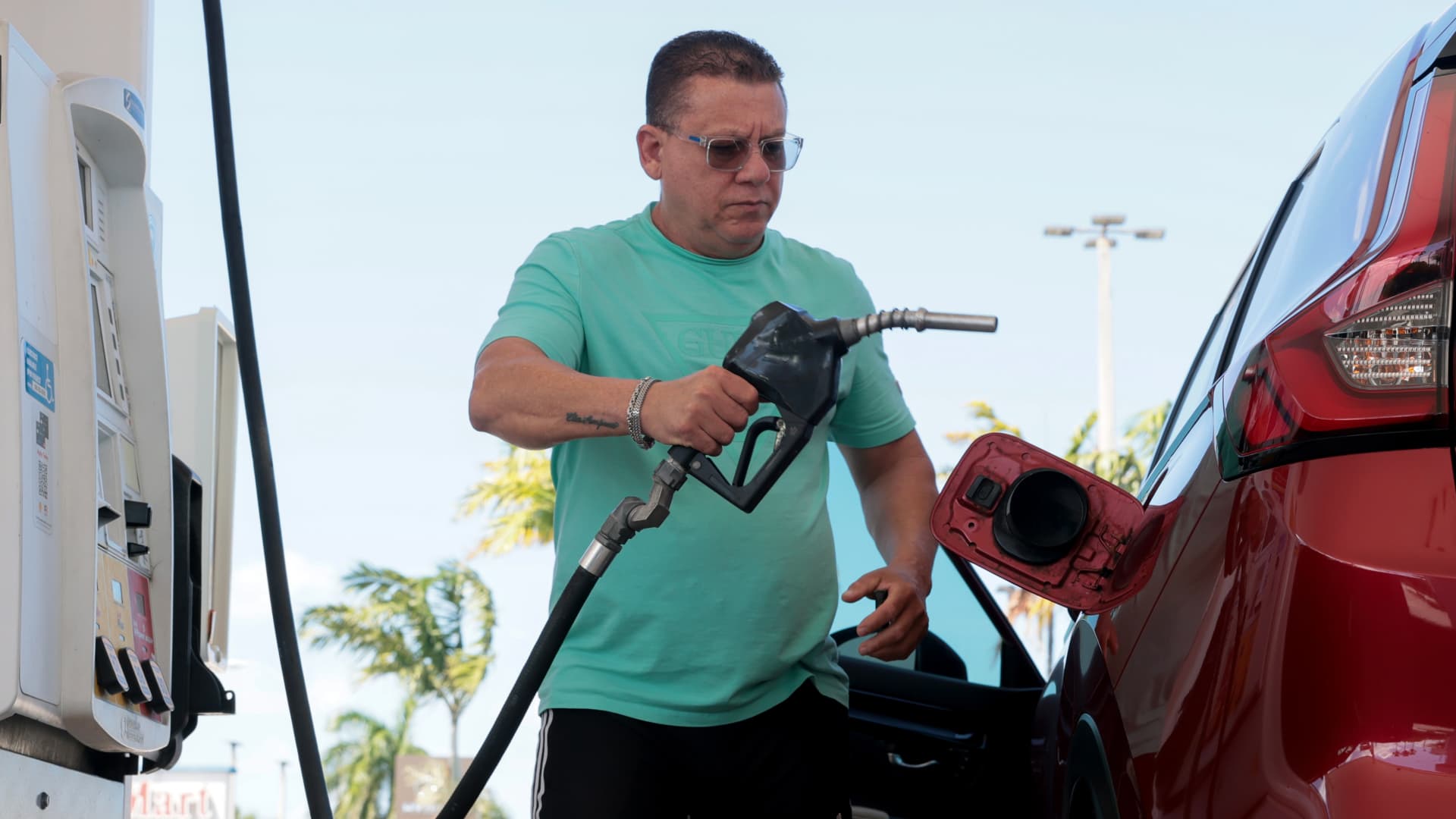
A customer fills his vehicle with fuel at a gas station on April 13, 2026 in Miami, Florida. As the United States military blockades the Strait of Hormuz fuel prices rose above $100 dollars a barrel.
Joe Raedle | Getty Images
As war in the Middle East pushes the national average for gas to around $4 a gallon, American drivers are feeling a significant pinch at the pump. Fuel costs have surged 37% since the start of the war, according to insurance-comparison marketplace Insurify.
Typically, higher gas prices lead consumers to cut back on how many miles they drive. Fewer miles driven translates to fewer accidents and lower car insurance premiums.
But a new report from Insurify shows any silver lining to drivers cutting back on miles is incredibly thin.
When gas prices rise 10%, people cut their driving by about 3% on average, according to the report. If Americans were to cut their total mileage by 10% this year, the average annual insurance premium would likely drop to $2,209.
While that’s slightly less than the current $2,222 average, the actual savings are negligible when compared to the soaring cost of gasoline.
Reducing driving by 10% would save the average person just $27 a year on insurance. That same person would still end up spending an extra $385 on gas in 2026, even after cutting back their miles, Insurify said.
Matt Brannon, a senior analyst at Insurify, told CNBC that the drop in insurance costs, roughly 1% annually, doesn’t move the needle for most consumers.
“Gas prices might overwhelm the savings they could get from insurance, especially if you’re driving a lot,” Brannon said.
Insurers, meanwhile, are seeing the benefits of consumer driving less and fewer accidents negated by the cost of auto parts, which has risen 4% year over year, according to Insurify.
Progressive, for example, warned in March that retaliatory tariffs and rising auto part costs could pressure profit margins and lead to rate hikes.
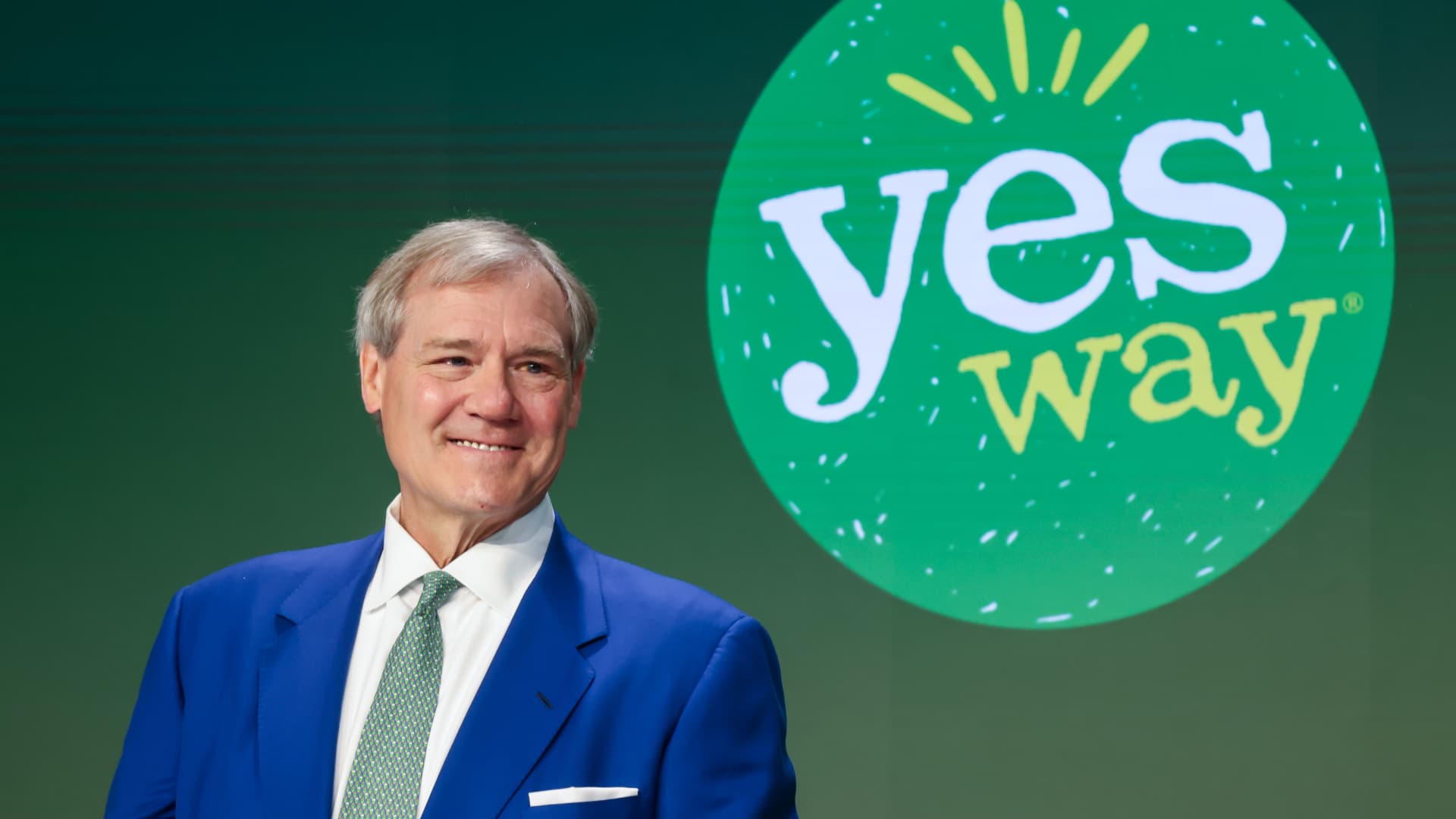
Thomas Trkla, chairman and CEO of Yesway, during the company’s initial public offering at the Nasdaq MarketSite in New York, April 22, 2026.
Michael Nagle | Bloomberg | Getty Images
Deep-fried burritos and chimichangas from convenience store chain Allsup’s are helping its parent company Yesway steal customers from fast-food chains, even with higher fuel prices, Yesway CEO Tom Trkla said Wednesday.
“A lot of the data that we get from our data providers show that our sales are up and some of their competitors’ sales are down,” he told CNBC. “We infer that we are taking some market share, both from other c-store chains and from other [quick-service restaurant chains] that sell food and compete with our burrito platform.”
Yesway made its public market debut on Wednesday, trading on the Nasdaq Stock Exchange under “YSWY.” It raised $280 million in its initial public offering, pricing shares at $20 for a valuation of $1.21 billion. The stock began trading at $22 a share.
The jump in the stock — and demand for Yesway’s food offerings — underscore how the convenience store industry has steadily chipped away at fast food’s dominance.
In 2025, Allsup’s sold roughly 41 million proprietary food products, including 24 million burritos, according to regulatory filings.
About two-thirds of Yesway’s revenue comes from fuel, while the merchandise sold inside stores accounts for the remaining third. And while fuel prices have risen as a result of the war in Iran, Yesway is still seeing high demand for its food.
“People come to our stores, not just for fuel, and that helps a lot too in these environments,” Trkla said. “The other thing I should mention is that we’re already a value shop …. We actually are already at the $4, $5, $6 price for our meals, so we’ve actually seen increases of inside merchandise sales.”
Over the last decade, c-stores have been taking market share from fast-food chains. Chains like Wawa, Buc-ee’s and Casey’s General Stores have won over customers with their fresh food, boosted by their offerings’ low prices and convenience. Breakfast, in particular, has become a battleground between c-stores and fast-food rivals like McDonald’s and Taco Bell.
The c-store industry’s overall food service sales reached $121 billion in 2024, according to data from the National Association of Convenience Stores.
Brookwood, a real estate-focused private equity firm, founded Yesway in 2015. In 2019, the company acquired Allsup’s. By the end of 2025, Yesway and Allsup’s combined had 448 locations, primarily concentrated in the Midwest and Southwest.
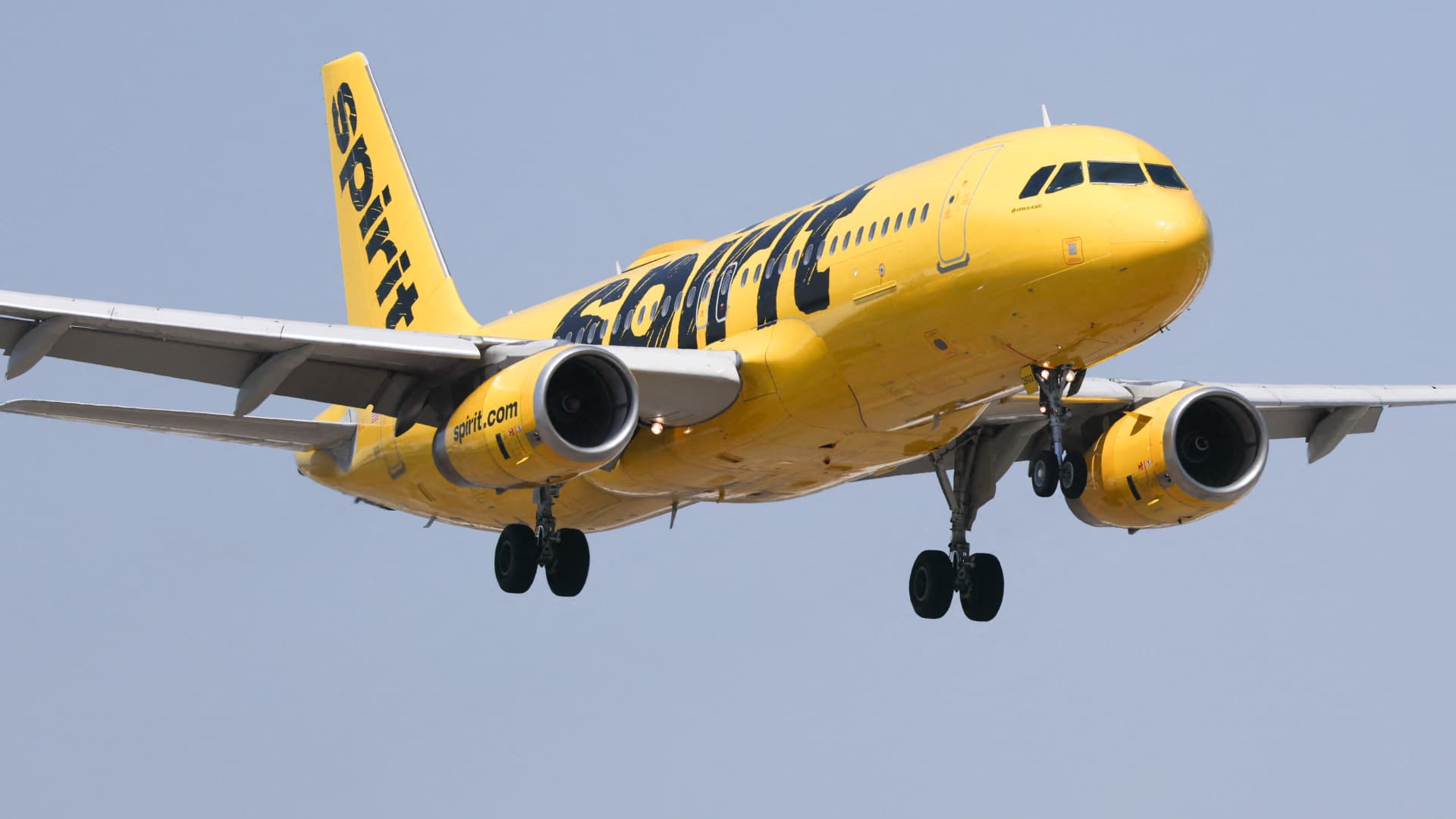
A Spirit commercial airliner prepares to land at San Diego International Airport in San Diego, California, U.S., January 18, 2024.
Mike Blake | Reuters
The Trump administration is in advanced talks for a financing package for Spirit Airlines as the carrier is facing the risk of a liquidation, according to people familiar with the matter.
The deal could include $500 million in financing from the government, which could provide a path to give the government an equity stake in the carrier, said the people, who requested anonymity because they were not authorized to discuss the talks. The senior financing would put the government ahead of other stakeholders in the airline, one of the people said.
The iconic discounter Spirit has been challenged for years by rising costs, changing consumer tastes, an engine recall and a court-blocked plan to be acquired by JetBlue Airways two years ago. The surge in fuel prices since the U.S.-Israel strikes on Iran in February has added to Spirit’s challenges.
“Spirit Airlines would be on a much firmer financial footing had the Biden administration not recklessly blocked the airline’s merger with JetBlue,” White House spokesman Kush Desai said in a statement to CNBC. “The Trump administration continues to monitor the situation and overall health of the U.S. aviation industry that millions of Americans rely on every day for essential travel and their livelihoods.”
Potential liquidation
Spirit had been facing a potentially imminent liquidation, people familiar with the matter told CNBC last week, speaking on the condition of anonymity to discuss matters that had not yet been made public. The Dania Beach, Florida-based carrier in August filed for its second Chapter 11 bankruptcy in less than a year, after it struggled to increase revenue to cover rising costs.
President Donald Trump hinted at potential government aid on Tuesday, telling CNBC’s “Squawk Box,” “Spirit’s in trouble, and I’d love somebody to buy Spirit. It’s 14,000 jobs, and maybe the federal government should help that one out.”
Read more about Spirit Airlines’ recent challenges
The Wall Street Journal earlier reported that the talks were in an advanced stage.
“We are hopeful that the government will recognize the needs for emergency funds especially in the current economic environment,” a spokesperson for the Association of Flight Attendants-CWA, which represents Spirit’s cabin crews, said in a statement. “The last thing our economy needs is tens of thousands more people out of work and the last thing the travelling public needs is fewer choices in air travel.”
The final terms of the deal and what the airline receives could still change.
Spirit declined to comment on the talks.
“We are operating our business as normal; Guests can continue to book, travel and use tickets, credits and loyalty points as usual,” the airline said in a statement.
Transportation Secretary Sean Duffy appeared against the idea of a government rescue of Spirit on Tuesday.
“What we don’t want to do is put good money after bad, and there’s been a lot of money thrown at Spirit, and they haven’t found their way into profitability,” Duffy said in an interview with Reuters. “And so would we just forestall the inevitable and then own that?”
“What would someone buy?” Duffy asked in the interview. “If no one else wants to buy them, why would we buy them?”
In February, Spirit said it expected to exit bankruptcy in late spring or early summer, telling a U.S. court that it would shrink and focus its planes on high-demand routes and travel periods. Pilot and flight attendant unions had also made concessions, including going on furlough in recent months, in a bid to help Spirit survive.
But jet fuel prices have nearly doubled in some parts of the U.S. since then, further adding to challenges for Spirit and the rest of the airline industry.
As a low-fare airline that also faces competition from larger carriers with their own no-frills, basic economy offerings, it has grown harder for Spirit to cover expenses. Spirit had introduced extra-legroom seats and other premium options to try to cater to higher-spending customers.
Opposition to a government rescue
Sen. Ted Cruz, R-Texas, who chairs the Senate Commerce Committee, wrote on X on Wednesday about the possible government rescue of Spirit, “This is an absolutely TERRIBLE idea.”
He said the government bank and automaker bailouts of the 2008 financial crisis were a “huge mistake” and that the “government doesn’t know a damn thing about running a failed budget airline.” He said the former Biden administration “killed” Spirit.
Fitch Ratings senior director Joe Rohlena said Spirit would have a “difficult path” even with a government rescue.
“Even aside from the headwind of sharply higher fuel prices, Spirit’s path back to sustainable cash generation depends on its ability to materially raise revenue, which will be difficult given intense industry competition and the airline’s limited appeal to many travelers,” he wrote.
United Airlines CEO Scott Kirby said he is against a government rescue of Spirit. Kirby has been critical of Spirit’s business model for years, and said he thought that the airline would go out of business.
“Well-run airlines are still solidly profitable even in this environment,” Kirby said on an earnings call on Wednesday. “As you see from United, I don’t think this crisis is anywhere near big enough to caused the need for an airline bailout.”
Other government rescues
The U.S. airline industry accepted more than $50 billion in taxpayer aid to weather the Covid-19 pandemic, which is still its biggest-ever crisis, but those funds weren’t handed to one specific airline. Some of the aid gave the U.S. government stock warrants for airlines.
Airlines also received a government bailout following the Sept. 11, 2001, terrorist attacks, but that money was also for more than one company. The U.S. in 2008-2009 also bailed out the auto industry during the financial crisis and took stakes in manufacturers.
The Trump administration has taken equity stakes in some companies it deemed critical to national security like Intel and USA Rare Earth, though Spirit stands out as it is in bankruptcy.
Correction: This article has been updated to correct the name of the Association of Flight Attendants-CWA.
Lululemon on Wednesday named Heidi O’Neill as the athleisure company’s new CEO, effective Sept. 8.
The news comes after the company has seen more than a year of disappointing performance and is embroiled in a dramatic proxy battle, with founder Chip Wilson criticizing the business.
Shares of the company sank more than 5% in extended trading.
O’Neill has held multiple roles at Nike, contributing to the sportswear behemoth’s growth. She also held positions at Levi Strauss, Hyatt Hotels and Spotify.
“Heidi is an inspiring leader and proven, consumer-driven brand strategist, with a rare ability to both imagine a new future for a brand and to create the structure and processes to deliver on that vision,” said Marti Morfitt, Lululemon’s executive chair of the board of directors, in a statement. “We selected Heidi because of the breadth of her experience, her demonstrated success delivering breakthrough ideas and initiatives at scale, and her ability to be a knowledgeable change and growth agent.”
O’Neill said in a statement that she plans to focus on building off of the company’s core foundation and unlock growth in global markets. O’Neill will start with a base salary of $1.4 million, according to an 8-K filing.
“I am humbled by the opportunity and energized by what the team is already building,” she said in her statement. “I look forward to joining the company and helping to define and deliver the organization’s next chapter of success.”
Lululemon has been struggling with weak sales and increased competition, as well as mounting costs from tariffs. In its last earnings report, the retailer said it expects tariffs to cost the company $380 million this year.
Wilson, Lululemon’s largest shareholder, has also been placing increased public pressure on the company to make changes to its board of directors. He did not immediately respond to a request to comment on the appointment.
In a statement, GlobalData managing director Neil Saunders said O’Neill has “a very strong pedigree in the activewear and sporting space” and “has an intimate knowledge of how the industry works.”
“There will be some, mostly activist investors, who see O’Neill as something of a safe and traditional choice,” Saunders said. “This argument is partly valid as a lot of cultural change is needed at Lululemon in order to improve performance. However, in our view, O’Neill is her own person who will come with an agenda of change.”
While at Nike, O’Neill played a key role in the company’s doomed direct-to-consumer sales strategy, where the brand pivoted away from wholesale partners in favor of its own website and stores under former CEO John Donahoe. When current CEO Elliott Hill took over as Nike’s next chief executive, he made it a priority to walk back the direct-selling plan.
Prior to leaving Nike, O’Neill also oversaw product and innovation at a time when the brand faced criticism for falling behind on new products and focusing too heavily on the same legacy lifestyle franchises, Dunks, Air Force Ones and Air Jordans. While the franchises briefly led to a surge in sales, fueling Nike’s growth to a $50 billion-plus brand, they ultimately became ubiquitous in the market and viewed as uncool by some consumers.
Now, Hill is still working on unwinding that strategy and clearing inventory from those franchises from the marketplace, which has hit Nike’s margins and led to a decline in sales online.
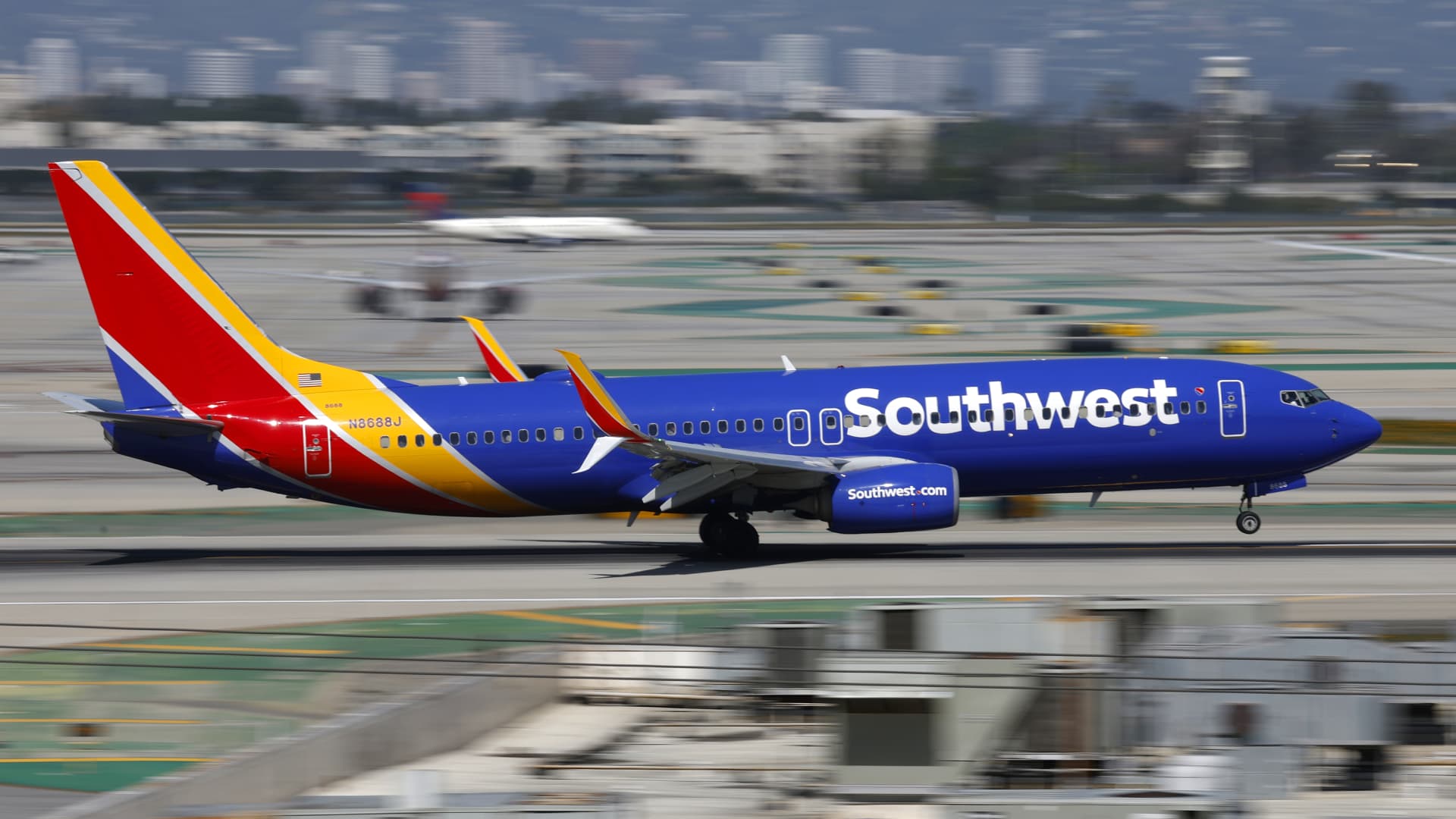
A Southwest Airlines Boeing 737 airplane lands at Los Angeles International Airport after arriving from Chicago on March 7, 2026.
Kevin Carter | Getty Images
Southwest Airlines forecast second-quarter earnings below analyst estimates, citing higher fuel prices, while holding off on updating its full-year 2026 forecast.
Southwest expects to earn between 35 cents and 65 cents a share in the current quarter, while analysts polled by LSEG expected 55 cents a share.
The airline in January forecast earnings per share of $4 this year, saying that it expected its new initiatives would pay off. Southwest has sought to increase revenue with checked bag fees and seat assignment fees.
“Achieving this outcome would require lower fuel prices and/or stronger revenue performance to offset higher fuel expense. The Company expects to provide updates to this guidance as appropriate,” Southwest said in an earnings release Wednesday.
Airlines have been either cutting their full-year forecasts or holding off on further forecasts because of volatile prices for jet fuel, generally their biggest expense after labor. They are also pulling back on their capacity growth plans to cut costs, which can drive up airfare when fewer seats are for sale.
Southwest said it expects its capacity to be flat to up no more than 1% in the second quarter, and unit revenues to rise by 16.5% to as much as 18.5% over last year.
Customers have shown they willing to keep booking despite higher fares, CEO Bob Jordan told reporters on Wednesday after the company reported results.
“Demand is really strong … strong in every sector,” he said.
Here’s what the company reported for first quarter compared with Wall Street expectations, according to consensus estimates from LSEG:
Earnings per share: 45 cents vs. 47 cents cents expected
Revenue: $7.25 billion vs. $7.27 billion expected
Southwest swung to a profit of $227 million, or 45 cents a share in the first quarter, compared with a $149 million loss, or a loss of 26 cents per share, a year earlier.
Revenue rose nearly 13% to $7.25 billion compared with $6.43 billion in the year-earlier period.