Intellia Therapeutics, building exterior and company sign, Cambridge, Massachusetts, USA.
Spencer Grant | Universal Images Group | Getty Images
Intellia Therapeutics said its Crispr-based treatment for a rare swelling condition met its goals in a late-stage trial, marking a milestone for the field of gene editing and putting the company on track to seek approval from the U.S. Food and Drug Administration.
The company’s treatment uses Nobel Prize-winning technology Crispr to edit DNA and turn off the gene that controls production of a peptide that’s overactive in people with hereditary angioedema, causing them to experience potentially life-threatening swelling attacks. Intellia’s treatment is administered once through an hourslong infusion, making the edits directly in the liver.
Intellia said the one-time treatment reduced attacks by 87% compared with a placebo, meeting the study’s main goal. Six months after treatment, 62% of patients were free from attacks and weren’t using other therapies, Intellia said.
The company described the safety and tolerability of the treatment as “favorable,” reporting the most common side effects were infusion-related reactions, headaches and fatigue. Analysts were closely watching safety in the trial since a patient in a separate trial of a different treatment from Intellia died. That patient developed a liver injury and ultimately died from septic shock following an ulcer, according to the company.
“When you think about where we started with Crispr, just 12 years ago with some of the fundamental insights, I think there was a lot of talk about what might be possible, and we’ve had reports along the way in terms of milestones, but this is the first Phase 3 data in any indication with in vivo Crispr where you’re actually changing a gene that causes disease,” said Intellia CEO John Leonard.
The only FDA-approved Crispr-based medicine comes from Vertex Pharmaceuticals. Called Casgevy, the gene editing is done outside the body, or ex vivo. The process requires collecting a person’s blood cells, making the edits outside the body, then reinfusing them back into a patient. Intellia’s treatment, meanwhile, makes the edits inside the body, or in vivo.
Intellia said it has started a rolling application with the FDA and plans to complete the filing in the second half of this year. The company expects to launch the treatment in the U.S. in the first half of next year, if it’s approved.
If approved, Intellia’s treatment, lonvoguran ziclumeran, will compete with about a dozen other chronic drugs for HAE. Despite the allure of a one-time treatment, genetic medicines haven’t always been a commercial successes. BioMarin withdrew its gene therapy for Hemophilia A because of weak sales, for example.
Leonard said there are important differences between the two, like the fact that BioMarin’s therapy faced questions about how long the effects would last. In contrast, he said Intellia hasn’t seen a single case in almost six years where the effects diminished over time.
Despite the results, he’s reluctant to call Intellia’s treatment a functional cure.
“I think this is a tipping point for the disease and tipping point for Crispr-based in vivo therapy where you can make a change [and] it’s permanent,” Leonard said. “And, as far as we can tell, we don’t have a single patient in this program or other program where there’s been any waning of the effect of what we did to the gene or the effect of what we’ve seen with the clinical aspects of the disease itself. So it’s pretty exciting.”
Clarification: This story has been updated to clarify that a patient in a separate trial of a different treatment from Intellia developed acute liver injury and ultimately died from septic shock following an ulcer.
Pharma thinks it’s found the next frontier in preventing heart attacks.
Novartis, Amgen and Eli Lilly are among the drugmakers betting that slashing levels of a particularly bad form of cholesterol could deliver the next blockbusters in cardiology. All three of the pharmaceutical giants are in late-stage trials to test whether drugs that cut Lp(a) can protect people from heart attacks.
If they can, the opportunity could be massive: an estimated one in five people worldwide have elevated Lp(a), and there’s not much they can do to lower it. Evidence from human genetics suggests the idea could work, but drugmakers don’t know for sure. That makes the first late-stage trial results from Novartis, expected later this year, important for the entire pipeline.
“History has taught us you can’t make assumptions,” said Dr. Steve Nissen, chief academic officer of the Heart, Vascular & Thoracic Institute at Cleveland Clinic who is the principal investigator of Novartis’ Phase 3 Horizon trial of pelacarsen, the company’s experimental drug to lower Lp(a). “We thought raising HDL would be beneficial and that didn’t work, so I think we have to keep an open mind.”
Lp(a), or lipoprotein(a), was first discovered in 1963. It’s a more dangerous cousin to the well-known LDL cholesterol because it simultaneously clogs arteries and promotes blood clots, posing two risks with just one particle. Almost 50 years after Lp(a) was discovered, researchers found that people who have high levels of it had a more than twofold higher risk of heart attack than those who don’t.
How much Lp(a) a person has circulating in their body is almost entirely determined by their genes. Lifestyle factors like diet and exercise don’t influence Lp(a) levels like they do LDL levels, leaving people with few good options to reduce it.
Currently, doctors encourage people to focus on the factors they can change, such as lowering their LDL cholesterol, decreasing blood pressure, treating obesity and diabetes and exercising. Those strategies can help protect people from high Lp(a) for some time, Nissen said. New medicines could treat people for a longer time.
Novartis, Amgen and Lilly have already proven their experimental drugs slash levels of Lp(a) by more than 80%. Now, they will need to show that translates into tangible benefits. If that happens, the drugs could reach annual sales of $5.6 billion by 2032, according to consensus estimates from Evaluate, a pharmaceutical commercial intelligence firm.
“We don’t know how much you have to lower levels,” Nissen said. “We don’t know how high you have to be to benefit from getting your level lowered. Estimates of how much you have to lower levels to prevent events based upon genetic studies are highly variable, so we don’t have an answer, and we won’t have an answer until on the date that we unblind the trial.”
That should happen around the middle of the year, Novartis CEO Vas Narasimhan said on the company’s fourth-quarter earnings call in February. The trial is studying whether Novartis and its partner Ionis’ drug pelacarsen prevents outcomes like heart attacks and strokes in people with elevated levels of Lp(a) who already have cardiovascular disease. Novartis delayed the readout by a year because people weren’t experiencing events as quickly as the company expected in the yearslong trial.
Narasimhan has said that might have to do with the fact that researchers were managing participants’ other risk factors. He said Novartis is still excited to see the data and to potentially create “an entire new class of medicines that can help a whole group of patients that have no other option.”
Novartis’ drug uses a different mechanism than its next closest competitors from Amgen and Lilly. Those drugs, Amgen’s olpasiran and Lilly’s lepodisiran, looked more potent in mid-stage trials, leading to larger Lp(a) reductions.
Amgen’s pivotal trial results were expected later this year or early next before the company also pushed back the timeline. The company now says it plans to provide an update on timing in early 2027.
Jay Bradner, Amgen’s executive vice president of research and development, said it’s impossible to say why it’s taking longer for enough people to have heart attacks to analyze the results without seeing the data.
“The clarity of the signal from population genetics and the encouraging signs from [earlier trials] render this a very smart bet,” said Bradner. The forthcoming results from Novartis will provide direction on how Lp(a)-targeting drugs can affect clinical outcomes, he said, adding that he’s “very bullish about the hypothesis.”
Lilly expects to share data from its Phase 3 trial of lepodisiran in 2029. All of the trials are designed slightly differently, which could create variation in the results, said Dr. Michelle O’Donoghue, a cardiologist at the Mass General Brigham Heart & Vascular Institute and the principal investigator of Amgen’s Ocean(a) trial of olpasiran.
“So there’s reason to think that the magnitude of the benefit might be different across the different programs,” she said.
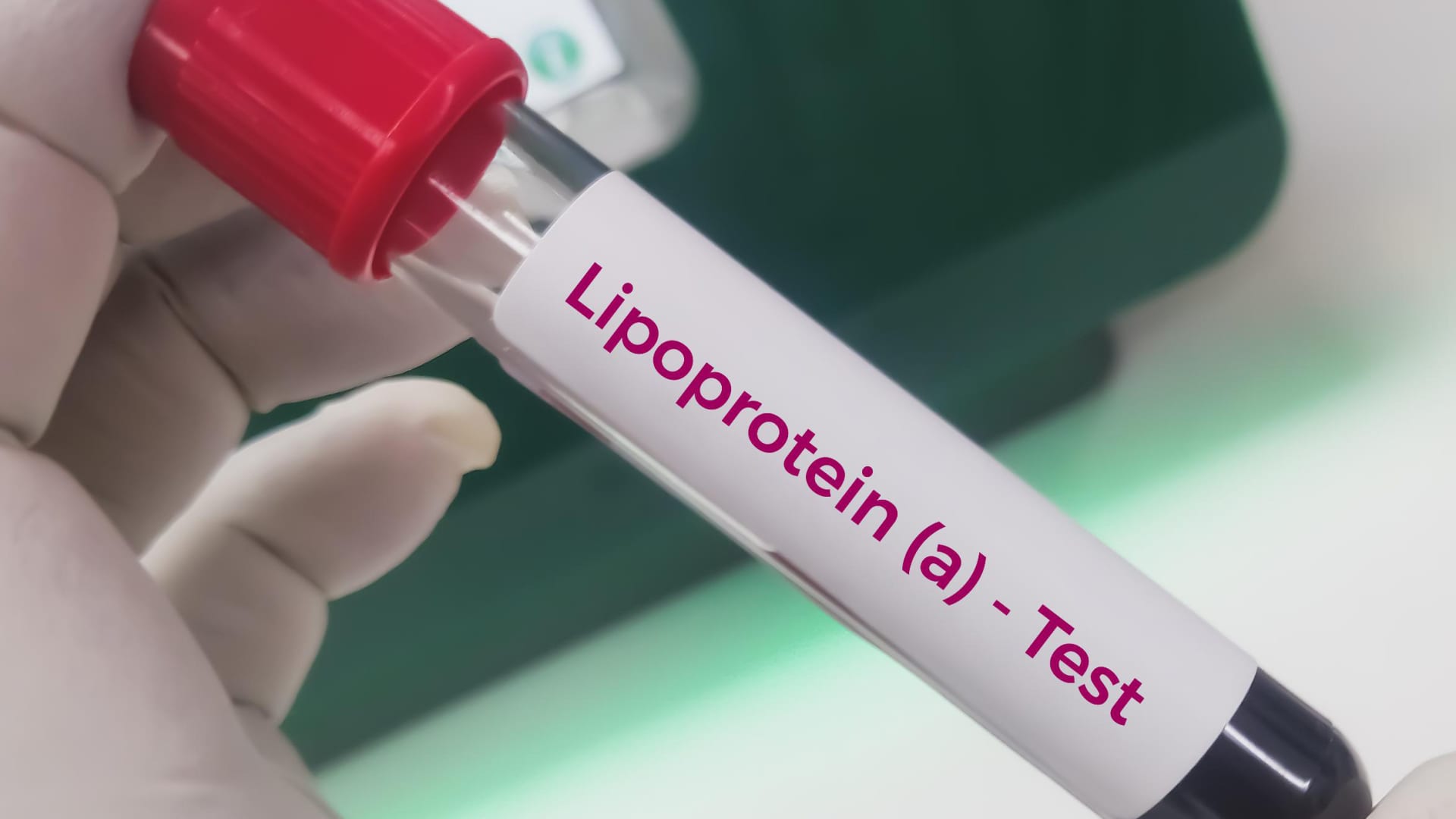
Despite the focus from drugmakers, few doctors test their patients’ Lp(a) levels. Less than 1% of adults were tested for it in the U.S. in 2024, and testing was concentrated in a handful of states, according to one study of electronic health records.
Screening involves a routine blood draw like what’s used to measure other types of cholesterol. Leading cardiology organizations recently started recommending every adult be tested for Lp(a) at least once in their life. Currently, some doctors are reluctant to screen people for a problem when they don’t have any medicines to offer them to treat it, Nissen and O’Donoghue said.
The Family Heart Foundation plans to advocate for adding Lp(a) to the standard lipid test that measures other types of cholesterol like LDL, said the organization’s CEO, Katherine Wilemon. Living with elevated Lp(a) and another genetic heart condition herself, Wilemon has pushed for more screening since experiencing a heart attack at 38 and founding the organization in 2011.
She said the Lp(a) drugs have already helped raise awareness about testing. If the treatments succeed in clinical trials, more screening could follow. Morningstar analyst Jay Lee thinks it could take time to build the market, especially since Novartis’ pelacarsen would initially be used for people with high Lp(a) levels and a history of cardiovascular events.
Amgen and Lilly are already testing whether drugs could protect people with elevated Lp(a) from having that first event. Those results are still years away, with Lilly’s trial expected to read out in 2029.
In the meantime, Lilly isn’t waiting to make more bets. The company is testing a daily pill, and it acquired a company that wants to use gene editing to slash Lp(a) levels with a one-time treatment.
“We’ve got a bunch of shots on goal,” Cleveland Clinic’s Nissen said. “We hope at least one of them ends up in the back of the net.”
Investors are skeptical, said Goldman Sachs analyst Asad Haider. They’re nervous what the delay in Novartis’ trial means for the drugs, and they’re concerned that even if the drugs work, it could take years for them to become mega-blockbusters, he said.
“That’s why this Novartis trial is going to be so important in how people think about the unlock,” Haider said.
Wilemon from the Family Heart Foundation thinks the market for the drugs is there. She sees screening as the most important issue and access as the second one. She points to PCSK9 inhibitors, powerful drugs that slash levels of LDL cholesterol, which struggled for years to gain traction until drugmakers lowered their prices.
But before uptake comes the data — and she said she and the whole Lp(a) community are crossing their fingers Novartis’ drug works.
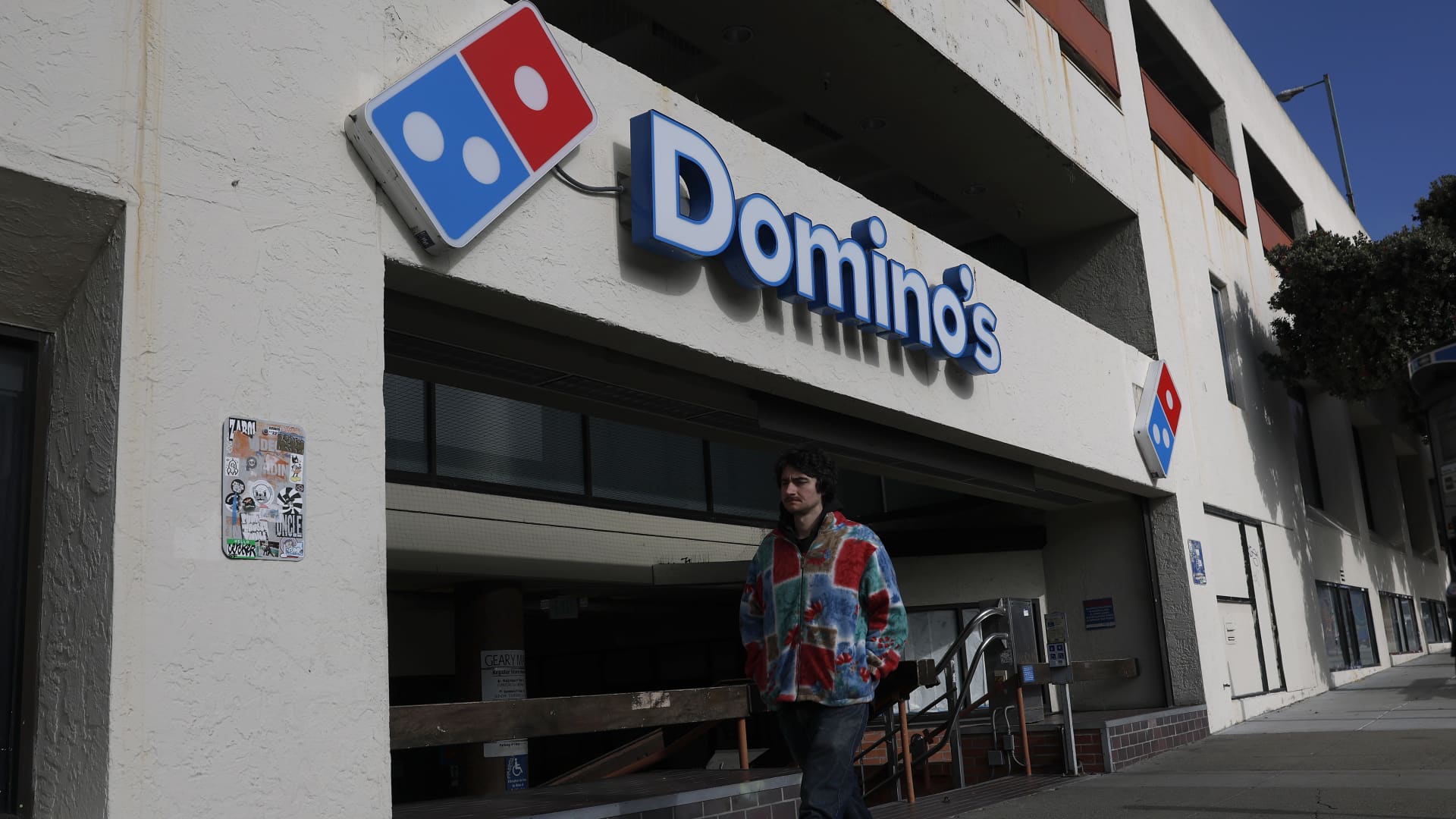
A pedestrian walks by a Domino’s Pizza on Dec. 9, 2025 in San Francisco, California.
Justin Sullivan | Getty Images
Domino’s Pizza stock fell 10% in morning trading on Monday after it reported weaker-than-expected U.S. same-store sales growth.
The chain’s domestic same-store sales rose just 0.9%, lower than the 2.3% bump expected by Wall Street analysts, based on StreetAccount estimates.
“We’re not happy with it,” CEO Russell Weiner told CNBC.
The pizza chain also lowered its full-year U.S. same-store sales forecast to low-single digit growth, down from its prior projection that U.S. same-store sales will increase 3%.
Weiner said he expects more fast-food chains to report similar headwinds from winter weather and weak consumer sentiment, which took a dive in March due to spiking fuel prices caused by the U.S.-Israeli war with Iran.
“One of the bad things about reporting first is you don’t get to hear about anybody else,” Weiner said.
Domino’s kicked off the earnings season for restaurant chains. Starbucks is on deck after the bell on Tuesday, and Chipotle Mexican Grill and Pizza Hut owner Yum Brands are expected to share their results on Wednesday. Rival Papa John’s will report its earnings next Thursday.
During the quarter, Domino’s also faced stiffer competition from rival pizza chains. Papa John’s and Pizza Hut both matched Domino’s $9.99 “Best Deal Ever” with promotions at the same price point. And Little Caesars undercut Domino’s $6.99 Mix & Match deal with a $5.99 version.
“People are seeing what we’re doing, and they’re sick of losing share, and they’re coming at it,” Weiner said, adding that he still expects Papa John’s and Pizza Hut to report same-store sales declines for the quarter despite the new promotions.
Looking ahead, Weiner expressed confidence that Domino’s will prove itself in the long run.
“Domino’s has got a bigger advertising budget than our second two competitors combined,” he said. “And those competitors are both going up for sale, so we know things aren’t good there right now.”
Yum announced in November that it was exploring strategic options for Pizza Hut, which could include a sale. And Papa John’s is reportedly in talks with Qatari-backed Irth Capital to go private. Both chains have also announced plans to close hundreds of restaurants this year, which could further boost Domino’s dominant position in the pizza category.
And if either Pizza Hut or Papa John’s goes private, Weiner said he expects that a new owner would shutter even more locations — a win for Domino’s.
Shares of Domino’s have lost nearly a third of their value over the last year. The company’s market cap has fallen to roughly $11.2 billion.
United Airlines CEO Scott Kirby (L) and American Airlines CEO Robert Isom listen as U.S. Transportation Secretary Sean Duffy speaks to reporters outside the White House on October 30, 2025 in Washington, D.C.
Kevin Dietsch | Getty Images
United Airlines CEO Scott Kirby confirmed Monday that he contacted American Airlines about a potential merger, a possibility American rejected.
“I approached American about exploring a combination because I thought we could do something incredible for customers together,” Kirby said in a statement. He said he shared his “big, bold vision” because he was confident it could win regulatory approval.
American rejected the idea and its CEO, Robert Isom, last week said such a merger would be bad for customers and “anticompetitive.”
Kirby had floated the idea to the Trump administration earlier this year, according to people familiar with the matter who weren’t authorized to discuss the private conversation,in hopes that the combination would mean a big global airline to compete with foreign rivals
American declined to comment on Kirby’s Monday statement.
“I was hoping to pitch that story to American, but they declined to engage and instead responded by publicly closing the door,” Kirby said in his statement Monday. “And without a willing partner, something this big simply can’t get done.”
He said that “American’s public comments make it clear that a merger like this is off the table for the foreseeable future” but outlined his vision for a combined airline.
Kirby reiterated that the country has deficit with foreign airlines that fly more than half of the long-haul seats into the U.S., with most of the customers being Americans.
“The combined scale of United and American would be a better way to compete with foreign carriers,” he said.
President Donald Trump said he was against the idea of a combination last week.
“I don’t like having them merge,” he told CNBC’s “Squawk Box” on Tuesday morning. He said he would, however, like someone to buy struggling discount carrier Spirit but he also suggested that the federal government could “help that one out.”
Spirit and the Trump administration are in advanced talks for a rescue package.
Nearly half an hour into a conference call on Friday to discuss first-quarter results with analysts, Customers Bank CEO Sam Sidhu revealed something unusual — up until that point, he hadn’t actually been speaking.
“The prepared remarks you heard on my behalf today were delivered by my AI clone, not read by me,” Sidhu said, calling it a potential first for a public company earnings call.
The point of the stunt, he said, was to underscore a broader shift happening as Customers Bank, a $25.9 billion asset lender catering to startups and small businesses, embraces artificial intelligence.
Customers Bank has signed a multiyear partnership with OpenAI in which the AI giant will embed engineers at the company to help it automate lending and client onboarding, CNBC has learned exclusively.
The deal is part of Sidhu’s effort to get ahead of other banks in the industry’s race to transform itself using AI agents as a new digital workforce. His strategy hinges on automating core banking processes — slashing loan timelines from weeks to days, for instance — and scaling growth without adding staff at the same pace.
While many bankers have described AI in broad terms like productivity gains, Sidhu is tying it directly to financial targets.
Sidhu told CNBC that the project will improve the firm’s efficiency ratio from about 49 to the low 40s, boosting the bank’s returns starting next year.
The relationship with OpenAI — which has targeted finance as one of its core industries — will be a symbiotic one for the AI giant, according to the bank CEO.
“We’re going to be co-creating enterprise solutions they could potentially sell to other banks in the future,” Sidhu said. “The goal here is end-to-end, automated agentic led workflow” for lending, deposits and payments.
OpenAI said it was proud to help Customers Bank “as they build a more intelligent operating model that empowers employees, strengthens client service, and sets a new standard for regional banking,” chief revenue officer Denise Dresser said in a statement provided to CNBC.
Always-on workers
The bank expects to roll out AI agents across lending, deposits and payments over the next six to 12 months.
If they succeed, closing a commercial loan will go from taking 30 to 45 days, including underwriting, document collection and legal negotiations, to about seven days, Sidhu said.
Opening accounts for complex commercial clients, which can take more than a day, will be collapsed to under 20 minutes using conversational AI and automated document gathering, he said.
“When you have an autonomous agent, you’re essentially creating a digital worker … and they can work around the clock,” Sidhu said.
Customers Bank has been laying the groundwork for this announcement for years, first tapping OpenAI in 2023 because Sidhu had what he describes as a tiny investment in the AI giant through his contacts in the venture capital world. The OpenAI deal signed last week broadens their relationship, enabling AI engineers into the bank’s processes, he said.
The bank is among a handful of smaller lenders that target the startup and venture capital community, and it reportedly bid for Silicon Valley Bank in 2023 amid the regional banking crisis that year.
Key advantage
While it is a relatively tiny firm compared to the likes of JPMorgan Chase, which has $4.9 trillion in assets, Customers Bank has a key advantage, according to Sidhu, who began his career at Goldman Sachs in 2004. The megabanks have sprawling global operations and far higher complexity and regulatory standards for AI implementation, he said.
“Smaller banks are not going to be expected to have the same level of frameworks as many of the larger banks,” he said. Regulators want community and regional banks “to be able to compete with larger banks.”
The lender already uses AI to write half the firm’s software code and has saved 28,000 hours of work so far, equal to not hiring about 15 full-time employees, he said.
“This is an opportunity for us to potentially slow that hiring … and do more revenue per employee,” he said.
The bank is also exploring entering new businesses that would have been prohibitively expensive to tackle before AI agents. For these AI-native business lines, smaller teams oversee automated systems that handle work previously requiring large numbers of humans, he said.
Unlike typical software licensing agreements, Sidhu said both sides are contributing resources to build new tools together, with OpenAI gaining real-world use cases inside a regulated financial institution.
“It’s going to benefit our investors. It’s going to benefit our customers,” Sidhu said. “Our regulators will hopefully also be happier over time, because they’re going to see us reducing risk as well.”
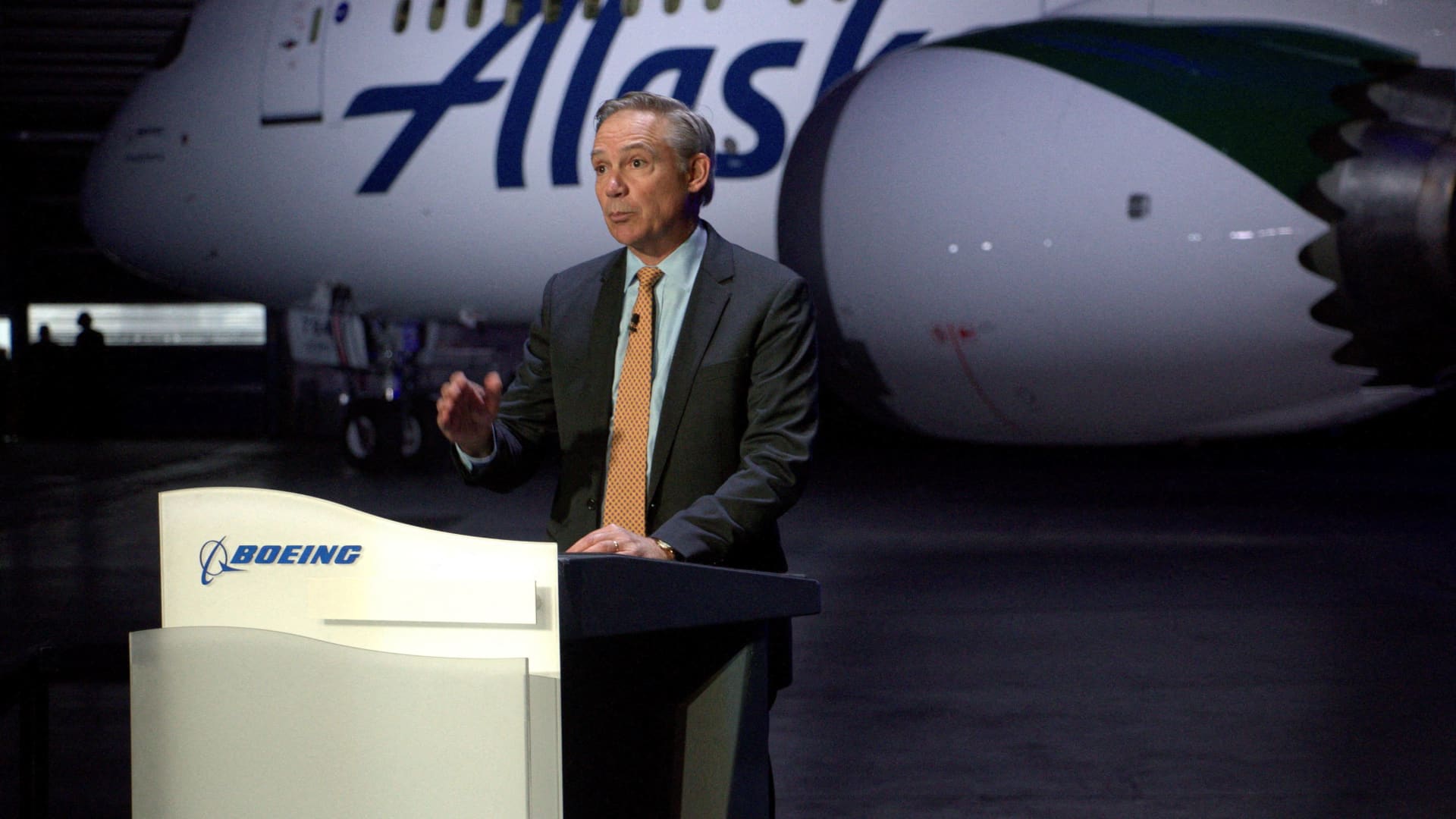
Boeing CEO Kelly Ortberg speaks at Boeing Field at an event announcing Alaska Airlines’ order for 105 737 MAX 10s and five 787-10 Dreamliner jets, in Seattle, Washington, U.S., January 7, 2026.
Dan Catchpole | Reuters
Boeing CEO Kelly Ortberg said the company expects to ramp up production of its best-selling 737 Max aircraft to 47 a month from 42 this summer, key to stemming the manufacturer’s losses.
“We’re hearing very good things about the quality of our airplanes” from customers, Ortberg told CNBC’s “Squawk on the Street” on Wednesday after the company reported a smaller-than-expected loss for the first quarter.
“All systems are go,” he said.
Boeing reported improvements across its businesses, including its key commercial aircraft unit, as the manufacturer tries to return to profitability.
Further increases of Max production requires Federal Aviation Administration approval, a requirement after a near-catastrophic blowout of a fuselage door plug in January 2024.
Ortberg said the company is also not seeing a slowdown in aircraft orders since the war in the Middle East began in February.
Here’s how Boeing performed in the first quarter, compared with analysts’ estimates compiled by LSEG:
Loss per share: 20 cents adjusted vs. a loss of 83 cents expected
Sales rose 14% to $22.22 billion in the first three months of the year. The company narrowed its net loss in the first quarter to $7 million, or 11 cents a share, from a loss of $31 million, or 16 cents a share, a year earlier. Adjusting for one-time items, Boeing posted a loss of 20 cents a share.
“Though we’ve faced some challenges, I’m proud of how our team has pulled together and worked through them to keep us on plan for the year,” Ortberg told employees in a note Wednesday. “When we work as a team, it’s incredible what we can do as a company.”
Ortberg took the reins in August 2024, tasked with course-correcting for Boeing after years of safety and manufacturing crises that have cost the company billions of dollars.
Boeing said it still expects certification of the long-delayed 737 Max 7 and Max 10, the smallest and largest of the bestselling Max family aircraft, later this year, with deliveries starting in 2027.
Boeing’s commercial aircraft unit handed over 143 airplanes in the first quarter, up 10% from a year earlier. The unit, Boeing’s largest, posted revenue $9.2 billion, up 13%, though it still posted a loss from operations.
The company’s defense business revenue rose 21% to $7.6 billion, and its services business revenue increased 6% from 2025, to $5.37 billion in the first quarter.
BMW wants to keep making sedans in spite of U.S. tariff pressures on German imports and the far higher sales of sport utility vehicles, said Sebastian Mackensen, the company’s North America chief.
Mackensen made the comments in an interview on Tuesday, a day before BMW unveiled an updated version of its full-size 7 Series sedan, which includes a slew of design and technology features BMW had originally developed for its electric vehicles.
The 7 Series vehicles will be the first without electric powertrains to come equipped with the new tech, which includes a panoramic heads-up display in the windshield and a voice assistant that uses artificial intelligence. Other upgrades include an enlarged drop-down screen that, along with a 36-speaker array, can essentially turn the rear seats into a small movie theater.
Called “neue klasse” — German for “new class” — BMW had intended its EVs to meld futuristic designs with a software-driven vehicle platform, following EV makers such as Tesla, Rivian, Lucid and Chinese brands.
“Already so many innovations have come to life that the company decided we need to bring those innovations into our entire lineup,” Mackensen said.
The 7 Series currently starts above $99,000 for the base model and runs up through a $168,000 starting price for the high-performance i7 M70 EV.
“I would say it is really on the top of our product portfolio,” Mackensen said. “It is the pinnacle of what we produce when it comes to luxury, but obviously always, always performance.”
However, since 2018, another full-size BMW, the X7, has rocketed past the 7 Series in the U.S. in terms of sales. In 2025 BMW sold nearly about twice as many full-size X7 SUVs as it did full-size sedans, if you combine sales of both the 7-Series with the similar, two-door, 8-Series.
This reflects an industry-wide trend, as SUV sales have overtaken sedans by a wide margin.
The X7, meanwhile, is made in Spartanburg, South Carolina, while the 7 Series, like all BMW sedans, is imported. Vehicles shipped to the U.S. from Germany carry a 15% tariff.
“This is definitely going to come into play,” said Robby DeGraff, manager of product and consumer insights at AutoPacific. “I can’t see BMW ever reallocating production of the 7 Series stateside, so the automaker is going to have to carefully keep tabs on demand and actual sales, to see how long it will be worth it to import the 7 Series.”
He added that the i7 is at even greater risk, given the pullback in U.S. EV sales.
‘A showpiece’
Though some of BMW’s closest rivals — such as Mercedes-Benz and Porsche — still have full-size sedans, several premium and luxury automakers have pulled theirs from the U.S. market in recent years.
Swedish maker Volvo stopped importing its S60 and S90 sedans in 2025. Lexus will discontinue the LS full-size sedan in the U.S. after the 2026 model year. German rival Audi said it will stop making the A8. It has been several years since American brand Lincoln made a sedan of any size.
Mackensen said that means the 7 Series sedan has a lot of potential.
“We obviously have a successful SUV lineup,” he said. “But we have always been a very successful sedan brand. We have a healthy share of sedans in our overall sales. And we like sedans. A lot of BMW customers like sedans, and we have no intention to stop offering sedans also in the future.”
By some metrics, sedans don’t have as strong a business case as SUVs do, said Stuart Pearson, head of automotive and mobility research at Oxcap Analytics.
“If you were being just purely economical about it and not thinking about image and brand, just saying, ‘Well, is this model worth the return?’ You might say no,” Pearson said.
Pearson added that BMW does sell many lower-priced sedans. The 7 Series shares underpinnings with some of them, such as the smaller 5 Series, so the cost of producing it is incremental, And, he added, the 7 Series is a technological flagship.
“I think they build these, these days, more to prove that they can than anything else,” said Sean Tucker, managing editor of Kelley Blue Book. “The fastest version of the 7 Series right now has a 0 to 60 time of 3.5 seconds. That is absurd for a car this large. The rear seats are as luxurious as the front seats. … This is everything BMW can build. It’s a showpiece.”
A substantial share of customers are still considering sedans overall. According to an AutoPacific survey of 18,000 Americans who plan to buy or lease a vehicle in the next three years, 45% of prospective BMW customers said they were most likely to get a four-door sedan. That percentage is very similar, if not identical, to that of Mercedes-Benz and Audi.
“I don’t think we’re going to see BMW pull the plug on its 7 Series soon, or Mercedes-Benz kill the S-Class anytime in the near future,” DeGraffsaid. “That, to me, would be a shocker. Those two brands really know their target audiences. Again, consumer choice is king in the luxury space.”
The U.S. alone accounts for about 30% of BMW’s profits, Pearson said, and that’s only grown as automakers have faced increasing pressure from Chinese automakers.
“The U.S. is a critical market to BMW,” Pearson said. “It’s always been one of its more profitable markets.”
The brand has set “ambitious” overall sales targets in the U.S. for 2026, Mackensen said — though he wouldn’t share specific numbers. In 2025, BMW was the top-selling luxury brand in the U.S., according to according to Kelley Blue Book.
“We are bullish on BMW performance in the United States,” he said.
While younger generations have been buying beauty products in droves, data shows that a different generation holds more spending power: Generation X.
Often dubbed the “forgotten generation,” Gen X spans those born between 1965 and 1980, according to Pew Research Center. Sandwiched between baby boomers and millennials, the often-overlooked generation hasn’t held the spotlight nearly as much as its counterparts.
But experts said it may be one of the most important generations for the beauty industry over the next few years.
Gen X will be the consumer spending leader globally through 2033, surpassing $20 trillion in spending power, according to data from NielsenIQ. The generation makes up roughly 25% of the total spend for beauty, both on beauty products and beauty services.
More importantly, the Gen X beauty market will grow to 1.3 times its current size in the next five years, NielsenIQ said.
That growth, according to the company, comes from a culmination of factors: The generation is financially stable and well established, has been leaning into anti-aging and longevity trends, and is heavy on brand loyalty.
According to Chicago-based market research firm Circana, households with members of Gen X accounted for 44% of total dollars spent on beauty in the past year, with skincare being their top category.
“This aligns with how beauty companies are focusing on solutions tied to skin health, anti-aging and long-term results, which are all areas that resonate strongly with Gen X consumers,” said Larissa Jensen, a beauty industry advisor at Circana.
The cohort will also see an increase its spending across haircare and makeup, Jensen added.
It’s a trend that’s been complemented by a broader focus on wellness and anti-aging.
“We’re not ignoring people as they get older in the beauty industry as much anymore,” said Anna Mayo, a NielsenIQ beauty thought leader. “For the first time, we’re seeing brands launched and they’re talking about menopause. … I think that really helps keep people engaged. They feel like they’re not buying something that was made for a college student.”
Gen X is also at the “prime spending phase” of their lives, with NielsenIQ estimating that between 2021 and 2033, the cohort will spent $15.2 trillion a year, expected to rise to $23 trillion by 2035.
Though the generation is spending its money experimenting with different brands and products, Mayo noted that its members have high brand loyalty and are likely to stick to and continue investing in a product once it sticks.
“Part of this is the industry has gotten really good at developing brands that are made for a lot more niche audiences,” she said. “We’re less so in the era of these mass market brands.”
The retail winners
A shopper enters an Ulta Beauty store in Pleasant Hill, California, US, on Wednesday, Dec. 3, 2025.
David Paul Morris | Bloomberg | Getty Images
It’s a growth that companies are taking note of, too. In early April, Ulta CEO Kecia Steelman told Yahoo Finance that catering to older generations is part of the company’s business strategy.
“I think 50 is the new 30 and 60 is the new 40s,” she said. “So those of us that are aging, we want to age gracefully, so if we can find products that are actually helping the longevity of the look, we’re leaning into that.”
Ulta did not respond to CNBC’s request for comment.
Sephora is seeing similar growth, telling CNBC the company is actively investing in broadening its brands that target the high-spending Gen X group.
“As we expand our assortment – particularly for our Gen X clients, with brands like YSE Beauty by Molly Sims, Sarah Creal and U Beauty – our focus remains on delivering brands with a clear understanding of our consumers’ goals, concerns, and preferences, while elevating authentic founder stories and expertise, which we know resonates with our clients,” Carolyn Bojanowski, Sephora’s U.S. executive vice president of merchandising, told CNBC in a statement.
Bluemercury, a personal care company, even launched a campaign last year celebrating women who are over the age of 40. The company identified Gen X as one of its biggest opportunities given its spending power and focus on luxury beauty.
The winners from Gen X’s spending spree will be clear, according to Lindy Firstenberg, a consultant at AlixPartners.
“Ulta is going to win because they’ve doubled down on wellness, and they have a huge focus on menopause brands,” Firstenberg said.
While Sephora has been outwardly advertising for younger cohorts, Firstenberg said even it’s emerging as a sort of Gen X “hotspot,” along with Bluemercury. The key, she said, has been investing in curation and one-on-ones with clients.
Members of Gen X, who grew up with salespeople working counters at department stores, invest in the experience as well as the product. Firstenberg said the importance of knowledgeable sales associates is 23% higher for Gen X than for Gen Z.
Brands that focus on meeting Gen X where they are instead of chasing younger generations, will secure their spending power, Firstenberg added.
“That is what Gen X wants: They want the best products, they want to be educated, they want that high talent and they want that service,” she said.
How Gen X spends
Shoppers are seen outside the French multinational personal care and beauty retail brand Sephora store in Spain.
Kirti Tewani, a member of Gen X and a content creator focused on promoting beauty and wellness for her cohort, said she’s seen a growing interest in investing in products that work to slow down or prevent further aging.
That generation posed a largely “untapped” market when she started seeing increased attention on it roughly two years ago.
“Gen X has been a generation that has gone through so many ups and downs in their lives that now we are at a position where we’re financially more independent, the kids have grown older and now we have the time to put into ourselves,” she said. “So we’re taking care of ourselves from the inside out.”
Tewani said she’s specifically seen Gen X focused on products that boast long-term effects and target areas like hyperpigmentation, dry skin and large pores. They’re also pairing those products with a wellness-focused lifestyle, she added, focusing on diet, exercise and sleep.
The generation is also looking for clean ingredients, according to Tewani, coinciding with a larger push toward simpler formulations in the beauty industry.
“I think the brands definitely knew that this was coming,” Tewani said. “Now, more brands are jumping on the bandwagon because they’re understanding where the spending markets are, and Gen X definitely fills in that gap.”
And Gen X’s age also means its spending for beauty expands beyond the surface level.
According to AlixPartners’ Firstenberg, people of those age are likely to be in a so-called “sandwich generation,” which means they’re buying beauty products for both parents and children, contributing to its large spending share.
It’s also not a generation that’s focused on newness or flashy marketing and instead want the products that show proven results.
Gen X’s spending power is nearly 25% above the national average, she added.
“We’re not only seeing that they have this power, but they yield it,” she said. “They’re going to maintain this highest spend by generation for at least the next eight years.”
An American Airlines flight lands at Ronald Reagan Washington National Airport in Arlington, Virginia, U.S., Nov. 7, 2025.
Nathan Howard | Reuters
American Airlines on Thursday cut its 2026 earnings forecast, becoming the latest airline to lower its outlook after a surge in fuel costs added billions to expenses this year.
American said it could post an adjusted per-share loss of 40 cents up to earnings of $1.10 a share, lower than the per-share earnings of $1.70 to $2.70 it forecast in January, though Wall Street analysts have been trimming their forecasts for the industry since the U.S.-Israel attacks on Iran this year.
Airlines have been either cutting their full-year forecasts or holding off on further guidance because of volatile prices for jet fuel since the war started. Fuel is generally their biggest expense after labor.
Carriers have also been pulling back on their capacity growth plans to cut costs, which can drive up airfare when fewer seats are for sale. Airline executives have said customers are still booking despite higher fares.
American noted the midpoint of its 2026 earnings forecast is flat on the year, even with a $4 billion increase in fuel costs.
“We’re going to recover, but key to that is just supply and demand balance,” CEO Robert Isom told CNBC’s Phil LeBeau on Thursday. “We’re going to be quick to make sure that we adjust our flying if we need to.”
American expects to grow capacity as much as 6% in the second quarter and forecast revenue up between 13.5% and 16.5% year over year, in line with analyst forecasts. Its adjusted earnings outlook ranged from a loss of 20 cents per share up to earnings of 20 cents.
“American delivered record revenue in the first quarter, and we’re on track for another record in the second quarter,” Isom said in an earnings release. “This revenue momentum is the result of focus on our four commercial priorities — elevating the customer experience, growing our global network, driving premium revenue and leading in loyalty.”
Here is what American reported in the first quarter compared with Wall Street estimates compiled by LSEG:
Loss per share: 40 cents adjusted vs. a loss of 47 cents expected
Revenue: $13.91 billion vs. $13.79 billion expected
For the first quarter, American posted a net loss of $382 million, or 58 cents per share, compared with a net loss of $473 million, or 72 cents, a year earlier. Adjusting for one-time items, the company reported a loss of 40 cents per share.
Its first-quarter revenue of $13.91 billion was up 10.8% from revenue of $12.55 billion a year earlier.
Comcast topped Wall Street’s revenue and earnings estimates for the first quarter on Thursday, lifted by NBC’s sports slate in February and improving broadband customer losses.
“It’s still early, but the initial results are encouraging. We’re starting to see signs that our efforts are working and we’re shifting the businesses in the right direction,” co-CEO Brian Roberts said on Thursday’s earnings call. In addition to refocusing its strategy, Comcast has changed up its leadership structure, including elevating Mike Cavanagh to co-CEO alongside Roberts.
The company’s stock climbed more than 6% in morning trading.
Here’s how Comcast performed for the period compared with average analyst estimates, according to LSEG:
Earnings per share: 79 cents adjusted vs. 73 cents expected
Revenue: $31.46 billion vs. $30.43 billion expected
The company said it lost 65,000 broadband customers compared with 183,000 losses in the same period last year. Heightened competition from wireless providers like Verizon and T-Mobile has led to quarterly customer losses for Comcast and its cable peers in recent years – which has weighed on these companies’ stocks in particular.
In response, Comcast in the last year has shifted its strategy and introduced more competitive pricing packages in a bid to reduce the broadband losses. The company has also leaned on its mobile business for growth, which added 435,000 new lines during the quarter. In total, Comcast now has 9.7 million mobile customers.
“The competitive environment remains intense,” Cavanagh said on Thursday’s call. “Fixed wireless continues to market aggressively across our footprint.”
Cavanagh noted the latest mobile plans that were launched this week in an effort to attract more customers. Mobile customers must also subscribe to Comcast’s broadband service, too.
The company also reported 322,000 cable TV customer losses – fewer than the 427,000 in the same period last year.
Revenue for Comcast’s connectivity and platforms unit, which includes its Xfinity-branded broadband, cable TV and mobile businesses, decreased 2% to $17.32 billion.
Comcast’s net income fell nearly 36% to $2.17 billion, or 60 cents per share, compared with $3.38 billion, or 89 cents a share, during the same period last year. Adjusting for one-time items including amortization and investments, Comcast reported earnings per share of 79 cents.
Adjusted earnings before interest, taxes, depreciation and amortization were down roughly 17% to $7.93 billion.
Comcast’s overall revenue increased roughly 5% to $31.46 billion for the quarter.
Sports lift
Olympic Rings are seen in the historic centre of Cortina d’Ampezzo one day before the start of the Milan Cortina 2026 Winter Olympic Games ahead to the Olympic Winter Games Milano Cortina 2026 on Feb. 5, 2026 in Cortina d’Ampezzo, Italy.
Emmanuele Ciancaglini | Ciancaphoto Studio | Getty Images
The company’s overall revenue got a boost from Comcast’s NBCUniversal, which aired a slate of sports – including the Super Bowl, Winter Olympics and NBA All-Star Weekend, during the quarter – that the company coined as “Legendary February.”
The media business, which is made up of NBCUniversal, recorded a nearly 61% increase in revenue to $7.28 billion during the quarter. Excluding the Olympics and Super Bowl – which provided significant boosts to advertising sales– revenue for the unit was up about 13%.
Live sports remains the highest-rated programming on traditional TV and streaming, and beckon the most advertising dollars. The Super Bowl, in particular, breaks records annually when it comes to its pricey commercial spots. NBC received an average $8 million per 30-second ad, CNBC reported.
Domestic advertising for the media unit was up 135% to $3.45 billion for the quarter. Excluding the Super Bowl and Winter Olympics, it rose 4.7% to $1.54 billion.
NBC’s sports roster also helped lift streaming service Peacock during the quarter. Peacock subscribers increased 12% year over year to 46 million. Peacock nearly doubled revenue to $2.1 billion compared with the same period last year. The streamer recorded a quarterly loss of $432 million compared with a loss of $215 million in the prior year period.
Adjusted EBITDAfor the media segment decreased to a loss of $426 billion due to higher operating expenses related to the costs associated with the Winter Olympics and Super Bowl as well as the cost of the NBA rights.
Following the subscriber additions and increased revenue, Peacock is set to approach profitability for the first time next quarter, Cavanagh said Thursday.
Profitability has become the key marker of success for streaming services as subscriber growth has leveled out for the larger platforms such as Netflix and Disney. In response, companies have focused on revenue-driving strategies such as advertising and price hikes.
Sports will continue to pay off for Comcast’s NBC in the second quarter with the NBA playoffs and upcoming 2026 FIFA Men’s World Cup, CFO Jason Armstrong said on Thursday’s call. NBC’s Telemundo holds the Spanish language rights for the World Cup, which begins in June, and will be broadcast on both traditional TV and Peacock. The 2022 World Cup helped lift Peacock.
The Olympics has been a “meaningful differentiator” for NBC, Cavanagh said Thursday, in particular for Peacock, which has seen an increase in viewership on the streaming service.
This also marked the first quarter since Comcast spun out Versant Media, the group of assets including cable TV networks such as CNBC and MS Now, as well as Fandango and other digital businesses.
“We’re already seeing the benefits of a more focused portfolio,” Cavanagh said of the spinout on Thursday. “Our six major growth drivers now represent well over 60% of total company revenue, up from 50% when we introduced the framework three years ago.
NBCUniversal is part of the overall content and experiences segment, which also includes the film studio and theme parks – each of which saw sales climb year over year.
Revenue for the film studio was up 21% to $3.43 billion, while Universal theme parks revenue increased 24% to $2.33 billion. The theme parks were boosted by the opening of Epic Universe last May.
Disclosure: Versant Media is the parent company of CNBC. Comcast was the parent company of CNBC through the fourth quarter of 2025.