Penulis: dexpert.inc@gmail.com

  • Eli Lilly (LLY) earnings Q1 2026

    Eli Lilly (LLY) earnings Q1 2026

    Eli Lilly on Thursday reported first-quarter earnings and revenue that blew past estimates and hiked its full-year sales outlook by $2 billion, as demand for its blockbuster weight loss drug Zepbound and diabetes treatment Mounjaro spiked again.

    The pharmaceutical giant now expects 2026 revenue to come in between $82 billion and $85 billion, up from a previous guidance of $80 billion to $83 billion.

    Lilly also expects its full-year adjusted profit to be between $35.50 to $37 per share. That compares to a previous outlook of $33.50 to $35 per share. 

    Resilient demand for Zepbound and Mounjaro has helped fuel several strong quarters for Lilly despite lower prices for the medications in the U.S.

    Programming note: Eli Lilly CEO David Ricks will speak to CNBC after 7 a.m. ET on Thursday. Watch live on CNBC TV or CNBC+.

    Mounjaro’s worldwide revenue rose 125% to $8.66 billion for the quarter, including U.S. sales of $4.2 billion. That surpassed the $7.26 billion in worldwide sales that analysts were expecting for the quarter, according to StreetAccount.

    Zepbound, which entered the market roughly three years ago, posted $4.16 billion in U.S. revenue for the first quarter. That’s up 80% from the year-earlier period, as demand for the drug also rose while realized prices dropped. Analysts were expecting $4.04 billion in U.S. sales for Zepbound, according to StreetAccount.

    Lilly is working to maintain its dominance in the booming market for GLP-1 drugs, with the company holding 60.1% share of the U.S. obesity and diabetes drug market in the first quarter, according to an earnings presentation. Novo’s market share in the quarter was 39.4%.

    Here’s what Eli Lilly reported for the first quarter compared with what Wall Street was expecting, based on a survey of analysts by LSEG: 

    • Earnings per share: $8.55 adjusted vs. $6.66 expected
    • Revenue: $19.80 billion vs. $17.62 billion expected

    Shares of Lilly rose more than 5% in premarket trading Thursday.

    The company posted fourth-quarter revenue of $19.80 billion, up 56% from the same period a year ago. 

    Revenue in the U.S. climbed 43% to $12.1 billion. Eli Lilly said that was driven by a 49% increase in volume — or the number of prescriptions or units sold — for its products, primarily for Mounjaro and Zepbound. That was partially offset by lower realized prices of Zepbound and another medication for psoriatic arthritis and other conditions, the company said.

    The pharmaceutical giant booked net income of $7.40 billion, or $8.26 per share, for the first quarter. That compares with net income of $2.76 billion, or $3.06 per share, a year earlier. 

    Excluding one-time items associated with the value of intangible assets and other adjustments, Eli Lilly posted earnings of $8.55 per share for the first quarter.

    The company’s newly approved GLP-1 pill for obesity, Foundayo, launched in the second quarter, so its sales are not included in Thursday’s report.

    Still, the pill’s rollout is likely to dominate the discussion during Lilly’s first-quarter earnings call. Executives will likely face questions about whether Foundayo can reach the same level of momentum as the rival Wegovy pill from Novo Nordisk, which benefited from a three-month head start in the U.S.

    It’s too soon to assess the performance of Lilly’s pill. But early prescription data suggest its initial rollout has been “modest,” according to a note last week from Leerink Partners analyst David Risinger. 

    In February, Lilly said it expects to benefit from Foundayo’s launch, Medicare coverage of obesity drugs coming online later this year and continued worldwide demand for Mounjaro and Zepbound. But the company also expects to face pricing pressure, driven by a drug pricing deal with President Donald Trump and lower cash-pay prices for Zepbound, among other factors. 

    Still, Lilly CEO Dave Ricks said in an interview in late April that he expects lower prices to accelerate prescription volumes in the U.S. He also estimated that global GLP-1 use will rise from approximately 20 million patients at the end of last year to 30 million at the end of 2026.
    Source link

  • Carvana (CVNA) earnings Q1 2026

    Carvana (CVNA) earnings Q1 2026

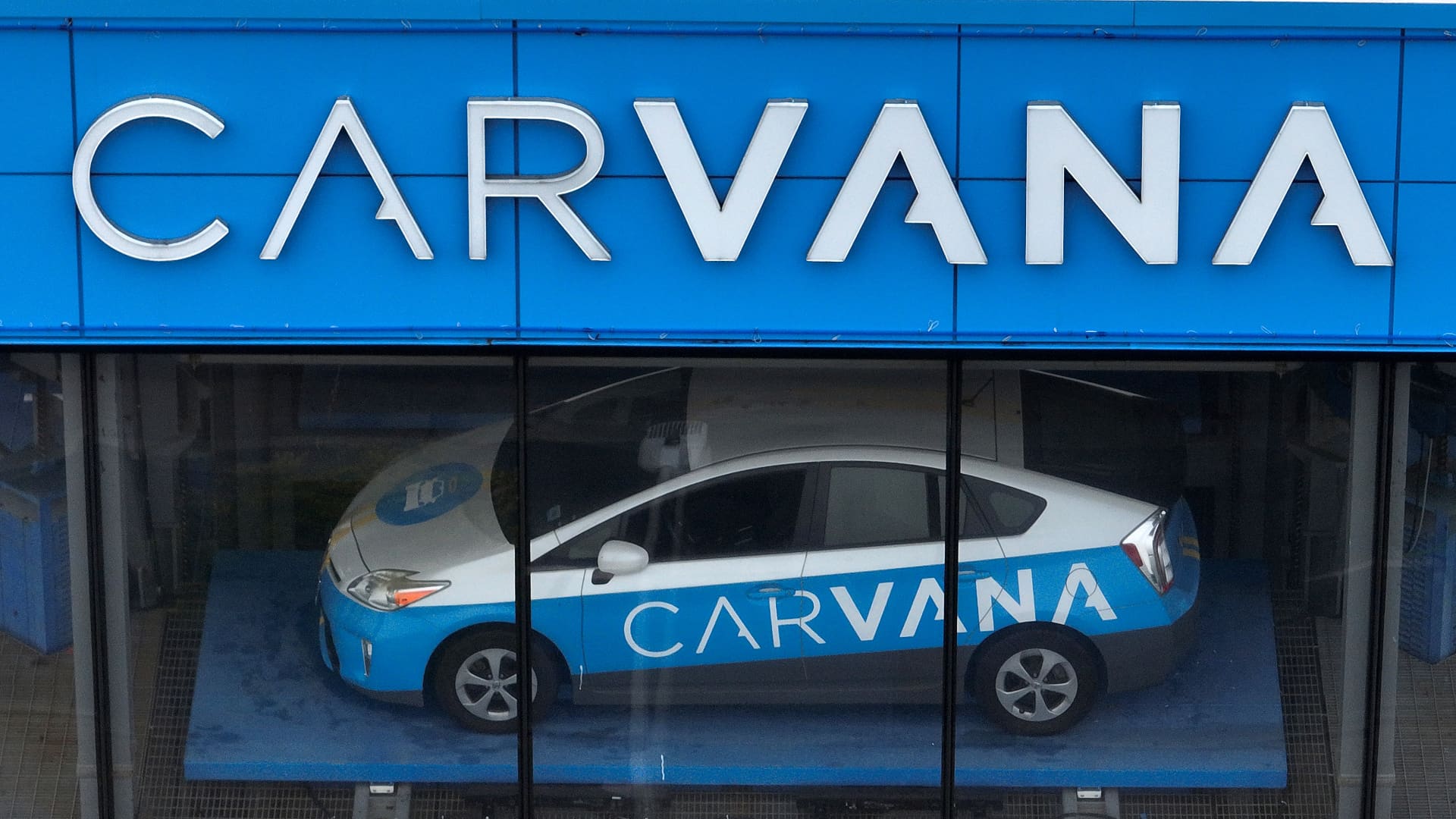
    In an aerial view, a sign is posted on the exterior of a Carvana car vending machine on July 19, 2023 in Daly City, California.

    Justin Sullivan | Getty Images

    Shares of Carvana jumped by as much as 10% in extended trading after the company reported record results during the first quarter that topped Wall Street’s expectations.

    Here’s how the company performed in the first quarter, compared with average estimates compiled by LSEG:

    • Earnings per share: $1.69 vs. $1.43 expected
    • Revenue: $6.43 billion vs. $6.08 billion expected

    The online used car retailer reported adjusted earnings before interest, taxes, depreciation and amortization of $672 million, and net income of $405 million, up from $373 million a year earlier.

    Carvana reported retail sales of 187,393 units, a 40% increase compared with a year earlier. Its revenue was $6.43 billion, up 52% from a year ago.

    The company does not release annual guidance but said it expects sequential increase in both retail units sold and adjusted EBITDA during the second quarter, leading to all-time company records on both metrics.

    Shares of Carvana, which has a roughly $87 billion market cap, are off 6% in 2026, but are roughly 63% higher over the past year.

    Source link

  • Chipotle Mexican Grill (CMG) Q1 2026 earnings

    Chipotle Mexican Grill (CMG) Q1 2026 earnings

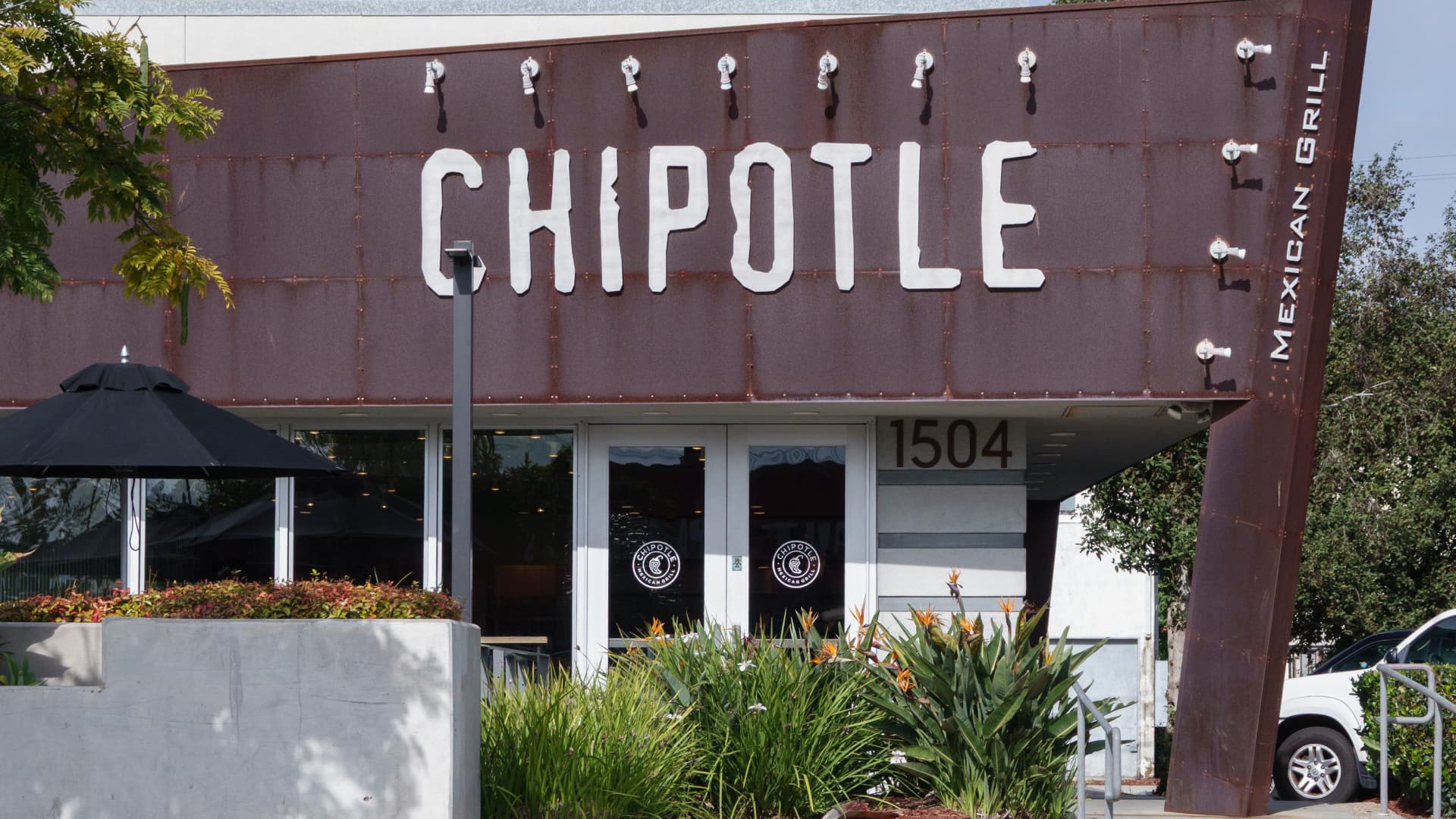
    A Chipotle logo is displayed on a sign outside a restaurant on Jan. 9, 2026 in San Diego, CA.

    Kevin Carter | Getty Images

    Chipotle Mexican Grill on Wednesday reported surprising same-store sales growth, signaling the burrito chain could be starting to put last year’s woes behind it.

    Shares of the restaurant company rose about 3% in extended trading.

    Here’s what the company reported compared with what Wall Street was expecting, based on a survey of analysts by LSEG:

    • Earnings per share: 24 cents adjusted, in line with expectations
    • Revenue: $3.09 billion vs. $3.07 billion expected

    Chipotle reported first-quarter net income of $302.8 million, or 23 cents per share, down from $386.6 million, or 28 cents per share, a year earlier. Higher effective tax rates, wage inflation and rising beef prices weighed on its margins during the quarter.

    Excluding legal expenses, restructuring costs and other items, the company earned 24 cents per share.
    Net sales rose 7.4% to $3.09 billion, boosted by new store openings.

    The company’s same-store sales grew 0.5%, reversing the fourth quarter’s declines. Wall Street was anticipating that its same-store sales would shrink 0.7%, based on StreetAccount estimates.

    CEO Scott Boatwright said in a statement that the results exceeded Chipotle’s expectations for the quarter. And its same-store sales momentum has continued into the second quarter, he said on the company’s earnings conference call.

    Chipotle CEO on Q1 Results: Proud of how quarter landed

    To attract diners, Chipotle has been balancing new menu items – like its cilantro lime sauce – with bringing back favorites for a limited time, like Chicken Al Pastor. Combined with its loyalty program, the menu innovation has helped lure back younger consumers, a cohort that stopped buying Chipotle as often last year and packing lunch instead.

    Traffic to Chipotle restaurants increased 0.6%. In the year-ago period, the chain saw transactions dip 2.3%, an early warning sign that diners weren’t visiting as frequently.

    While many restaurant chains saw traffic and sales weaken in 2024, Chipotle initially bucked the trend. But last year was tough for the fast-casual chain and other restaurants at similar price points. Customers, concerned about the broader economy and their disposable incomes, weren’t going to its restaurants as often to save money.

    Chipotle addressed the downturn by trying to improve restaurant operations and adding new menu items. On Monday, the company announced Fernando Machado, an alumnus of Restaurant Brands International, as its newest chief brand officer.

    For the full year, the company reiterated its previous projection of flat same-store sales. CFO Adam Rymer said the outlook is “conservative,” citing unpredictable consumer trends.

    The economy has only become more volatile since Chipotle’s last earnings report; the U.S. war with Iran has led to climbing fuel prices, and few companies have opted to raise their full-year outlooks in recent weeks. Chipotle executives said that sales softened in March, after the conflict began.

    The war in the Middle East also means that Chipotle may open fewer restaurants this year than expected, according to Boatwright. The company has a development deal with Alshaya Group to operate locations in the region as part of its broader strategy to expand internationally.

    Source link

  • PayPal makes Venmo a standalone business unit as potential buyers circle

    PayPal makes Venmo a standalone business unit as potential buyers circle

    Enrique Lores, then-CEO of Hewlett-Packard speaks on CNBC outside the World Economic Forum in Davos, Switzerland on Jan. 22, 2025.

    Gerry Miller | CNBC

    PayPal CEO Enrique Lores has this week told managers that he is reorganizing the firm’s reporting lines to separate Venmo, the popular mobile payments app, from the company’s other operations, CNBC has learned exclusively.

    Venmo will soon be its own standalone segment within PayPal, making it easier to track its progress or potentially sell the business to another company, said people with knowledge of the changes.

    PayPal is looking to recruit a digital banking executive to run the new Venmo segment, said the people, who weren’t authorized to speak publicly.

    The other two segments will be a PayPal-branded business for merchants and consumers and a payment services unit that includes its Braintree unit and crypto operations, the people said.

    Lores, who spent six years as CEO of computer maker HP before stepping in as PayPal CEO in March, is betting that a sharper corporate structure can reignite growth at a company that has lost ground to Apple, Google and Stripe in the battle over e-commerce transactions. Lores replaced Alex Chriss, a former Intuit executive who struggled to revive a stock that had fallen roughly 80% from its pandemic-era peak.

    PayPal’s precipitous share decline has attracted interest from potential bidders, including rival Stripe, for parts or all of the company, Bloomberg reported in February. The firm has hired bankers to gird itself against takeover bids or activist campaigns, according to Semafor.

    PayPal declined to comment for this story.

    Job cuts in limbo

    The structural changes come as the threat of a broad round of layoffs looms like those seen at payments rival Block. Earlier this year, PayPal managers were tasked by former CEO Chriss to come up with 15% headcount reductions, but that effort was left in limbo when Chriss was replaced, said one of the people.

    Venmo, with its nearly 100 million users, is viewed as arguably PayPal’s most valuable standalone asset because of its growth prospects. Analysts have said it is a key target for potential acquirers and could attract a premium valuation.

    Amid the changes, two key executives, Diego Scotti, who ran the consumer group that included Venmo, and Michelle Gill, who oversaw a small business group that is being dissolved, are departing, the people said. Scotti and Gill didn’t immediately respond to requests for comment.

    The firm will also stand up a new artificial intelligence transformation group led by Anshu Bhardwaj, a former Walmart tech executive, according to the people. A financial services unit that supports the other main business segments will be run by Scott Young, a former Goldman Sachs consumer banking manager, the people said.

    PayPal reports first-quarter results next week.

    Source link

  • Ford Motor (F) earnings Q1 2026

    Ford Motor (F) earnings Q1 2026

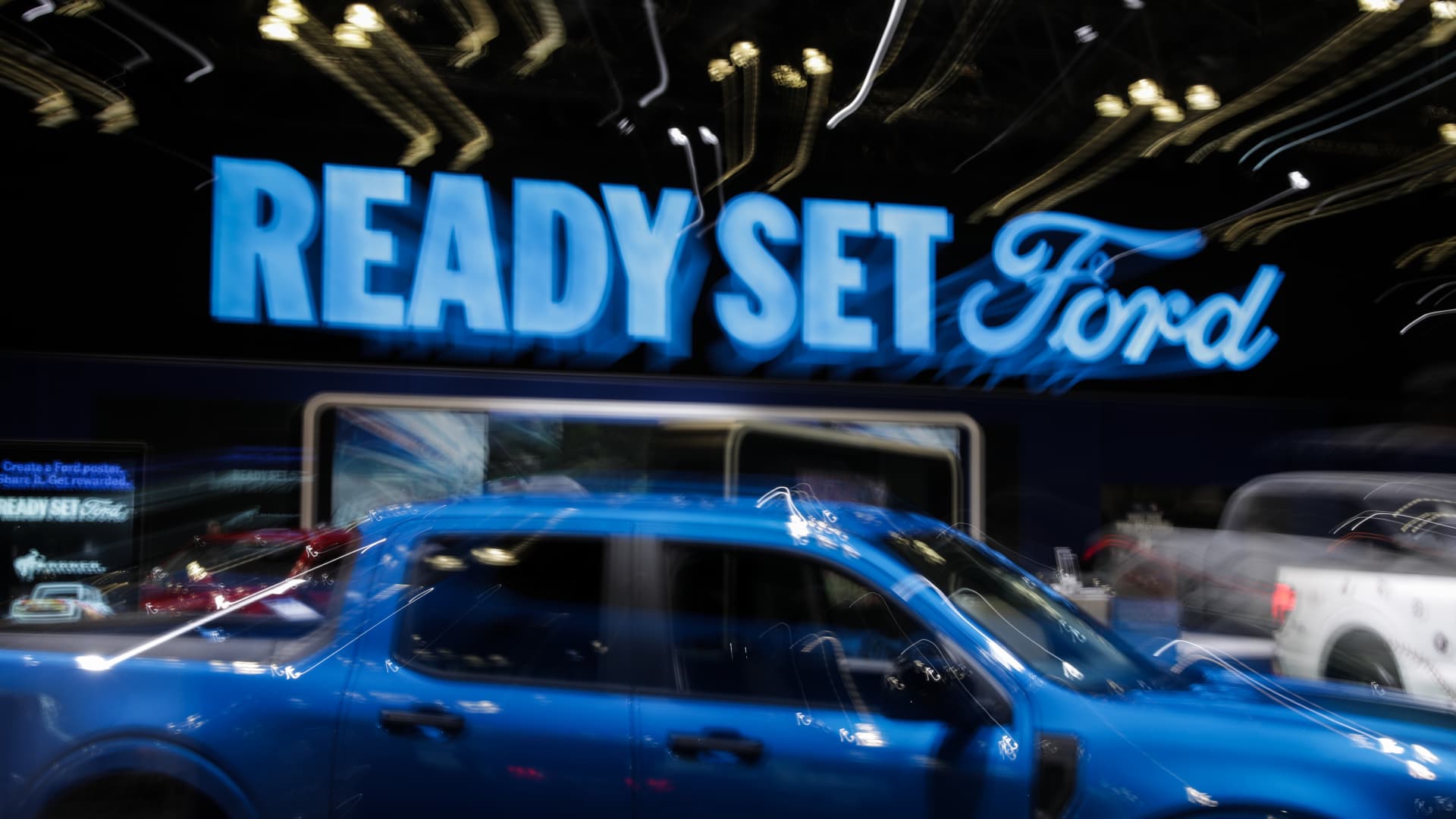
    Ford at the New York International Auto Show in New York City on April 2, 2026.

    Danielle DeVries | CNBC

    DETROIT — Ford Motor is set to announce first-quarter results after the markets close Wednesday.

    Here’s what Wall Street is expecting, based on a survey of analysts by LSEG:

    • Earnings per share: 19 cents adjusted
    • Automotive revenue: $38.82 billion

    Those results would mark a roughly 3.7% increase in automotive revenue compared with a year earlier and a 35.7% increase in adjusted earnings per share, up from 14 cents.

    Ford’s 2025 first-quarter results included $37.42 billion in automotive revenue, adjusted earnings before interest and taxes of $1.02 billion and net income of $471 million. Its total revenue, which includes its Ford Credit financing arm, was $40.7 billion.

    Aside from earnings and any changes to the automaker’s 2026 guidance, investors will be monitoring effects from the Iran war, tariff impacts and any updates to production at key aluminum supplier Novelis following two fires. They’ll also be watching for any additional charges related to the automaker’s pullback in all-electric vehicles.

    Ford announced plans in December to record about $19.5 billion in special items starting in the fourth quarter of 2025 related to a restructuring of its business priorities and EV investments. That includes $7 billion in 2026 and 2027, with a majority of $5.5 billion in cash charges through 2027 being recorded this year, Ford said at the time.

    The Detroit automaker’s 2026 guidance released in February included adjusted EBIT of between $8 billion and $10 billion, up from $6.8 billion last year; adjusted free cash flow of between $5 billion and $6 billion, up from $3.5 billion in 2025; and capital expenditures of $9.5 billion to $10.5 billion, up from $8.8 billion.

    Source link

  • Coca-Cola (KO) Q1 2026 earnings

    Coca-Cola (KO) Q1 2026 earnings

    Coca-Cola on Tuesday reported quarterly earnings and revenue that topped analysts’ expectations, fueled by higher demand for its beverages.

    For the full year, Coke is now projecting comparable earnings per share growth of 8% to 9%, up from its prior forecast of 7% to 8%, thanks to lower effective tax rates.

    And despite uncertainty over the U.S.-Iran war and its ramifications for the broader economy, the company reiterated its previous outlook of organic revenue growth of 4% to 5%.

    “During the quarter, the external environment differed greatly across our markets,” CEO Henrique Braun said on the company’s conference call. “While many consumers remained resilient, others are under pressure due to persistent inflation, greater macroeconomic uncertainty and volatilities driven by the conflict in the Middle East.”

    Shares of the company rose 5% in morning trading.

    Here’s what the company reported compared with what Wall Street was expecting, based on a survey of analysts by LSEG:

    • Earnings per share: 86 cents adjusted vs. 81 cents expected
    • Revenue: $12.47 billion adjusted vs. $12.24 billion expected

    Coke reported first-quarter net income attributable to shareholders of $3.92 billion, or 91 cents per share, up from $3.33 billion, or 77 cents per share, a year earlier.

    Excluding impairment charges and other items, the beverage giant earned 86 cents per share.

    The company’s adjusted net sales climbed 12% to $12.47 billion. Coke’s organic revenue, which strips out acquisitions, divestitures and currency, rose 10% in the quarter.

    The company’s unit case volume increased 3% globally. The metric excludes pricing to reflect demand more accurately.

    In the past few quarters, Coke executives have reported weaker demand from lower-income consumers. However, premium brands like Fairlife and Smartwater have stayed strong in the current K-shaped economy, boosted by high-income shoppers who aren’t feeling the same pinch as low-income consumers.

    Coke has also been trying to offer more affordable options for budget-conscious shoppers, Braun said on Tuesday’s call.

    All of Coke’s operating segments reported volume growth for the quarter, including its home market. The company’s volume in North America increased 4%.

    Across the portfolio, Coke’s water, sports, coffee and tea segment reported the strongest global growth. The division saw volume rise 5%, fueled by stronger demand for its tea and bottled water.

    The sparkling soft drinks division reported that volume increased 2%, fueled by a 13% jump for Coca-Cola Zero Sugar.

    The laggard of the portfolio this quarter was Coke’s juice, value-added dairy and plant-based beverage segment, which reported a volume decline of 1%. Growth in Fairlife and Santa Clara, a Mexican dairy brand, was not enough to offset the sale of the company’s finished product operations in Nigeria last year.

    Looking ahead to the rest of the year, Coke executives expressed confidence that they would be able to weather the uncertainty caused by the war between the U.S. and Iran.

    “Notwithstanding volatility in certain commodities, like tea and coffee, we believe the overall impact on our cost basket is manageable at this time,” CFO John Murphy said, adding that the outlook may change as the geopolitical situation progresses.

    The company has less exposure to higher aluminum and plastic prices than its bottling partners. However, sales in the Middle East did weaken in March after the conflict began, executives said.

    Source link

  • Yum Brands (YUM) Q1 2026 earnings

    Yum Brands (YUM) Q1 2026 earnings

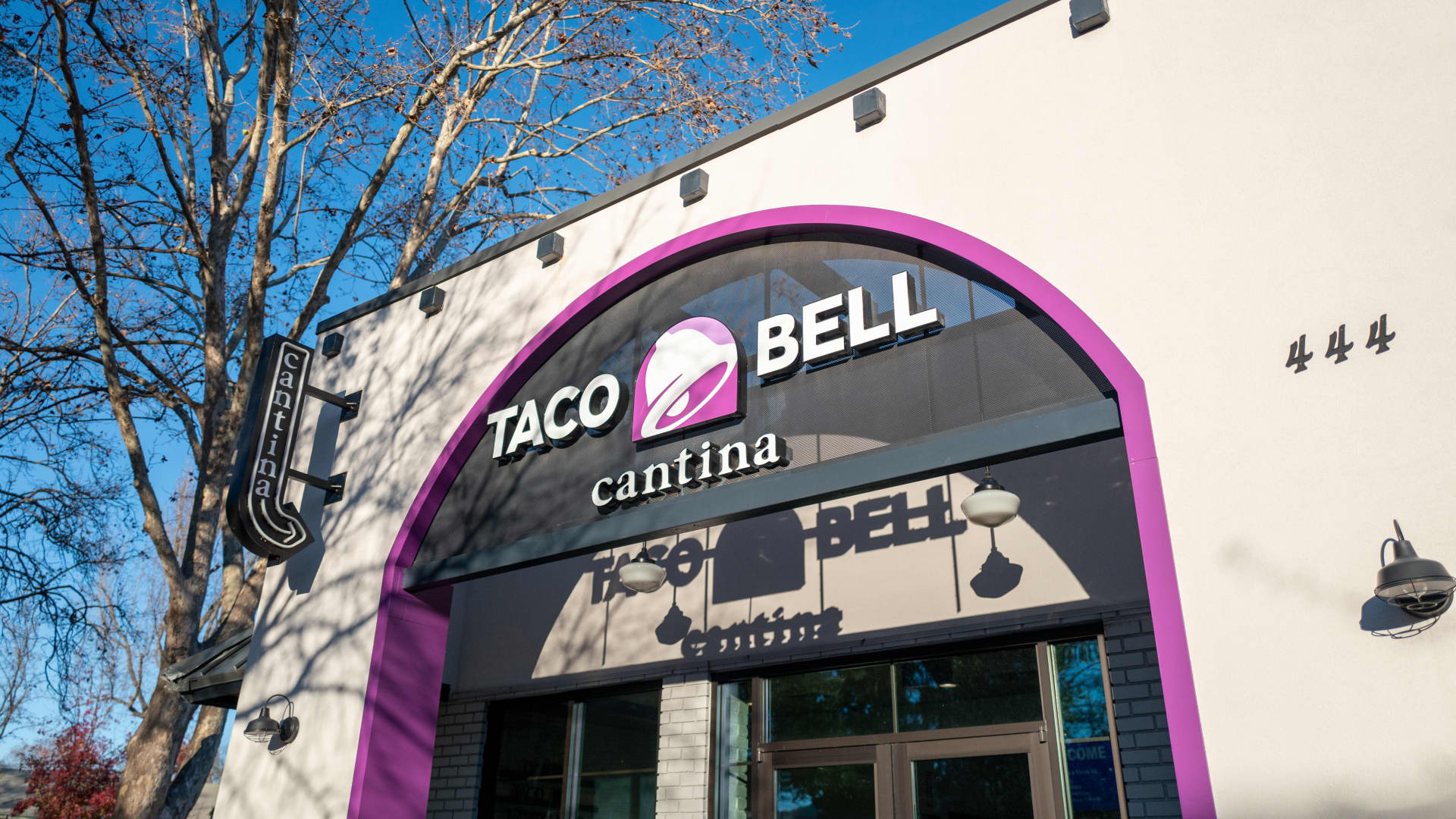
    Facade of a Taco Bell Cantina restaurant in Danville, California, Jan. 8, 2026.

    Smith Collection | Gado | Archive Photos | Getty Images

    Yum Brands on Wednesday reported quarterly earnings and revenue that topped analysts’ expectations, fueled by another strong quarter for Taco Bell.

    Here’s what the company reported compared with what Wall Street was expecting, based on a survey of analysts by LSEG:

    • Earnings per share: $1.50 adjusted vs. $1.38 expected
    • Revenue: $2.06 billion vs. $2.04 billion expected

    Yum reported first-quarter net income of $432 million, or $1.55 per share, up from $253 million, or 90 cents per share, a year earlier.

    Excluding charges related to its strategic review of Pizza Hut and other items, the company earned $1.50 per share.

    Net sales climbed 15% to $2.06 billion, lifted by higher revenue from company-owned restaurants. Last year, the company bought more than 100 Taco Bell locations across the Southeast with a goal of accelerating development and profitability.

    Across Yum, global same-store sales rose 3%, driven by growth at Taco Bell, the gem of the company’s portfolio.

    Taco Bell’s same-store sales increased 8%, topping Wall Street’s estimates of 5.6% growth, according to a survey by StreetAccount.

    “Taco Bell delivered an outstanding 8% same-store sales growth, meaningfully ahead of the [quick-service restaurant] industry, building off a very strong Q1 same-store sales growth rate in 2025,” Yum CEO Chris Turner said in a statement.

    KFC reported same-store sales growth of 2%, shy of the 2.5% increase projected by StreetAccount. While the fried chicken chain’s international business is considered one of Yum’s “growth engines,” its U.S. business has struggled in recent years, buckling under increased competition and consumers’ value expectations. KFC U.S. system sales fell 2% during the first quarter.

    To win back customers, KFC is taking some cues from Taco Bell’s successful playbook by leaning into innovation and affordability.

    Similarly, Pizza Hut saw stronger results outside of its home market. The struggling pizza chain reported flat same-store sales globally, although its international business saw same-store sales rise 2% in the quarter. Its U.S. same-store sales shrank 4%.

    Analysts were projecting global same-store sales declines of 0.7% for Pizza Hut, according to StreetAccount.

    In November, Yum said it would explore strategic options for the chain, which has long been the laggard of its portfolio. Several private equity firms, including Apollo Global Management and Sycamore Partners, are among the potential buyers vying for Pizza Hut, Reuters reported earlier this month.

    While Yum did not provide an update on the strategic review on Wednesday, its earnings release did include a bullet point showing the company’s system sales, unit count and core operating profit excluding Pizza Hut.

    Source link

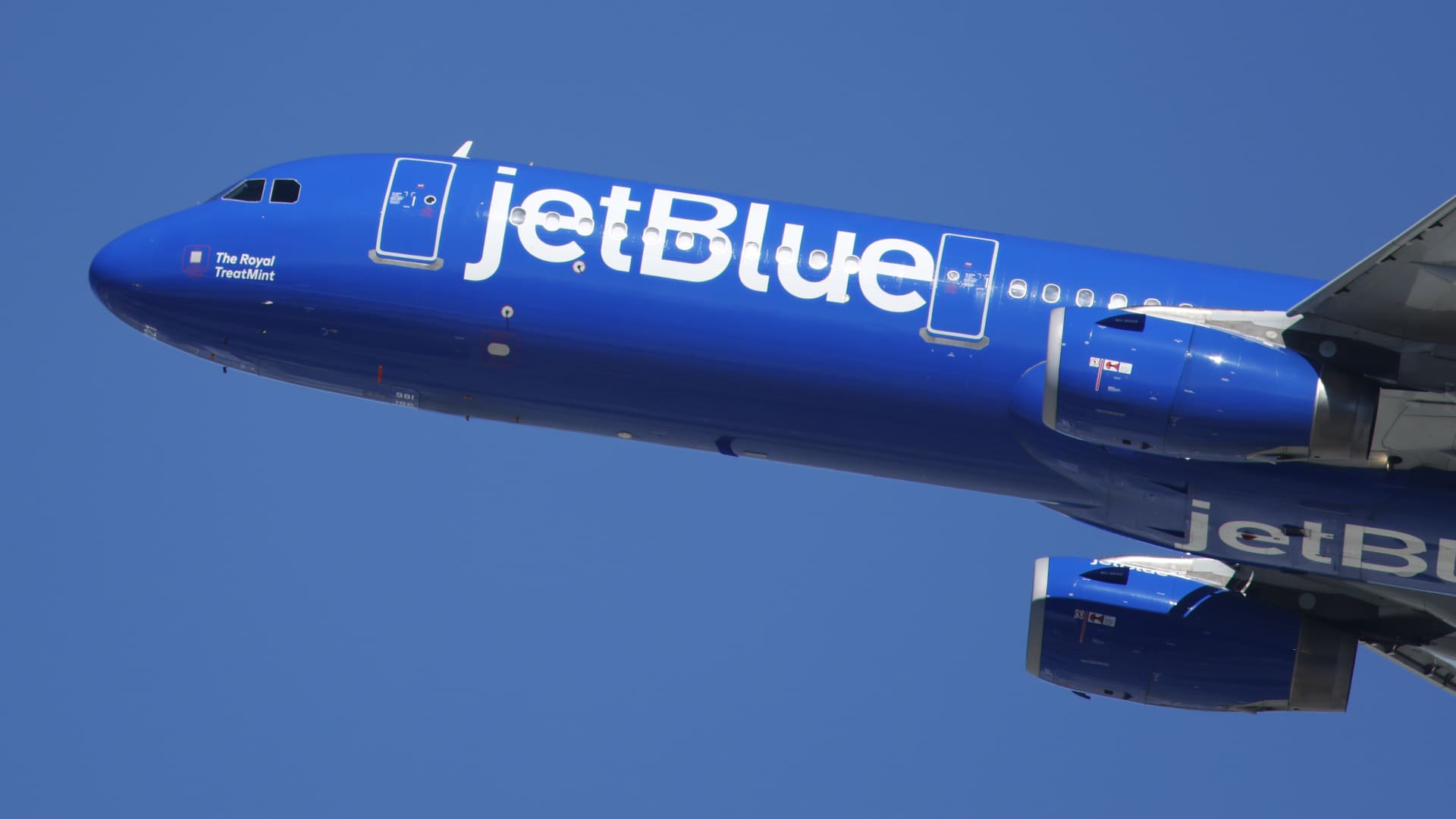
  • JetBlue keeps Fort Lauderdale flights, regardless of Spirit’s fate

    JetBlue keeps Fort Lauderdale flights, regardless of Spirit’s fate

    JetBlue Airways is moving forward with its flight plans at Fort Lauderdale–Hollywood International Airport, its president said, regardless of whether the airport’s No. 1 carrier, Spirit Airlines, gets a government bailout.

    JetBlue, United Airlines, Frontier Airlines, Breeze Airways and others added flights last year at Fort Lauderdale, Florida, which is Spirit’s home hub as well as at other major airports where Spirit has a large presence. Those moves came shortly after Spirit filed for Chapter 11 bankruptcy protection for the second time in less than a year.

    As a possible liquidation looms, budget carrier Spirit is in talks with the Trump administration for a potential bailout that could include a $500 million loan that could also give the government an up to 90% stake, people familiar with the matter have said, requesting anonymity to talk about the deal before it’s public. The airline’s lenders are assessing a deal this week.

    Spirit has cut its capacity in recent years to save on costs. In February, it still had the most market share at Fort Lauderdale with nearly 25%, down from more than 28% a year earlier, while JetBlue’s share grew to more than 20%, up from 18.5% a year earlier, according to the latest available statistics from the airport.

    “We have now added significant capacity” there, JetBlue’s president, Marty St. George, said on an earnings call Tuesday. “We’ve doubled the size of our next biggest competitor.

    “We did not go into this with any expectation of Spirit going away,” he added. “What we have done is we’ve taken advantage of gate availability that they’ve created with some of their pulldowns.”

    He added that JetBlue was happy with its unit revenue there, even with the capacity additions. “I think what it shows is that the JetBlue value proposition resonates in South Florida,” he said.

    The industry is grappling with a surge in fuel prices, but JetBlue and other carriers have so far reported that customers continue to book flights.

    The Association of Value Airlines, of which JetBlue isn’t a member, on Monday said it is seeking $2.5 billion from the Trump administration to help offset the jump in fuel, airlines’ second-biggest expense after labor.

    JetBlue CEO Joanna Geraghty said the airline is open to “anything and everything, assuming the terms would make sense for JetBlue,” but added the airline is focused on its JetForward strategy to return to profitability, including adding new products like domestic first-class seats.

    She said that the carrier is watching the situation and seeing what “shakes out with Spirit and value carriers and whether anything comes their way,” she said.

    Source link

  • Jamie Dimon warns of ‘bond crisis’ ahead as global debt risks build

    Jamie Dimon warns of ‘bond crisis’ ahead as global debt risks build

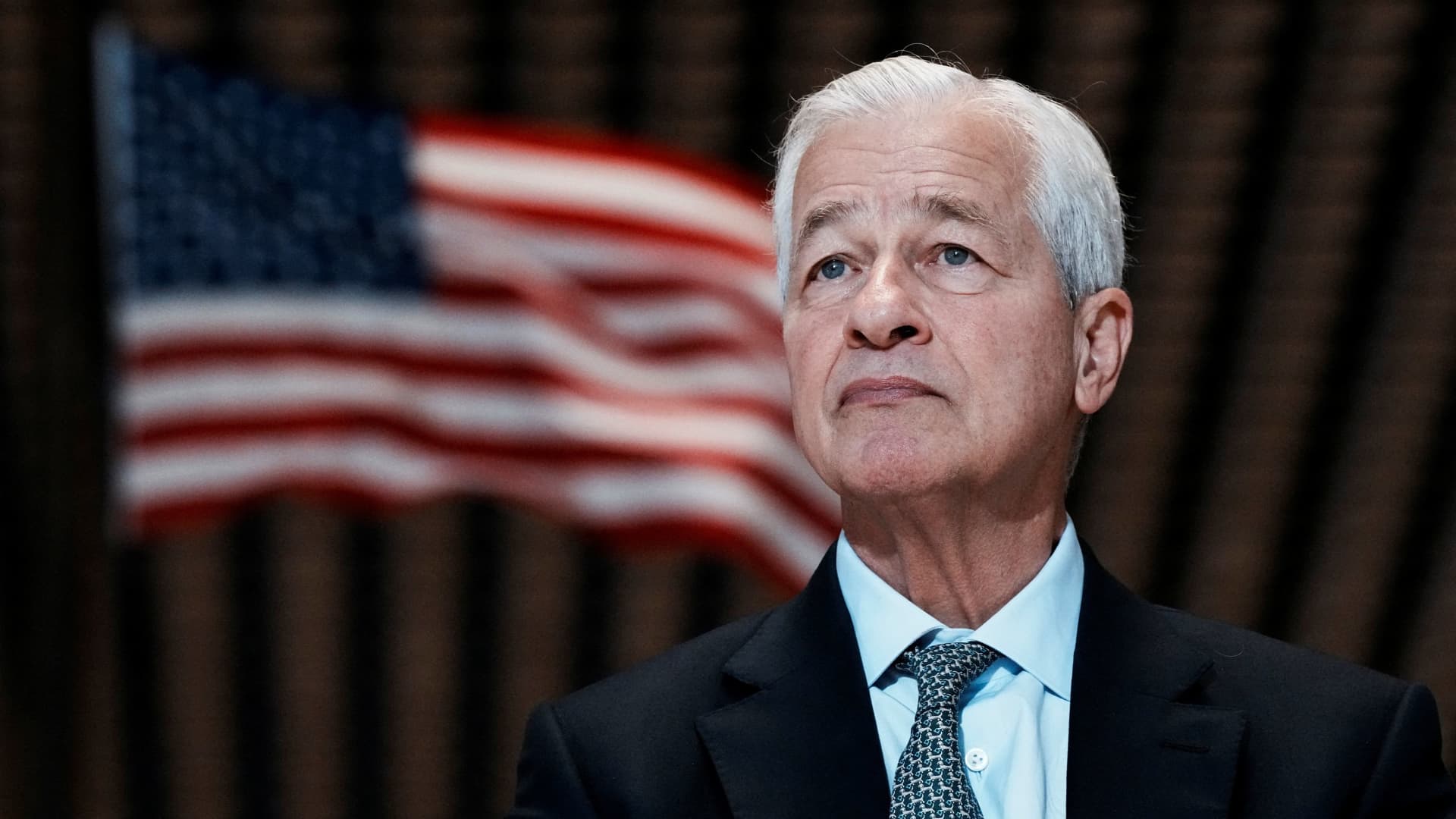
    Jamie Dimon, Chairman and Chief Executive Officer of JPMorgan Chase & Co., attends the ribbon-cutting ceremony opening the firm’s new headquarters at 270 Park Avenue, in New York City, U.S., Oct. 21, 2025.

    Eduardo Munoz | Reuters

    JPMorgan Chase CEO Jamie Dimon on Tuesday warned that rising government debt levels could trigger a crisis in the bond market, urging policymakers to act before markets force their hand.

    Dimon’s statement was in response to a question about whether he was worried about rising levels of government debt “around the world and in your country.”

    “The way it’s going now, there will be some kind of bond crisis, and then we’ll have to deal with it,” Dimon said at an investment conference held by Norway’s sovereign wealth fund, the largest in the world.

    “I’m not that worried we’ll be able to deal with it,” Dimon said. “I just think maturity should say you should deal with it, as opposed to let it happen.”

    Dimon, who runs the world’s largest bank by market cap, said history has shown that today’s growing mix of risks could combine in unpredictable ways. While the timing is uncertain, failing to address those pressures increases the odds that adjustment comes after upheaval rather than deliberate policy moves.

    “The level of things that are adding to the risk column are high, like geopolitics, oil, government deficits,” Dimon said. “They may go away, but they may not, and we don’t know what confluence of events causes the problem.”

    A bond crisis would likely mean a sudden jump in yields and a breakdown in market liquidity, where investors rush to sell and buyers recede, typically forcing central banks to step in as buyers of last resort.

    A recent example is the 2022 U.K. gilt crisis, when yields on the U.K. government bonds surged and the Bank of England had to step in to stabilize the market.

    In the wide-ranging interview, Dimon addressed risks he saw in the credit cycle and the pace of artificial intelligence adoption and his insights into setting corporate culture.

    While he didn’t think that private credit, at about $1.7 trillion, was large enough to be a systemic risk to the U.S. economy, he did say that the larger risk was that a downturn across all lending categories would be harsher than expected.

    “We haven’t had a credit recession in so long, so when we have one, it would be worse than people think,” Dimon said. “It might be terrible.”

    Source link

  • FCC launches review of Disney broadcast licenses

    FCC launches review of Disney broadcast licenses

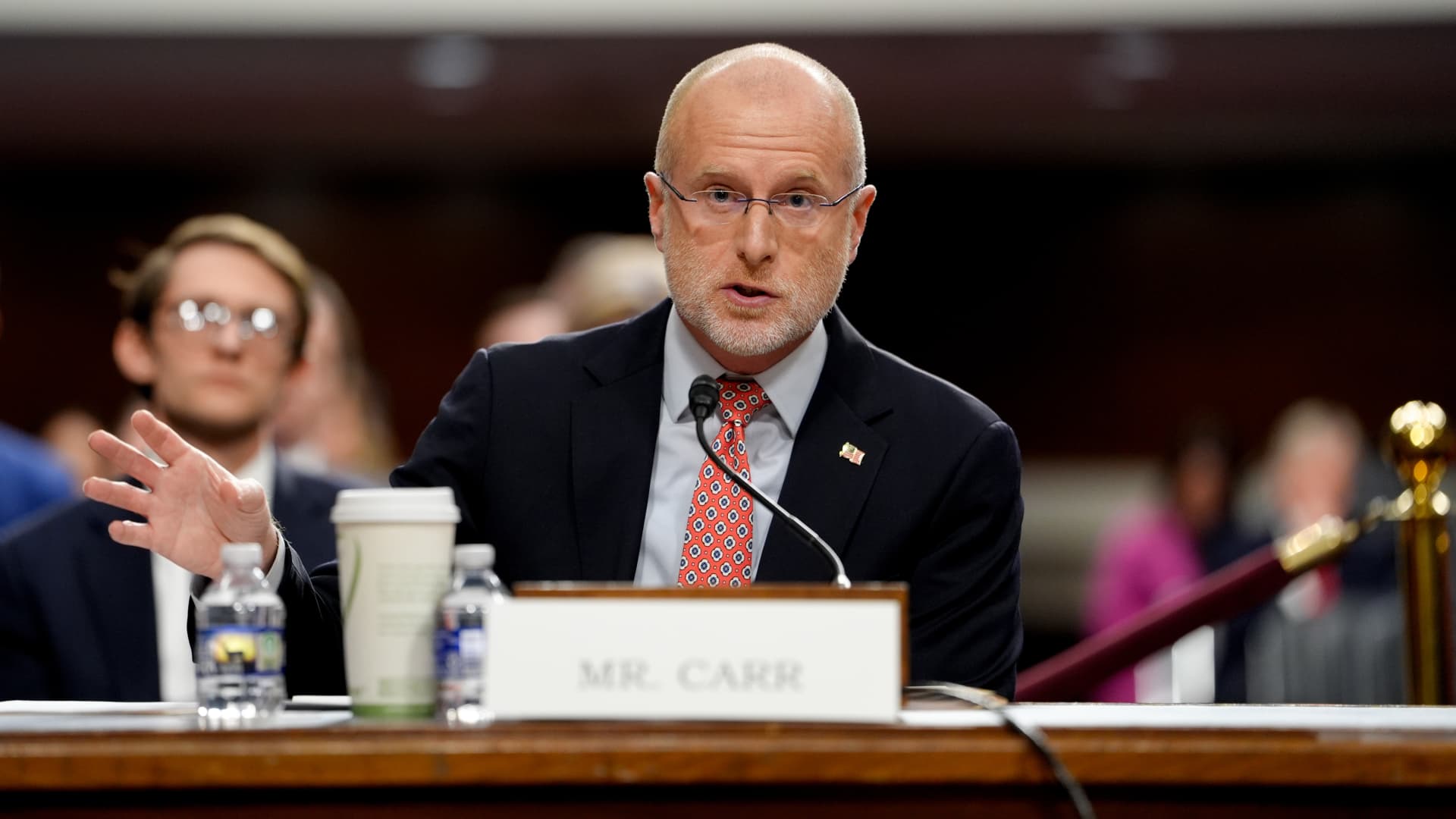
    The Federal Communications Commission is seeking an early review of Disney’s broadcast station licenses following concerns around the company’s diversity, equity and inclusion efforts, according to a letter from FCC Chairman Brendan Carr Tuesday.

    The letter orders the company to file for early renewal for ABC-owned television stations and notes the action is related to an investigation into Disney’s DEI efforts, which began last year.

    ABC-owned station licenses were originally up for renewal between 2028 and 2031.

    Disney confirmed on Tuesday that it received the FCC’s order initiating an accelerated review of its licenses. The FCC said in the letter that Disney now has 30 days — or until May 28 — to file for the renewals.

    “ABC and its stations have a long record of operating in full compliance with FCC rules and serving their local communities with trusted news, emergency information, and public‑interest programming,” Disney said in a statement. “We are confident that record demonstrates our continued qualifications as licensees under the Communications Act and the First Amendment and are prepared to show that through the appropriate legal channels. Our focus remains, as always, on serving viewers in the local communities where our stations operate.” 

    The FCC’s move to require early renewals from Disney comes as ABC faces renewed backlash from President Donald Trump this week following comments made by comedian Jimmy Kimmel in an opening monologue for his late night TV show that airs on ABC’s network.

    Trump revived his push for ABC to take Kimmel off the air after the host of “Jimmy Kimmel Live!” referred to First Lady Melania Trump as an “expectant widow” during the show last week, days ahead of an alleged assassination attempt at the White House Correspondents’ Dinner.

    However, the FCC, the federal entity that regulates the media and telecommunications industry, began investigating Disney’s stations last March for possible violations of the Communications Act of 1934 and the FCC’s rules regarding its prohibition on unlawful discrimination.

    Since beginning its investigation, the FCC said that “Disney’s ABC has purported to respond” to two inquiries. Still, the agency said that it has determined further action was “appropriate.”

    The order lists eight stations subject to the early renewal — three in California, as well as others in Illinois, New York, Texas, North Carolina and Pennsylvania — all of which are owned and operated by Disney. The call for early renewal does not affect Disney’s affiliates, which are operated by broadcast station owners like Nexstar Media Group.

    Disney is not the only media company subject to an investigation surrounding its DEI efforts.

    Under Carr, who was appointed by Trump, the FCC also began investigations last year into Comcast, the owner of NBCUniversal, as well as Paramount, prior to its merger with Skydance.

    Following reports earlier Tuesday of the FCC’s intention to review ABC’s licenses early, FCC Commissioner Anna Gomez called the move “unprecedented, unlawful, and going nowhere,” in a post on X, adding that “this political stunt won’t stick. Companies should challenge it head-on. The First Amendment is on their side.”

    First Amendment experts began to weigh in on the FCC’s latest move on Tuesday, raising similar points as to when “Jimmy Kimmel Live!” was temporarily suspended in September following comments the host made after the killing of conservative activist Charlie Kirk.

    At the time, Carr had suggested broadcast station licenses could be revoked in response.

    “The FCC has no authority to cancel broadcasters’ licenses because of their perceived political views. But this isn’t just about the rights of Disney and ABC,” said Jameel Jaffer, executive director at the Knight First Amendment Institute at Columbia University in an emailed statement.

    “President Trump is trying to consolidate control over what Americans see and hear on the radio, television, and social media. If he gets his way, we’ll have only government-aligned media organizations that broadcast only government-approved news and commentary. It would be difficult to imagine an outcome more corrosive to democracy or more offensive to the First Amendment,” Jaffer said.

    Source link